
Recent online claims have stirred considerable controversy by stating that Australia is now classified by the World Bank as a “third world country.” This misconception gained traction particularly after a viral X video suggested such a downgrading. The video linked Australia’s economic challenges to political decisions, insinuating that the ruling Labor Party’s policies have led to the country’s supposed decline. However, experts and official World Bank representatives have decisively debunked these assertions, affirming that no such categorization exists within the World Bank’s framework. Such misinformation not only distorts the country’s true economic standing but also perpetuates outdated geopolitical terminologies that no longer reflect contemporary global realities.
In essence, understanding the World Bank’s actual classification system and acknowledging Australia’s economic status are fundamental to dispelling these myths. The importance of accurate geopolitical and economic classifications cannot be overstated, particularly as they influence public perception and policy discourse. Australia’s robust economy, advanced infrastructure, and high-income status firmly place it among the developed nations, contrary to the unfounded “third world” label.
- The term “third world country” is outdated and not used by the World Bank.
- Australia is officially classified as a high-income country by the World Bank in 2026.
- Social media misinformation has falsely linked Australia’s economic conditions to this outdated term.
- The World Bank uses income-based classifications rather than Cold War-era political categories.
- Australia’s status is confirmed as an advanced economy by other global bodies like the IMF.
- Misconceptions around country categorization impact public understanding and international relations.
Clarifying the World Bank’s Economic Status Classifications in 2026
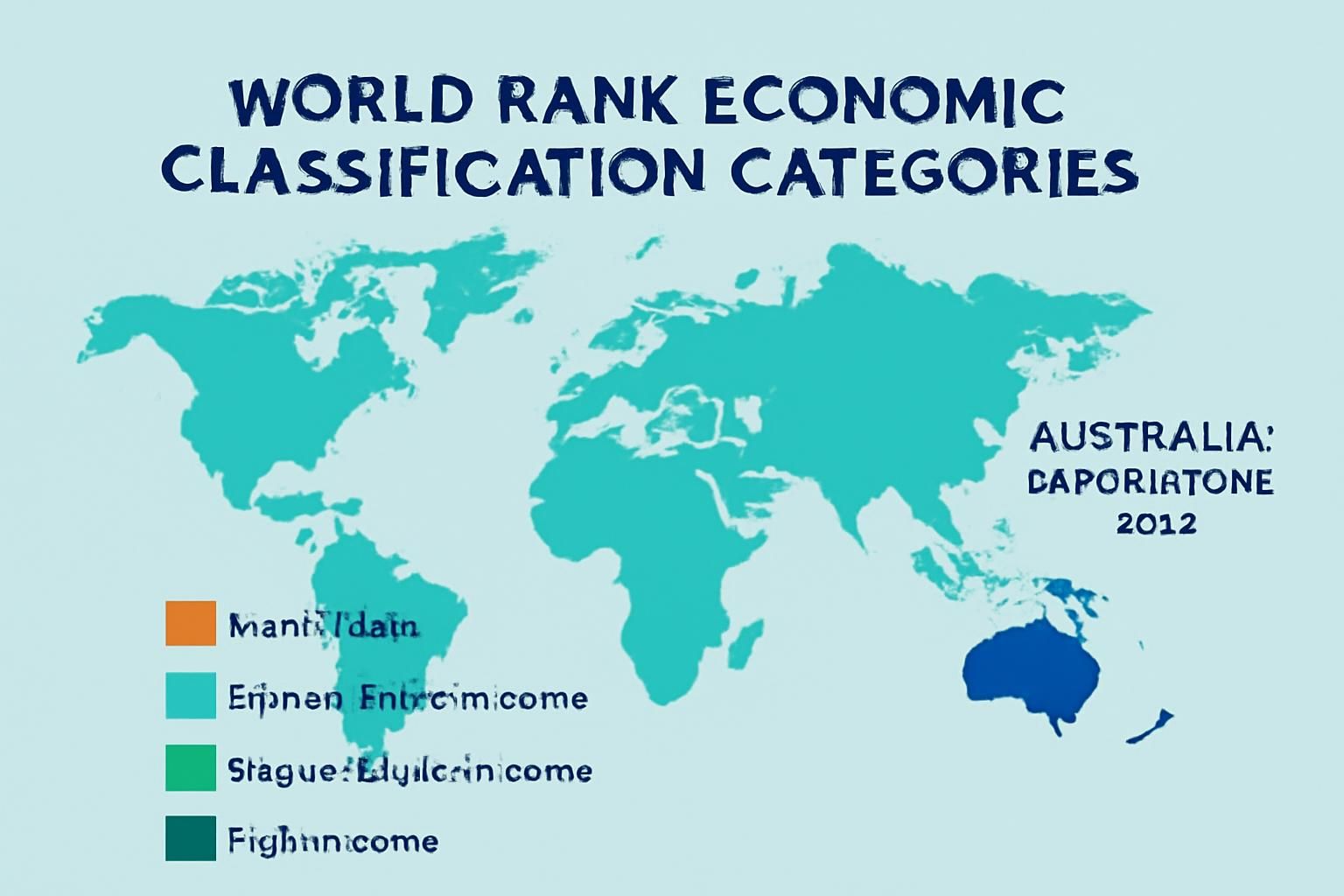
The World Bank continuously evaluates countries’ economic statuses using gross national income (GNI) per capita, dividing nations into four primary income categories as of 2026: low income, lower-middle income, upper-middle income, and high income. This classification is strictly based on economic metrics rather than political or historical considerations, illustrating a data-driven and objective approach.
In the World Bank’s 2025-2026 update, a country is categorized as a high-income economy if its GNI per capita exceeds $14,375. Australia consistently ranks well above this threshold, reflecting its strong economic foundation, advanced industries, and high standards of living. These indicators collectively disqualify the nation from any “third world” label, a term primarily rooted in mid-20th century geopolitics rather than contemporary economic analysis.
This practical, income-focused classification system helps clarify common misunderstandings. For example, a low-income economy is defined by a GNI per capita of $1,175 or less, which includes many developing nations still striving for infrastructure development and industrialization. Australia’s economic profile sharply contrasts with these metrics, underscoring its position as a developed, high-income nation.
By overturning political narratives of the Cold War and outdated terminologies, the World Bank’s methodology provides a clearer, more objective picture of global development. This also highlights how misinformation, such as that spread by viral videos or partisan social media posts, conflicts with rigorous economic assessments and misleads the public.
Debunking the ‘Third World’ Label: Origins and Misuse in Modern Context
The label “Third World country” originated during the Cold War era, coined in 1952 by French demographer Alfred Sauvy to describe countries unaligned with either Western capitalist or Eastern communist blocs. Over time, it became conflated with economically developing or low-income nations. However, this term has increasingly fallen out of favor among experts, replaced by more precise and respectful classifications.
Development agencies and economists today widely consider the phrase to carry outdated and often pejorative implications. Academic research, such as the 2022 BMJ Global Health paper, highlights the term’s implicit racism and bias, as it suggests a hierarchy of development and modernity unsuitable for contemporary discourse. The persistence of such terminology on social media platforms only perpetuates confusion and stereotypes about a nation’s true economic status.
Australia’s modern economic and social indicators offer a stark contrast to any classification as a “third world” country. Its advanced infrastructure, comprehensive social welfare systems, leading education institutions, and independent robust economy establish it as firmly in the “first world” or developed nations category, as traditionally understood.
This section clarifies why geopolitical labels anchored in outdated global power structures are inadequate in representing current economic realities. It also stresses the need for responsible communication and the avoidance of terms that can propagate misunderstanding or prejudice in global discussions.
Australia’s Economic Reality: High-Income Classification and Development Indicators
Australia’s economic indicators underscore its standing as a high-income country with a stable, diversified economy. Key sectors include mining, finance, education, technology, and agriculture. The nation has a high standard of living, comprehensive healthcare, and significant investments in infrastructure and innovation.
The World Bank’s classification corresponds directly to the country’s GNI per capita, reflecting the prosperity and economic capacity of average Australian residents. Australia’s advanced infrastructure supports high levels of productivity and quality of life, including widespread access to modern amenities and technological advancements. Furthermore, Australia maintains consistently low unemployment rates compared to global averages, which contradicts the narrative presented in some viral social media posts.
Beyond economic metrics, Australia’s development status is confirmed by numerous other global organizations. The International Monetary Fund (IMF), for instance, lists Australia under “Advanced Economies,” a category that distinguishes nations with mature financial markets, robust governance, and sustained economic growth. This verified status removes any ambiguity surrounding Australia’s place in the global economic order.
Understanding these economic realities prevents the misleading conflation of growth challenges or political debates with fundamental misclassifications. Australia continues to attract global investment and immigration thanks to its stable governance and strong economic fundamentals.
Geopolitical Implications of Misclassifying Developed Countries
The erroneous classification of Australia as a “third world country” carries substantial geopolitical consequences. Accurate country categorizations shape diplomatic relations, foreign aid allocations, trade agreements, and international policy negotiations. Misconceptions can adversely affect a nation’s reputation, bargaining power, and global standing.
For Australia, which plays an influential role in regional and global partnerships, being inaccurately labeled damages perceptions and might misinform public opinion at home and abroad. Such misclassification can lead to unjustified criticism of government policies or economic conditions. It may also fuel unnecessary political polarization, as observed in the use of this false claim to criticize the ruling government.
The geopolitical landscape in 2026 demands clarity and precision in economic discourse. As countries negotiate over global challenges like climate change, trade, and security, factual economic statuses become even more critical indicators guiding cooperation and competition. Australia’s confirmed status as a developed, high-income country ensures its ongoing role as a constructive stakeholder in international forums.
Combatting misleading narratives safeguards the integrity of policy debates and maintains trust between governments, businesses, and citizens, vital for effective diplomacy and development assistance strategies.
Examining Common Misconceptions in Social Media and Political Rhetoric
The viral claim on X and other social media platforms that the World Bank classifies Australia as a “third world country” notably derives from misunderstandings of the Bank’s growth metrics and economic terminology. This type of misinformation is often leveraged to criticize political leadership by blaming systemic economic phenomena on government mismanagement.
The specific allegation that surpassing a 2.5% growth rate automatically downgrades a country’s status stems from an incorrect interpretation of demographic and economic data. Contrary to this claim, high economic growth is usually a positive indicator and does not correlate with being labeled a developing or “third world” country by any credible institution.
Such narratives oversimplify complex economic realities and ignore recognized frameworks, leading to public confusion. Furthermore, they often polarize discourse, targeting specific administrations to shift blame for issues like urban infrastructure pressures or housing market fluctuations, which have multifaceted causes.
Addressing these misconceptions requires careful explanation and public education efforts that rely on trustworthy sources like the World Bank and reputable economic experts. Reducing the spread of false information is crucial to maintaining informed citizenship and balanced political debate.
Understanding Income-Based Country Groupings Globally
Income classifications by the World Bank provide more precise insights into a country’s economic status than Cold War-era north-south or first-second-third world models. This system’s focus on GNI per capita allows policymakers and analysts to tailor development strategies and funding allocation based on empirical data.
The classification groups are as follows:
| Income Group | GNI Per Capita Threshold (2025-2026) | General Characteristics |
|---|---|---|
| Low Income | $1,175 or less | Limited industrialization, low standards of living, often reliant on agriculture |
| Lower-Middle Income | $1,176 – $4,655 | Developing infrastructure, emerging industrial sectors |
| Upper-Middle Income | $4,656 – $14,375 | Diversified economy, growing urbanization |
| High Income | Above $14,375 | Advanced infrastructure, high living standards, stable governance |
This categorization framework enables global development agencies and governments to allocate resources and aid effectively, ensuring support matches economic realities. Australia’s income significantly surpasses the high-income threshold, reaffirming its classification.
Comparative Analysis: Australia’s Development Status Versus Common ‘Third World’ Misconceptions
Australia serves as a prime example to contrast between modern development classifications and outdated third world assumptions. While the term “third world” remains common vernacular in some circles, Australia’s profile contradicts any such categorization decisively.
Key indicators illustrating Australia’s advanced status:
- Per capita income well above the World Bank’s high-income threshold.
- Robust healthcare system with universal coverage.
- Highly developed education sector, including numerous world-class universities.
- Strong infrastructure networks including transport, energy, and digital connectivity.
- Stable political institutions promoting economic growth and social equity.
Such a comprehensive development profile discredits the erroneous label attributed to Australia, highlighting the dangers of simplifying economic realities into obsolete categories.
Resources to Understand and Verify Country Economic Classifications
For those interested in verifying country classifications or gaining deeper insights into economic categorizations, authoritative sources are invaluable. The World Bank offers regularly updated data and detailed analytical frameworks explaining income thresholds and related criteria.
Additionally, organizations like the International Monetary Fund provide complementary classifications highlighting distinctions between “Advanced Economies” and emerging markets, reflecting different dimensions of development.
Online platforms such as Glann’s blog on economic classifications offer accessible explanations tailored for diverse audiences, helping debunk myths and clarify misconceptions circulating in media and politics. Engaging with such reputable resources equips readers to distinguish fact from fiction regarding country status and economic development discussions.
Does the World Bank still use ‘Third World’ to classify countries?
No, the World Bank has phased out the term ‘Third World’ and now classifies countries based on income levels derived from GNI per capita.
What category does Australia fall into according to the World Bank in 2026?
Australia is classified as a high-income country by the World Bank, reflecting its strong economic metrics and development.
Why is the ‘third world’ label considered problematic?
The label is outdated and can carry racist and backward implications, failing to accurately represent the complexities of countries’ development and economic standings.
How can misinformation about country classifications be addressed?
By referring to authoritative sources such as the World Bank and IMF, and promoting economic literacy to counter false claims shared on social media and other platforms.
What does the IMF classify Australia as?
The International Monetary Fund considers Australia an ‘Advanced Economy,’ consistent with its economic strength and global standing.