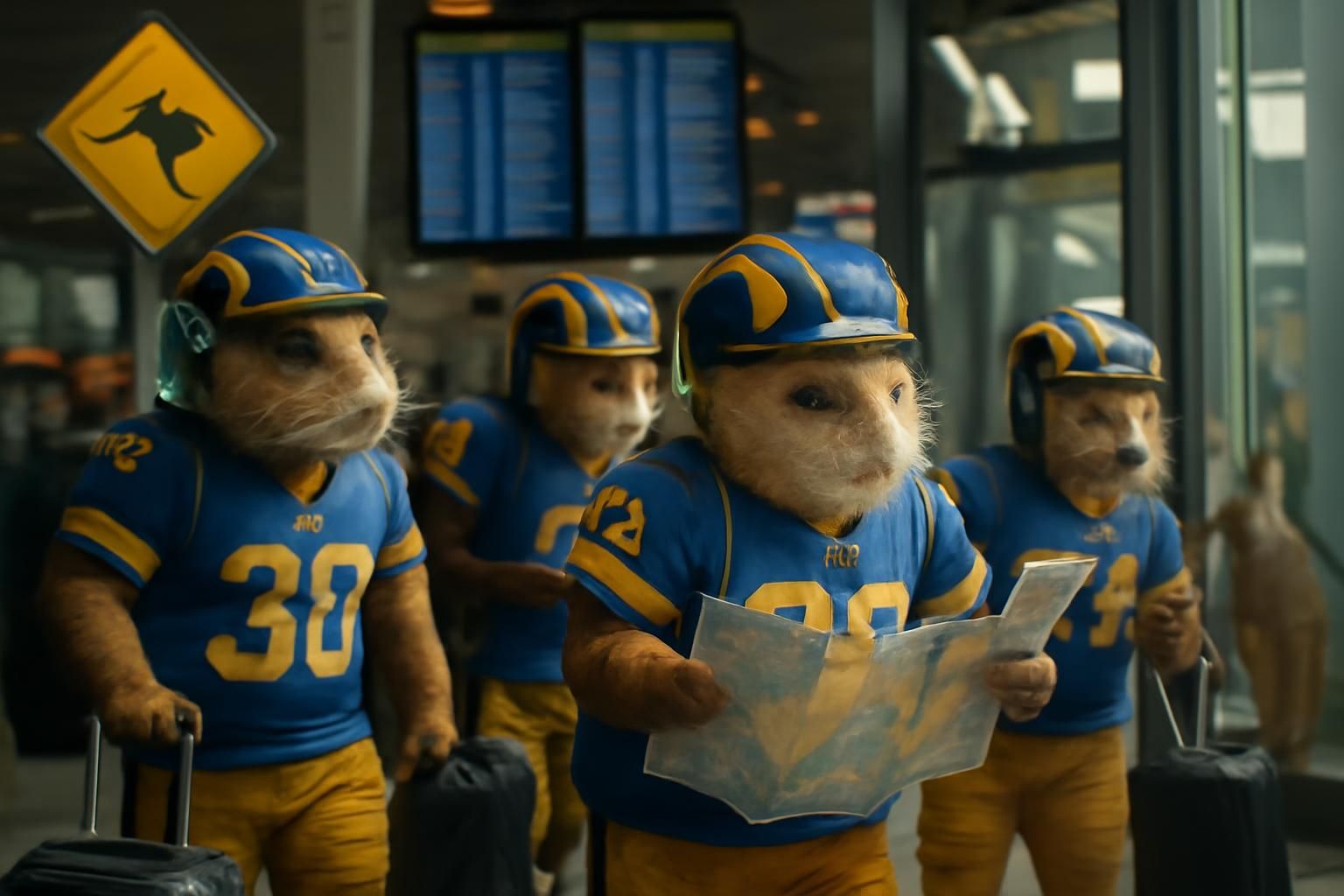
As the Los Angeles Rams prepared for a groundbreaking NFL event in 2026, their journey to Australia was anything but ordinary. The team’s approach to tackling the complex issues of long-haul travel and time zone navigation involved turning some of their own players into test subjects—or “guinea pigs”—to simulate and analyze the challenges ahead. Their innovative travel itinerary was crafted with those early experiences, aiming to minimize jet lag, optimize recovery, and ensure competitive readiness for their season opener against the San Francisco 49ers in Melbourne. This strategic preparation highlights not only the physical demands of international sports travel but also the intricate planning necessary for high-performance teams to excel overseas.
Key Points:
- Los Angeles Rams employed four players as “guinea pigs” to test the Australia travel itinerary months before the official trip.
- These early travel experiments helped refine the timing and logistics for the nearly 16-hour trans-Pacific flight to Melbourne.
- Adjustments focused heavily on mitigating jet lag and balancing physical and mental fatigue.
- The Rams chose a late departure strategy, leaving just hours before their opening game in Australia to leverage insights from their player tests.
- This approach proved controversial but underscored innovative thinking in sports travel management.
- The itinerary planning combines sleep schedule manipulation, practice adjustments, and data-driven recovery protocols.
- The logistics and experiences of the players acting as test subjects shaped the team’s final travel strategy.
- Using player feedback from these trial runs provided a competitive edge in adapting to the Australian environment.
Innovative Use of Players as Test Subjects to Refine the Rams’ Australia Travel Itinerary
In 2026, the Los Angeles Rams took a decidedly unorthodox approach to managing the demands of their international season opener by selecting four players to serve as experimental subjects for a months-ahead trial run of the Australia travel itinerary. This proactive strategy aimed to dissect every aspect of the nearly 16-hour flight and the consequential jet lag effects that often plague athletes making long-haul, trans-Pacific journeys.
By dispatching players Kevin Dotson, Kyren Williams, Tyler Davis, and Xavier Smith well in advance of the official game week, the Rams gathered invaluable data related to sleep disturbances, recovery pace, and mental alertness upon arrival. Throughout their early travel experience, these players meticulously documented their physiological responses and subjective feelings of fatigue, which helped team scientists and coaches identify the most vulnerable periods in the travel schedule.
This pilot travel group faced the grueling reality of state-of-the-art jet lag, sleep displacement, and tactical training adjustments required to maintain peak performance. The direct feedback from these players enabled the Rams’ support staff to tailor pre-flight schedules, in-flight recovery protocols, and post-arrival training sessions, effectively turning what could have been a disadvantage into a performance edge. Coaches could modify practice times to align better with altered circadian rhythms, while nutritionists recommended meal timings that helped reset internal clocks more efficiently.
The usage of players as ‘guinea pigs’ for travel strategies is uncommon in professional sports but provided a contextual anchor for fine-tuning the broader team itinerary. This hands-on research under real conditions allowed the Rams to avoid generic assumptions about intercontinental travel effects and focus instead on granular details specific to their players’ responses and recovery profiles.
From Theory to Practice: Data-Driven Insights from Player Trials
To translate these observations into actionable planning, the Rams integrated sleep science specialists and performance analysts who monitored biometric data during the trial runs. Continuous heart rate variability, sleep quality indices, and cognitive function tests were administered to accurately chart recovery trajectories. This interdisciplinary approach ensured that modifications were grounded in measurable evidence rather than guesswork.
For example, players reported challenges during the initial 24 hours after landing, with consistent dips in concentration and muscular stiffness evident in practice sessions. Recognizing this, the Rams adopted staggered light exposure and hydration strategies to accelerate adjustment. The team also strategically chose to delay departure until a few hours before kickoff, a decision stemming directly from pilot group feedback that suggested prolonged pre-game stays might worsen overall fatigue.
This evidence-based method allowed the Rams to craft a unique itinerary featuring:
- Customized sleep schedules both pre- and post-flight
- Timed exposure to natural and artificial light to influence circadian regulation
- Optimized meal planning emphasizing phase-appropriate nutrition
- Revised practice timings to coincide with performance peaks adjusted for Australian time zones
The result was a comprehensive plan respecting both the physiological and psychological demands placed upon the players, demonstrating how sports teams can leverage scientific research and player experience to optimize performance in challenging travel contexts.
Challenges of Navigating Time Zones: How the Rams Dealt with Jet Lag in Australia
The Rams’ journey to Australia presented a complex challenge: traversing multiple time zones that traditionally impair athletic performance due to jet lag. Flight duration close to 16 hours across the Pacific results in circadian rhythm disruptions, sleep deprivation, and cognitive decline—all factors that could jeopardize a team’s competitive edge.
To circumvent these issues, the Rams needed to revolutionize their approach to international travel preparation. Time zone management became as critical as the physical training regimen itself. The player ‘guinea pig’ trials highlighted that jet lag’s impact goes beyond simply feeling tired; it affects reaction times, decision-making accuracy, and muscle recovery rates crucial for a high-stakes NFL game.
By mapping their sleep-wake cycles against Melbourne time well before the official trip, the players gradually adapted their biological clocks through phased light exposure and melatonin supplementation. This method, endorsed by sleep experts, gradually shifted their circadian systems towards alignment with Australian local time.
Additionally, the Rams employed sophisticated strategies including:
- Controlled Light Exposure: Tailored sessions of natural daylight and controlled darkness to recalibrate the player’s internal clocks.
- Hydration and Nutrition: Timed intake of fluids and meal composition aimed to mitigate dehydration effects and support metabolic adjustment.
- Physical Activity Adjustment: Modifying workout timing and intensity to promote alertness or rest as per the new timezone.
- Psychological Support: Techniques to maintain mental focus and reduce travel anxiety, essential for optimal cognitive function.
This multi-pronged methodology stands in stark contrast to typical overnight flights that leave players fatigued and unable to perform at their best. The Rams demonstrated that with targeted interventions and early adaptation, jet lag can be substantially alleviated even in demanding transoceanic journeys.
Case Study of Jet Lag Mitigation Techniques in High-Level Sports
Many elite sports teams have faced similar challenges when competing internationally, but the Rams’ explicit use of players as test cases gives fresh insights. Their systematic collection of data and subsequent itinerary fine-tuning echoes practices seen in international soccer clubs and Olympic squads, who prioritize circadian acclimatization.
For example, soccer teams traveling to Asia or Europe for tournaments often arrive days early, but the Rams’ decision to arrive just hours before the game—based on their test subjects’ feedback—was a strategic gamble. It allowed players to avoid prolonged jet lag time and maximize time closer to game conditions. This approach is aligning with a growing body of research suggesting that long pre-game stays abroad can sometimes degrade performance if not managed with precise circadian science.
Understanding that each athlete reacts differently to jet lag was key. For instance, offensive lineman Kevin Dotson showed different adjustment patterns compared to skill position players like Kyren Williams. Tailoring schedules and recovery protocols on a player-specific basis was a significant advancement in ensuring everyone arrived game-ready despite the long distance.
Strategic Decision-Making Behind the Rams’ Travel Timing and Itinerary Choices
Unlike the San Francisco 49ers, who chose to acclimatize a full week ahead of the season opener in Melbourne, the Rams opted to travel later, departing just on Tuesday night before their Thursday game. This decision resulted from thorough data analysis and direct player feedback, where the ‘guinea pig’ travel experiences weighed heavily into the team’s planning.
Late departure was intended to compress exposure to Australia’s time zone, minimizing the total days spent in an environment that could cause circadian distress. It also reduced the time away from home facilities and supported maintaining routine training standards up until departure.
This choice carried risks. Some players stepped off the 15-hour flight appearing visibly exhausted. The Rams had to employ rapid recovery protocols, such as immediate hydration, nutrition optimization, and low-intensity movement sessions on arrival to stimulate circulation without causing fatigue.
A deeper understanding of the decision-making process reveals:
| Factor | Considerations | Outcome |
|---|---|---|
| Jet Lag Management | Shorten exposure time while managing sleep adjustments | Reduced overall jet lag effects |
| Training Consistency | Maintain standard practice schedules until departure | Preserved physical conditioning and mental readiness |
| Logistics | Simplify travel plans with fewer days abroad | Lower risk of infection and injury overseas |
| Player Well-being | Use personalized recovery plans post-flight | Faster adaptation upon arrival |
The Rams’ innovative travel timing choice showcases not only a new paradigm in sports logistics but also the importance of individualized player care within elite competitive contexts.
Balancing Risks with Competitive Advantages
This itinerary strategy sparked debate within sports circles. Some critics argued that the late arrival could leave players under-recovered, compromising performance. Others praised the scientific underpinning and the team’s willingness to discard traditional long acclimatization assumptions.
Team leadership underscored that their choice was evidence-based, drawing on actual player experiences rather than conventional wisdom. The player ‘guinea pig’ experiments had provided a unique experiential foundation for minimizing uncertainty, and the Rams trusted these insights to gain a competitive edge on foreign soil.
The Impact of Early Travel Trials on Final Team Preparation and Game Day Readiness
The early journey of the four Rams players served as a microcosm for the entire team’s experience with international travel. Their reports guided tactical adjustments in hydration protocols, sleep hygiene, and mental preparation strategies. These refinements allowed the team to enter the field better adjusted, with less residual fatigue than typically seen in such demanding trips.
Moreover, the trials revealed psychological factors linked to player confidence and mental clarity following long-haul flights. Coaches introduced mindfulness and visualization exercises designed to elevate focus despite environmental stressors. This holistic approach went beyond physical recovery, ensuring the Rams were prepared on every front.
Adjustments influenced by the guinea pig data shaped the following key preparatory elements:
- Tailored in-flight routines including stretching and controlled napping
- On-ground recovery sessions immediately after landing
- Team meetings scheduled around new time zones to maximize alertness
- Personalized sleep plan adjustments up to the day of the game
These measures combined to reduce the typical performance drop-off seen after arduous international travel. Player testimonials highlighted improved subjective energy and focus compared to past seasons’ overseas games.
How Player Experience Informs Organizational Learning
In addition to immediate benefits, the early travel experience contributed to the Rams’ long-term organizational knowledge base. The data collected is now a valuable resource for future NFL teams traveling abroad, providing a tested template for mitigating travel challenges on a large scale.
This culture of innovation, placing player welfare and scientific evidence at the forefront, demonstrates the Rams’ commitment to pioneering solutions in elite sports. Their Australia travel adventure not only prepared them for a historic NFL event but also redefined how teams can approach complex travel logistics in 2026 and beyond.
For further insights on international sports travel strategies, see this detailed article on effective sports acclimatization and how teams optimize performance across global time zones.
The Role of Sports Science in Shaping Future Team Travel Itineraries
The Rams’ approach represents the increasing integration of sports science into logistical planning. Athletic performance is no longer solely determined on the field but is deeply influenced by travel methodologies, recovery science, and circadian biology.
Modern technology enables real-time physiological monitoring, guiding adaptive protocols that respond to each player’s unique needs during international travel. Wearable devices track sleep stages, stress levels, and muscular recovery, offering coaches actionable insights to refine travel and training schedules dynamically.
Looking ahead, teams are expected to adopt more individualized travel itineraries, with tailored nutrition, sleep, and training plans. The Rams’ precedent serves as a case study for this evolution, showcasing how a team can use direct player experience – literally as guinea pigs – to improve overall outcomes.
Key innovations in sports travel science include:
- Precision chronotherapy to reprogram circadian rhythms
- Advanced biometric tracking for real-time recovery assessment
- Virtual reality and mental rehearsal protocols during travel
- Adaptive scheduling based on predictive analytics
These scientific tools are poised to revolutionize how sports teams prepare for international competition, ensuring peak performance despite the logistical challenges of global travel.
Cross-Disciplinary Collaboration Enhances Travel Planning
The Rams’ success was driven by a cohesive effort from coaches, sports scientists, physiologists, and psychological specialists. This collaborative framework is becoming the norm in elite sports, where every detail from lighting in hotel rooms to timing of meals is coordinated for optimal athlete performance.
Ultimately, the Rams’ experiment with player guinea pigs underscores the value of integrating hands-on experience with scientific rigor to tackle the unique obstacles of sports travel in the current era. This model is likely to inspire similar planning innovation across many sports sectors.
Player Perspectives: The Physical and Mental Journey Behind the Scenes
For the players selected as initial guinea pigs, the experience was both challenging and illuminating. Forced to navigate jet lag, altered sleep patterns, and unfamiliar routines well ahead of their teammates, these athletes became vital contributors to the Rams’ broader strategy.
Kyren Williams described the initial travel as mentally taxing but appreciated how the trial enabled the team to better manage the actual game-week trip. Kevin Dotson emphasized how lessons learned about hydration and light exposure during their test journey helped him adjust more quickly when the full team traveled.
Their firsthand experience underscores the necessity of listening to player feedback not only in physical training but in all aspects of team logistics. This practice builds trust and helps players feel valued in the process, reinforcing cohesion and morale.
Such involvement ultimately leads to more effective recovery strategies, as players gain ownership of their routines and learn tools to control travel-induced fatigue. This empowerment is critical in high-intensity sports environments where mental resilience is as important as physical readiness.
Insights into Mental Resilience Amid Challenging Travel Conditions
Sporting endeavors in 2026 increasingly recognize the mental toll of international competition. The Rams’ player guinea pigs reported feelings of disorientation and irritability during adjustment phases, highlighting the need for psychological interventions such as mindfulness and relaxation techniques.
With ongoing mental preparation, players were better equipped to focus during intensive training sessions and game day under unfamiliar schedules. Psychological support is now firmly embedded in sports travel planning, acknowledging that mental agility is a game-changer against international opponents.
For teams interested in holistic athlete care, this case demonstrates that beyond physical conditioning, attention to mental health during travel is indispensable. More teams now emphasize counseling services, coping skill workshops, and mental fitness assessments to complement physical recovery.
Broader Implications for Sports Teams and International Event Planning
The Rams’ utilization of players as guinea pigs reframes how teams can prepare for demanding travel itineraries in 2026. Their approach has set a precedent for sports franchises worldwide, underlining the role of hands-on, data-driven experimentation in navigating global competition logistics.
With more leagues expanding their footprint internationally, travel strategies will become increasingly important components of competitive planning. The Rams’ model displays the benefits of early experimentation and personalized adjustment to enhance team resilience and on-field performance.
This shift is evident in numerous sports contexts, from basketball franchises regularly traveling to Europe to soccer clubs traversing continents for championships. Implementing player-feedback loops and embracing scientific insights leads to more sustainable athlete management practices.
Stakeholders including coaches, sports administrators, and event planners can learn from the Rams’ experiences to improve scheduling, reduce travel-related stress, and optimize athlete health—a blueprint for future success in international sports events.
Sports Travel Innovations Reflect Wider Trends in Athletic Performance
This case also reflects a broader trend toward data-centric and player-focused solutions across the sports industry. The balance of physical, mental, and logistical factors in travel planning is becoming a science of its own, essential for maintaining the high standards of modern sports competition.
As the NFL and other leagues continue embracing global markets, evolving travel strategies like those pioneered by the Rams will become best practices. In particular, integrating advance player trials to test itineraries may soon become a standard for all teams venturing into international matches.
For further reading on how sports teams navigate international event logistics, the article on cross-continental travel optimization provides an in-depth exploration of current innovations and future prospects.
Why did the Rams use players as ‘guinea pigs’ for their Australia trip?
The Rams deployed four players months ahead of the official game to test the long-haul travel effects firsthand and collect data to optimize their travel plan, aiming to reduce jet lag and improve performance upon arrival.
What strategies did the Rams implement to manage jet lag?
They employed sleep schedule adjustments, controlled light exposure, nutrition timing, and mental preparation techniques to align players’ circadian rhythms with the Australian time zone.
How did the late departure strategy impact team performance?
While controversial, the late departure minimized prolonged exposure to jet lag and allowed players to maintain regular routines longer, supported by rapid recovery protocols after arrival.
What role did sports science play in the Rams’ travel preparation?
Sports science provided biometric monitoring, recovery analytics, and circadian rhythm management, enabling data-driven itinerary customization and improved overall adaptation.
Can other teams adopt the Rams’ travel approach?
Yes, the Rams’ model serves as a case study for integrating player feedback and sports science in travel planning, which can be adapted by other teams facing international competition.