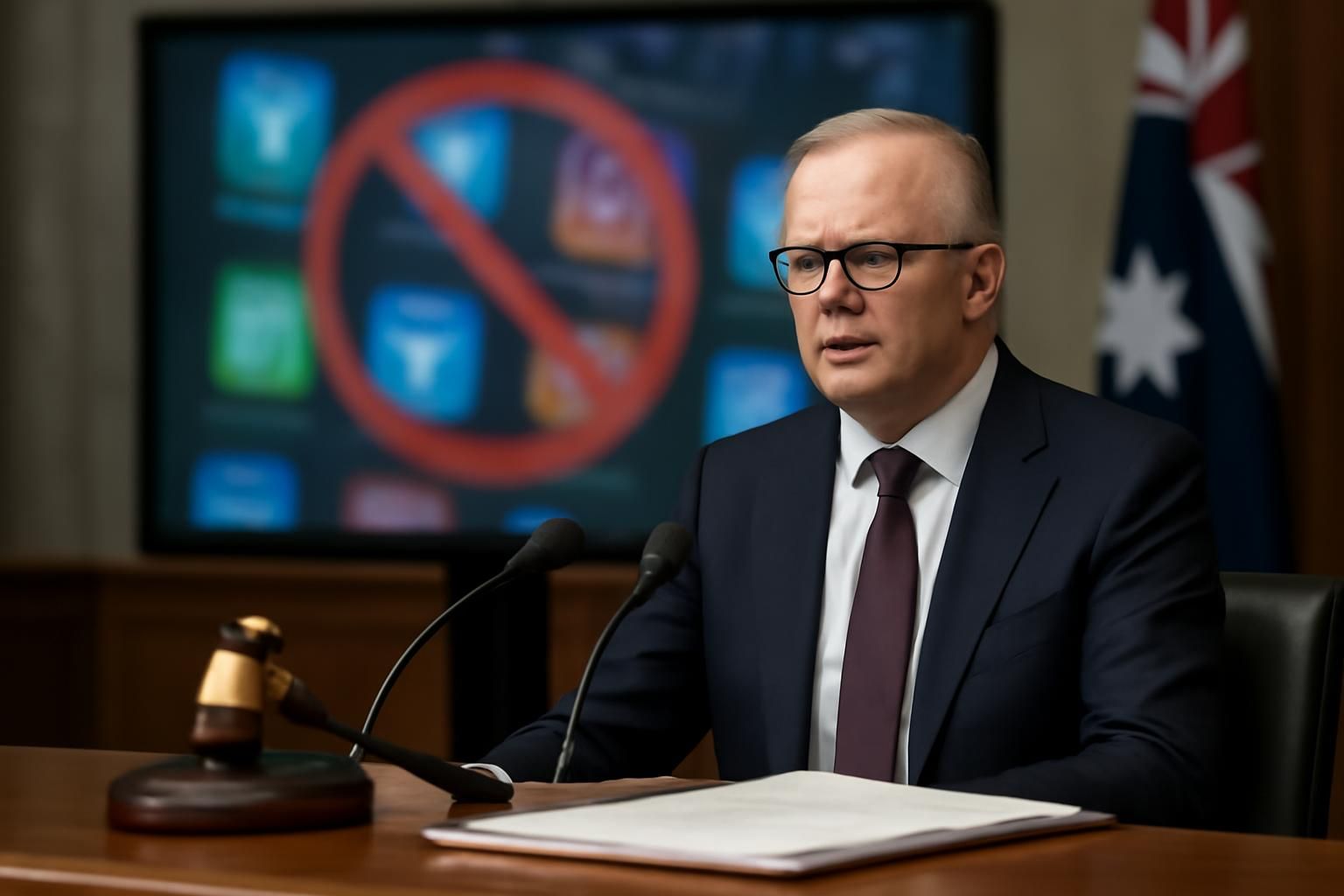
Australia is at a pivotal moment in its digital regulatory landscape, confronting the difficulty of enforcing a pioneering social media ban aimed at protecting children under the age of 16. This legislation, designed to restrict children’s direct access to platforms like Facebook and Instagram, is now facing significant hurdles regarding compliance and enforcement. In response, the Australian government has announced plans to double the maximum penalties imposed on social media companies that fail to uphold these rules, signaling a robust commitment to safeguarding online safety for younger demographics. This move is more than a mere legislative tweak; it reflects Australia’s broader strategy to hold tech giants accountable and foster a safer online environment amid the growing complexities of digital interaction in 2026.
Key aspects of this regulatory push include the recognition of the challenges in monitoring and enforcing age restrictions, the tangible penalties intended to discourage non-compliance, and the implications for global social media firms operating within Australia’s jurisdiction. The challenges tied to verifying user ages, particularly with sophisticated workarounds such as fake profiles, have revealed weaknesses in current enforcement methods. The government’s decision to escalate the penalties up to A$99 million ($68 million) is aimed at compelling these platforms to invest more effectively in robust identification technologies and stricter moderation systems.
Moreover, the debate around this regulation is intensifying, as experts, parents, and policymakers weigh the effectiveness of bans against the realities of children’s social media engagement. Critics argue about the difficulty in enforcing such laws given the cross-border nature of digital platforms, the evolving tactics used to evade restrictions, and concerns about children’s digital rights. However, proponents emphasize the critical need to protect minors from exposure to harmful content, online predators, and the adverse mental health effects linked to excessive social media use. Australia’s initiative thus emerges as a critical case study in the global effort to reshape the online landscape for child safety.
Australia’s Rationale Behind Strengthening Penalties for Child Social Media Ban Breaches
The Australian government’s move to double penalties reflects an urgent response to the limitations of existing enforcement mechanisms within the social media ban framework. Initially, the regulatory approach set the groundwork for one of the world’s first comprehensive laws banning under-16s from holding social media accounts. However, as compliance data revealed significant gaps, the policy architects recognized the need for more stringent deterrents.
At the heart of this adjustment lies the understanding that social media companies possess both the technological capability and the legal obligation to ensure their platforms are not accessible to young children who are vulnerable to online harms. Yet, many firms have struggled or resisted full compliance, citing technical difficulties in verifying ages accurately or the massive logistical challenge involved. Australia’s plan to increase fines to as much as A$99 million aims to shift the cost-benefit balance firmly against complacency.
For instance, consider a hypothetical social media platform operating in Australia. Without significant punishment, the financial incentive to cut corners in age verification might persist. By contrast, facing the prospect of multi-million-dollar fines, such firms may prioritize the integration of biometric verification, AI-driven content moderation tools, and more stringent account setup checks. This is not only about imposing penalties but catalyzing innovation in enforcement technology.
The government’s stance underscores that protecting children’s online safety cannot rest on voluntary corporate goodwill. Instead, legislation with meaningful repercussions must underpin regulatory frameworks. As social media continues to be an integral element of youth culture, the increased penalties aim to signal to all players that the status quo is unacceptable and that safeguarding the mental and emotional well-being of Australia’s children is non-negotiable.
Effective Enforcement Demands Technological Responsibility
Technological solutions are central to effective enforcement of the child social media ban. Companies are expected to deploy advanced age verification systems that go beyond simple checkbox confirmations. The challenge includes balancing robust user verification with privacy rights and convenience. For example, some platforms have started to experiment with multi-factor identity checks linked to government-issued identification, though these raise concerns about data security and user trust.
This drives an important dialogue on how legislation like Australia’s ban can coexist with broader privacy regulations. If social media companies fail this balance, they risk hefty fines. The increased penalties serve as a potent reminder and incentive to innovate responsibly while respecting user data protections.
Challenges in Enforcing Australia’s Under-16 Social Media Ban: Age Verification and Evasion Tactics
One of the paramount enforcement challenges lies in the difficulty of accurately verifying the age of social media users. Children intent on bypassing the ban often use false birthdates, shared accounts, or other deceptive means. This evasion undermines the effectiveness of the legislation, leading to widespread concerns among regulators about the law’s practical impact.
For example, consider the case of a 14-year-old Australian user who gains access to social media by using an older sibling’s account. Without sophisticated detection systems, platforms may be none the wiser. Similarly, fake profiles created through automated bots or purchased digital identities further complicate enforcement. These tactics expose the technological arms race between regulators and users seeking to circumvent restrictions.
Social media companies employ various tools to counter these tactics. Machine learning algorithms scan for suspicious account patterns, while verification prompts encourage honest user declarations. Nevertheless, no system is entirely foolproof. This has sparked debate about whether the ban is enforceable without international cooperation and cross-platform data sharing to detect and shut down fake or underage accounts effectively.
Australia’s legislation is pushing firms to take these enforcement responsibilities seriously, but the challenges remain daunting. The complexity is compounded by the global reach of platforms which can route activities through servers and data centers overseas, outside the immediate reach of Australian regulators.
Examples of Enforcement Challenges in Other Jurisdictions
Globally, countries face similar enforcement issues with underage users on social media. The European Union’s General Data Protection Regulation (GDPR) includes an age of consent requirement – generally set at 16 – but enforcement remains a challenge. Platforms serving billions of users struggle to maintain age-appropriate access controls.
In the United States, the Children’s Online Privacy Protection Act (COPPA) regulates data collection from children under 13 but doesn’t ban social media use outright. Ineffectively monitored, many children access platforms without seeking parental consent, indicating a patterned difficulty in enforcement worldwide. Australia’s legislation tries to take a stronger stance but runs into these universal challenges.
Hence, the Australian experience contributes valuable insights for global policymakers about the limits of digital age restrictions and the need for shared standards and technologies.
Online Safety and Mental Health: The Case Strengthening Australia’s Social Media Ban
Central to the rationale for Australia’s ban and its crackdown on enforcement failures is the increasing evidence linking social media exposure to negative mental health outcomes among children. Research consistently points to heightened risks of anxiety, depression, cyberbullying, and disrupted sleep patterns associated with early social media use.
Children and adolescents are particularly vulnerable as their brains and social skills develop. Social media platforms, with their addictive design features and exposure to harmful content, present unique risks. Australia’s ban thus reflects a preventative public health strategy designed to mitigate these risks by limiting young users’ exposure.
For instance, studies have shown that children under 16 using social media extensively report higher incidences of body image dissatisfaction and lowered self-esteem. This data informed Australia’s legislation, highlighting the urgency of protecting this demographic from premature, unregulated social media access.
Furthermore, the government’s push for stricter enforcement and increased penalties is part of a comprehensive approach that includes educational campaigns for parents and children about online safety practices. In this way, the legislation is not just punitive but seeks to foster awareness around the importance of healthy digital habits.
Balancing Risks and Benefits of Social Media for Youth
It’s important to acknowledge that social media is not universally harmful. Many children use platforms for positive social connection, creativity, and learning. Yet, policymakers and child psychologists urge caution, advocating for restrictions and protections until children reach an age where they can safely navigate these spaces.
The Australian ban attempts to create a buffer period during early adolescence, safeguarding mental well-being while encouraging tech companies to develop safer platform environments. This serves as a proactive rather than reactive regulatory model.
Legal Framework and Implications of Doubling Penalties in Australia’s Social Media Ban
The legislation proposal to increase penalties involves amending the existing act that governs online interactions and social media platforms. This move raises significant legal implications for companies operating in Australia, especially multinational firms like Meta and others that dominate the social media landscape.
The table below outlines the current and proposed penalty maxima under this legislation:
| Penalty Type | Current Maximum Fine (AUD) | Proposed Maximum Fine (AUD) | Description |
|---|---|---|---|
| Failure to Remove Under-16 Accounts | 49.5 million | 99 million | Penalty imposed on companies who fail to prevent underage users from accessing their platforms. |
| Non-compliance with Age Verification Protocols | 20 million | 40 million | Fines related to inadequate or ineffective age verification measures. |
| Repeated Enforcement Violations | 10 million | 25 million | Higher fines for companies with multiple breaches within the enforcement period. |
This escalation aims to impose financial consequences substantial enough to genuinely impact corporate behavior. Australia’s legal framework is evolving to prioritize online safety as a public good, with strong punitive measures for violations.
Notably, this legislation could set a global precedent, prompting other nations to reconsider their approaches to social media regulation regarding children. The combined legal heft and moral imperative underpinning the Australian approach signal a watershed in digital governance.
Legal Challenges and Industry Pushback
The increase in penalties has been met with predictable resistance by social media companies who argue that the requirements for tight enforcement are technically and financially burdensome. Industry lobbyists warn that overly strict penalties could stifle innovation or drive firms to limit services in Australia.
Legal experts, however, underscore the importance of upholding legislation that places children’s welfare at the forefront. They argue that tech firms must adapt business models or face the consequences, reaffirming the regulatory shift towards accountable and transparent operations.
Effective Regulation Strategies to Overcome Enforcement Challenges in Social Media Ban
Overcoming enforcement challenges requires a multi-faceted strategy combining technology, policy, and public engagement. Australia’s experience offers valuable lessons on how such complex regulation can be operationalized in a dynamic digital environment.
Key components of effective strategies include:
- Enhanced age verification technologies: Investing in biometric checks, AI algorithms, and government-ID validation systems helps close loopholes.
- Inter-agency collaboration: Cooperation between regulatory bodies, law enforcement, and child protection agencies enhances investigation and compliance efforts.
- Public awareness campaigns: Educating parents, schools, and children about the ban and the dangers of premature social media use improves societal buy-in.
- International cooperation: Cross-border data sharing agreements and global industry frameworks are essential, given the ubiquitous nature of digital platforms.
- Robust reporting and audit mechanisms: Requiring platforms to regularly report compliance data and undergo audits increases transparency.
These initiatives collectively support stronger enforcement, reducing the ability of underage users to exploit system weaknesses. Australia’s legislation is evolving with these considerations at its core, aiming to create a sustainable and enforceable model for child online safety.
Lessons from Successful Enforcement Programs
Countries like South Korea and the United Kingdom have piloted targeted programs that blend technology with regulatory oversight and public education. These have achieved measurable reductions in underage social media access. Their approaches highlight the importance of integrating multiple tools rather than relying solely on harsher penalties.
The Role of Public and Parental Engagement in Supporting Social Media Ban Enforcement
Enforcement alone cannot guarantee the success of Australia’s child social media ban. Public engagement, especially parental involvement, is critical for fostering an ecosystem supportive of these regulations. Parents play an active role by monitoring their children’s online habits and educating them about digital risks.
Community initiatives encourage parents to use parental control software, open communication about social media, and advocate for child-friendly online policies. Schools supplement this with digital literacy programs designed to empower students with knowledge about safe online practices.
Australia’s government continues to support these efforts by funding educational resources and offering workshops focused on online safety for families. This holistic approach addresses enforcement challenges by embedding the ban within everyday societal norms and responsibilities.
How Parental Action Empowers Enforcement
Parental vigilance can detect early signs of rule evasion and help bridge the gap between legislation and real-world monitoring of children’s social media activity. For example, a parent who notices unusual behavior in their child online can report suspicious accounts or enforce household internet usage rules that complement the legal restrictions.
Understanding legal responsibilities for social media platforms in Australia and strategies for effective regulation and online safety education provide further insight into how collaborative efforts enhance enforcement success.
Global Impacts and Future Outlook of Australia’s Child Social Media Ban and Penalties
Australia’s bold approach to doubling penalties for social media companies failing to protect children sets a new bar on the international stage. It challenges tech giants to reconsider how they manage global users, particularly younger ones. This legislation may become a catalyst for other countries to adopt similar measures, spurring a wave of reform focused on online safety and corporate accountability.
The future outlook suggests an increased role for artificial intelligence and machine learning to monitor user age and content effectively. Additionally, legal frameworks are anticipated to evolve to address emerging technologies such as virtual reality and metaverse platforms, which pose new challenges for child protection online.
Australia’s leadership highlights the growing recognition that safeguarding children in digital spaces requires continuous adaptation and cooperation between governments, industry, and civil society. The regulatory journey ahead is likely to be complex but necessary to ensure the social media landscape does not compromise the safety and development of its youngest users.
A Checklist for Future Digital Child Protection Regulations
- Strengthen international cooperation to standardize age verification and enforcement remedies.
- Invest in advanced AI-driven monitoring to detect and prevent underage social media use.
- Expand public awareness campaigns globally about risks and regulations.
- Develop adaptive legislation to encompass emerging digital platforms and new forms of online interaction.
- Enhance data privacy protections while implementing stricter verification methods.
What age does Australia’s social media ban apply to?
The ban applies to all children under 16 years old, preventing them from holding social media accounts on platforms operating in Australia.
What are the penalties for companies not complying with the ban?
Fines can reach up to A$99 million for companies that fail to prevent under-16 children from accessing social media services.
Why are age verification systems challenging to implement?
Technical complexity, privacy concerns, and user resistance make implementing foolproof age verification systems difficult for social media platforms.
How can parents support the enforcement of the social media ban?
Parents can monitor their children’s online activity, use parental controls, and educate them about online safety to complement the legal restrictions.
Could Australia’s approach influence global social media regulations?
Yes, Australia’s penalty doubling and regulatory framework may serve as a model for other countries aiming to enhance child online safety.