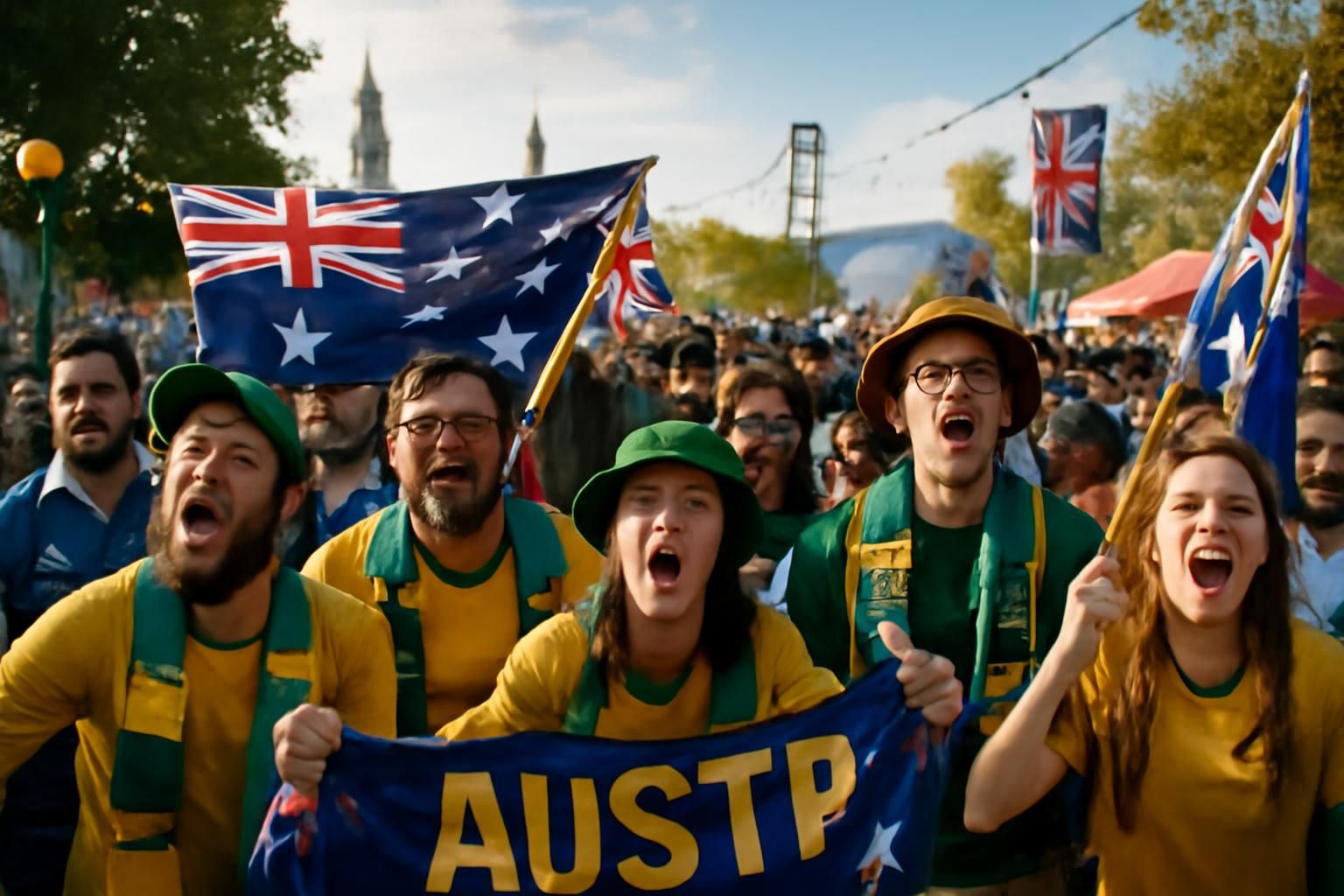
The 2026 FIFA World Cup has proven to be a stage not only for thrilling soccer matches but also for energetic fan expressions that blend sport and political commentary. One of the most striking examples emerged when thousands of Australian fans transformed the streets of Santa Clara into a vibrant arena of protest, chants, and solidarity. Their signature anti-Donald Trump chant reverberated through the Bay Area, capturing media attention and sparking conversations about how global sporting events provide a platform for political voices. As the Socceroos prepared to face Paraguay at the renamed San Francisco Bay Area Stadium, their fervent supporters congregated hours before kickoff, launching their now-famous chant that links political criticism with passionate sports fandom. This phenomenon highlights how soccer festivities during the World Cup have extended beyond the pitch, reflecting wider societal dialogues and fan identities.
Brief Highlights:
- Australian fans introduced a politically charged chant targeting former U.S. President Donald Trump during World Cup games.
- The chant gained significant traction in the Bay Area, particularly near Levi’s Stadium in Santa Clara.
- More than 7,000 Socceroos supporters participated in marches and celebrations featuring the chant.
- The chant humorously accuses Trump of serious allegations intertwined with soccer fan culture.
- This event reflects a growing trend of political expression mingling with sports events worldwide.
- Media personalities such as HBO’s John Oliver have amplified awareness of the chant, adding to its cultural impact.
The Rise of Political Chants Among Australian Fans at the World Cup
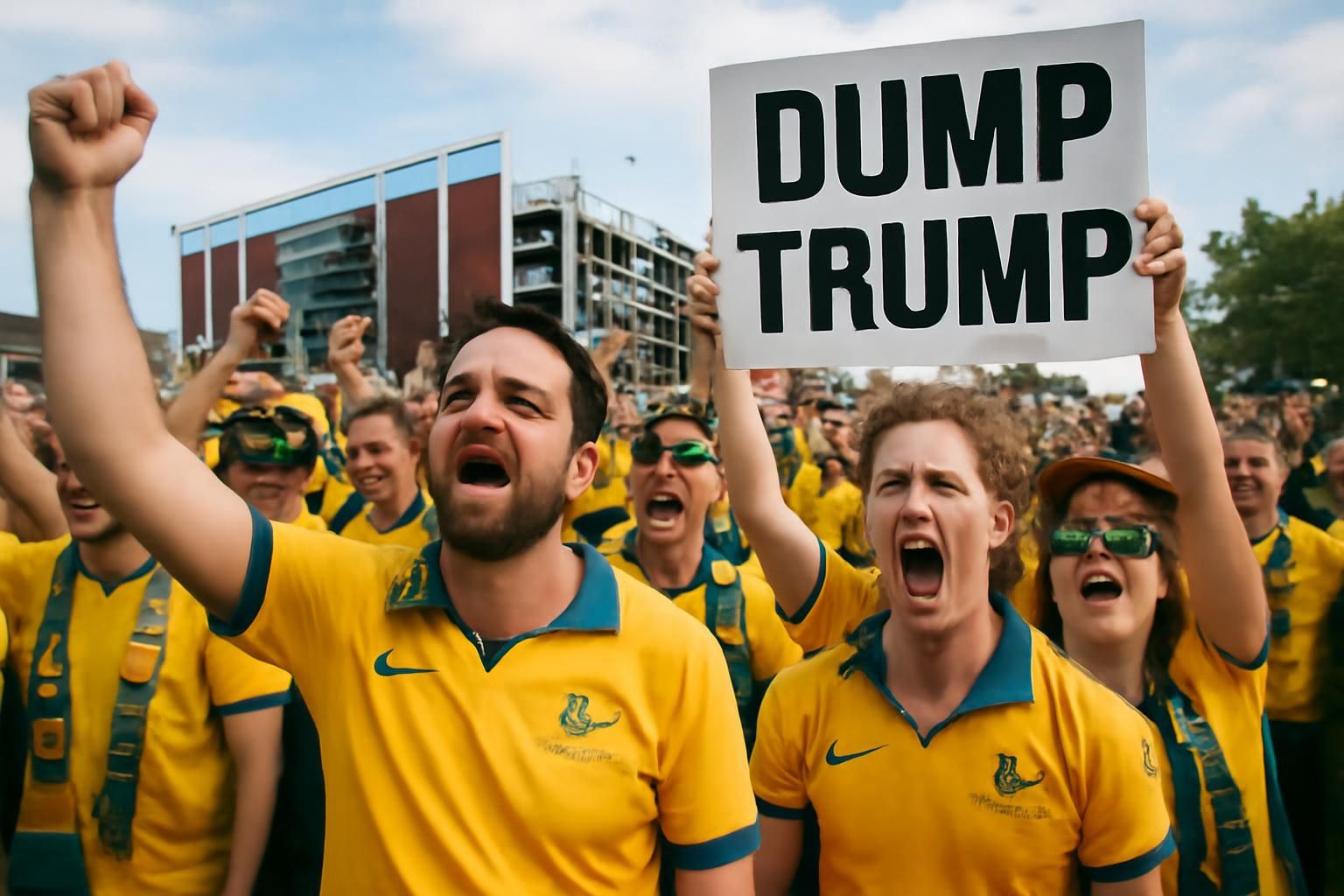
Political chants in sports arenas are not entirely new, but the way Australian fans incorporated an anti-Donald Trump chant during the FIFA World Cup festivities in 2026 marked a novel moment. The chant gained widespread popularity as it resonated with fans frustrated by the former U.S. President’s controversies, particularly his alleged ties to Jeffrey Epstein. Australian fans displayed a remarkable unity in their vocal protest, continuously repeating the phrase, “Aussie boys, we’re on a bender, Donald Trump is a sex offender,” which quickly became a viral phenomenon.
This chant exemplifies how sports supporters can use their platforms to raise awareness or mock high-profile political figures, blending humor, satire, and serious political allegations—a tactic that creates emotional engagement among crowds. Such chants thrive at the intersection of sports and societal issues, illustrating fans’ ability to transform stadiums and adjacent public spaces into stages for political expression.
For the Australian fans, this chant was more than just a moment of humor; it represented collective frustration with global political dynamics. Given the international nature of the World Cup, these fans’ voices found a global audience. The climate in 2026, which remains politically charged across many nations, also fostered an environment where fan protests could gain immediate online traction, amplified by social media platforms and coverage from influential media figures such as John Oliver. His acknowledgment lent the chant further legitimacy and virality.
These chants also reflect a modern form of fan identity. Australian supporters, known for their vocal and passionate backing of the Socceroos, navigate the fine line between celebration and protest, showing that sports events today are arenas where social and political conversations naturally occur.
Mass Mobilization: Thousands of Fans March in Santa Clara
One of the most visible manifestations of this chant’s influence was seen in Santa Clara, California, where more than 7,000 Australian fans gathered at a local strip mall and adjacent restaurants hours before the critical Group D match against Paraguay. This massive turnout showcases the organizational capabilities and enthusiasm of Australian fans, who have traveled extensively along the West Coast to support their team.
The pregame gathering soon transformed into an impromptu protest march, with fans chanting their anti-Trump slogan as they moved toward Levi’s Stadium, known officially during the tournament as the San Francisco Bay Area Stadium due to FIFA’s strict branding policies. The streets pulsated with rhythmic chants that endured throughout the march, combining soccer cheers with pointed political commentary.
Such mass mobilizations underscore sports fans’ unique ability to convene large crowds in both celebratory and protest dynamics. They transform urban spaces into vibrant centers for expression, often blending cultural and political narratives through chants, signage, and coordinated movements. This duality is apparent as fans chant playful soccer taunts alongside serious political critiques, making the fan experience richer and multifaceted.
In examining this event, it’s clear that the fans displayed strong community spirit and used the occasion to voice political dissent creatively without disrupting the sporting event itself. Their collective action serves as a model for how sports gatherings can accommodate spirited and respectful political messaging amid festivities.
The Role of Humor and Satire in the Anti-Trump Chant
Humor and satire are powerful components behind the anti-Donald Trump chant. By infusing levity into a serious accusation, Australian fans created an engaging and memorable expression that could be repeated and broadcast easily. The phrase’s cadence and the catchy rhyme contribute substantially to its viral success.
This blend functions on several levels. First, it creates a striking juxtaposition between the festive atmosphere of a World Cup matchday and the sharp tone of political criticism. Second, satire softens the delivery of controversial messages, making them more palatable and spreading them rapidly within fan circles and beyond. The chant’s rhyming structure resembles traditional sports chants, ensuring it fits naturally in the sports soundscape while delivering a potent message.
This approach is comparable to historical examples where fans turned stadiums into stages for societal commentary, such as English football supporters’ chants during the Thatcher era or South American fans’ creative protest songs. The Australian chant against Donald Trump, therefore, represents a contemporary iteration of this tradition, re-imagined for an era of rapid digital dissemination.
Humor also enables a constructive outlet for political frustration, transforming it from mere protest into a form of entertainment and community bonding. By chanting together, Australian fans not only critique but also reinforce their shared values and identity.
Sports as a Platform for Political Expression in the 2026 World Cup
Political expression within sports has long been contentious, but major international events like the World Cup provide unparalleled platforms for global voices to be heard. The 2026 tournament in North America has continued this legacy, with diverse fan bases like the Australians seizing opportunities to express socio-political opinions during festivities.
In this setting, fans from various nations have brought their unique perspectives to the global stage, combining passion for soccer with cultural and political statements. The Australian anti-Donald Trump chants stand out as a prominent example of fan-driven messaging that transcends pure sports commentary.
FIFA’s global audience intensifies the impact of such political expressions. With matches broadcast to billions worldwide, vocal fan protests or chants during games gain immediate attention and prompt broader discussions about the appropriateness and power of political speech at sporting events. This has sparked debates about balancing respect for the sport and stadium regulations with fans’ rights to free expression.
In 2026, many teams’ supporters have adapted to this environment by leveraging chants, signs, and social media campaigns to engage with political topics. This phenomenon is an essential part of the World Cup’s narrative, reflecting the intersection of sport, society, and politics in the modern age.
Understanding Crowd Dynamics and Reactions to the Chant
How crowds react to politically charged chants like the anti-Donald Trump slogan depends heavily on the context and composition of attendees. Australian fans’ chant has elicited a range of responses, from enthusiastic support among Socceroos backers to discomfort and criticism from more neutral or opposing fans.
The chant’s bold nature and direct political accusation make it polarizing. While many fans see it as a justified and humorous form of protest, others worry it could undermine the spirit of sportsmanship or create divisions during an event meant to unite diverse cultures and nationalities. This complex reaction illustrates the challenges of balancing passionate political expression with the inclusive nature of international competitions.
Interestingly, the chant also generates solidarity among like-minded fans, strengthening communal ties within Australian supporter groups. It offers a shared linguistic and cultural shorthand that reinforces identity and group belonging. Conversely, it may provoke tension with fans from countries supporters of Donald Trump or those preferring apolitical sporting environments.
Studying such crowd dynamics provides insight into how large sports events like the World Cup serve as microcosms of wider societal debates around freedom of speech, protest, and respect.
Comparing Australian Fans’ Chant with Global Sports Protests
Sports have historically been a catalyst for protests and political statements worldwide. Australian fans’ anti-Donald Trump chant fits into this lineage, echoing other instances where fans expressed dissent or support for political figures during major events.
Examining similar moments can help contextualize the significance and impact of this chant within the broader tradition of political protests through sports. For example, during the 1968 Olympics, athletes raised their fists in a Black Power salute, challenging racial injustice on a global stage. More recently, NFL players kneeling during the national anthem raised awareness about racial inequality in the United States.
Similarly, soccer fans across Europe and Latin America have used chants and banners to speak out on various political matters, from government policies to social justice issues. Australian fans’ chant, while aimed at a specific individual, follows this pattern of leveraging passionate fan gatherings to initiate dialogue and express collective views.
The global visibility of the World Cup amplifies these efforts, showing how sports and political activism are often deeply intertwined and mutually reinforcing.
| Historical Sports Protest | Context | Impact |
|---|---|---|
| 1968 Olympic Black Power Salute | Protest against racial discrimination during a highly globalized sporting stage | Raised international awareness and has become symbolic of athlete activism |
| NFL Players Kneeling (2016 onward) | Highlighting racial injustice and police brutality in the U.S. through a nationally broadcast platform | Generated widespread debate about protest and patriotism in sports |
| European Football Fans’ Political Chants | Varied themes including anti-government and social justice messaging during league matches | Influenced public opinion locally and brought social issues into sports discourse |
| Australian Anti-Trump Chant (2026 World Cup) | Targeted political figure amid soccer celebrations and gatherings in the U.S. | Inspired international conversations about sports, fan activism, and political statements |
Insights on Media Coverage and Cultural Impact of the Chant
The anti-Donald Trump chant by Australian fans has attracted significant media coverage, both traditional and social media, highlighting the power of sports fans’ political expressions to transcend the sporting world and influence popular culture. Comments from TV hosts like John Oliver brought additional public focus to the chant, framing it as a clever and unexpected gift from Australian fans to the United States beyond cultural exports like avocado toast and Nicole Kidman.
This type of engagement with the chant demonstrates how media personalities can influence the narrative by interpreting fan protests through humor and analysis, thereby widening their reach. It also underscores the evolving relationship between sports, media, and political discourse in 2026.
Social media platforms have further amplified the chant’s visibility, with viral videos capturing the chants echoing in the streets of Santa Clara. Fan-made content, memes, and commentary continue to spread the chant, embedding it into both sports culture and political conversations. This interplay between fans and media serves as a modern example of how sports activism relies on both in-person energy and online amplification.
Potential Legacy of the Anti-Donald Trump Chant in Future World Cups
Looking forward, the Australian fans’ anti-Donald Trump chant at the 2026 World Cup may serve as a hallmark example of how fan culture can evolve into political activism within the context of international sports. It opens critical discussions about the boundaries of fan expression, the role of sports events in global political dialogues, and how traditions of vocal fandom adapt to contemporary political climates.
Future tournaments might witness an increase in politically charged fan manifestations as global awareness and connectivity continue to rise. Sports organizations could face growing pressures to address how political chants and protests intersect with event policies and fan behavior management. Furthermore, fans themselves might increasingly view global sports as prime opportunities to express their ideological stances while uniting around their teams.
In analyzing this chant’s legacy, it is important to recognize its dual role as both a form of protest and entertainment. This duality ensures its relevance not only during the 2026 World Cup but also as a possible precedent for fan activism in subsequent global tournaments. Australian supporters have set a precedent for how spirited protest can coexist with world-class sports celebrations, potentially influencing fan cultures worldwide in years to come.
What motivated Australian fans to create the anti-Donald Trump chant?
Australian fans voiced political frustration relating to Donald Trump’s controversies, including his alleged connections to Jeffrey Epstein, combining this protest with their passionate support for the Socceroos during the World Cup.
How did the chants affect the atmosphere during the World Cup festivities?
The chant energized Australian supporters, contributed to a vibrant and politically charged atmosphere in the Bay Area, and brought attention to fans’ ability to blend sports enthusiasm with political messaging.
Were there any controversies surrounding the chant?
Yes, while many embraced the chant as a humorous form of protest, others felt it was divisive or inappropriate at an international sporting event expected to be apolitical.
How has media coverage influenced the public perception of the chant?
Coverage by prominent figures like John Oliver helped popularize the chant, framing it as a clever cultural moment that increased its visibility and impact beyond the sports community.
Could this chant influence fan behavior in future World Cups?
The chant sets a precedent for politically oriented fan expressions at the World Cup, suggesting future tournaments may see more active fan participation in political discourse during sporting events.