
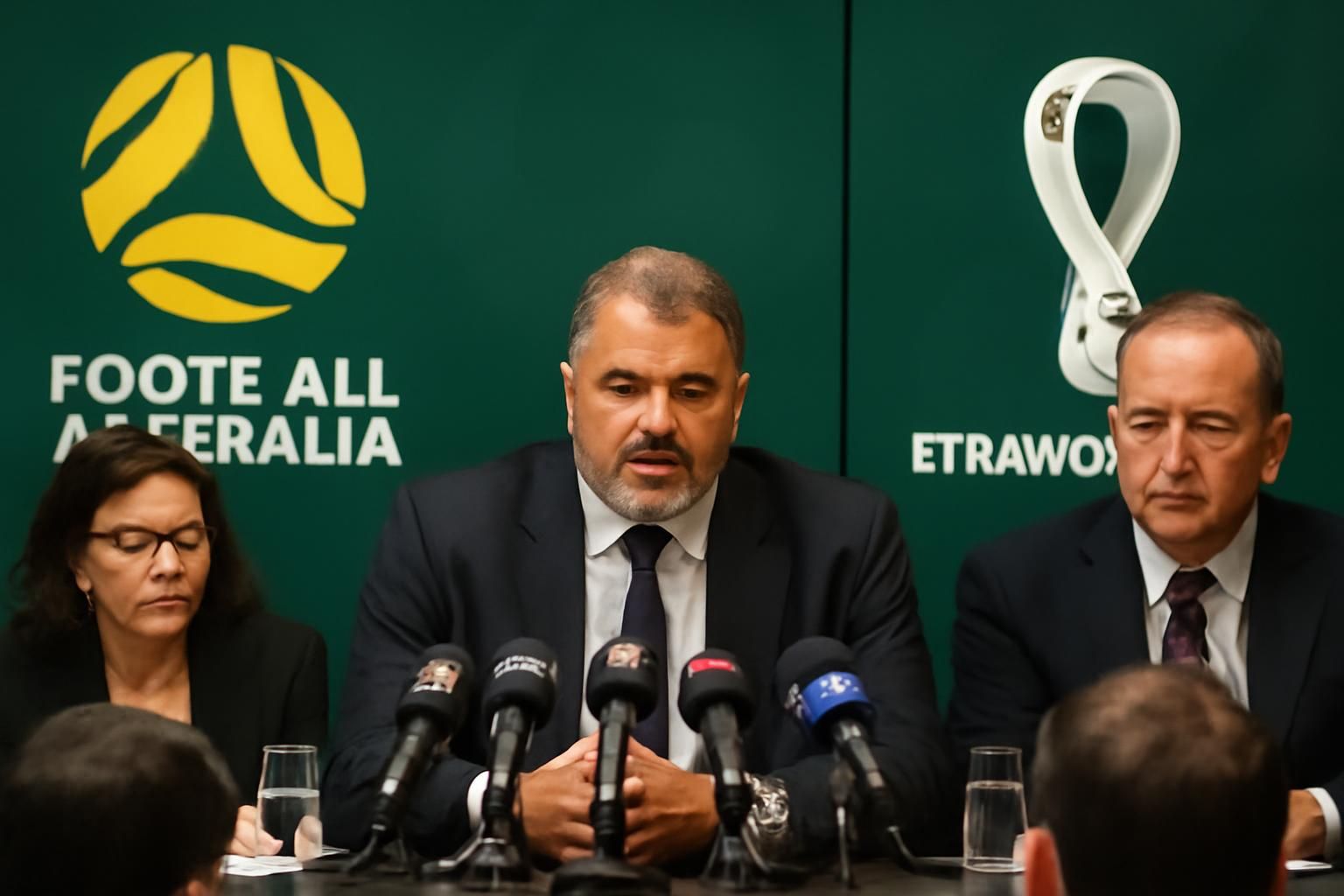
In the wake of a significant and controversial proposal from FIFA to privatize the FIFA World Cup, Football Australia’s hesitant and delayed reaction has sparked heated debate within the global football community. This moment of silence and ambiguity surrounding such a monumental decision has led many to question the organization’s leadership qualities amidst a landscape where decisive action and firm stances are essential. Football Australia found itself caught between the allure of a substantial financial boost and the need to uphold strong governance principles, ultimately drawing widespread criticism for what has been perceived as a lack of backbone and grit in their response.
Football Australia’s tepid stance was especially glaring given the gravity of the issue: FIFA’s proposal to introduce private investment into one of the world’s most prestigious sporting events could alter the dynamics of international football and raise concerns about governance, ethics, and the commercialization of the sport. While other national and continental federations were swift to denounce the plan robustly, Football Australia’s response was cautious and noticeably delayed, leading to questioning whether the organization is prepared to assert a leadership role on the global stage.
This controversy unfolded against the backdrop of the Socceroos’ continuous challenges in advancing through the FIFA World Cup knockout stages, emphasizing broader concerns about Australian soccer’s strategic direction and ability to compete internationally. As the game evolves rapidly worldwide, governance and management decisions play an increasingly critical role in a country’s footballing success and reputation.
Football Australia’s eventual official welcome of FIFA’s withdrawal of the ‘FIFA Forward Enterprise’ proposal reflected less on proactive advocacy and more on a reactive position after FIFA President Gianni Infantino was forced to scrap the plan amid global dissent. However, the delayed and somewhat noncommittal nature of their statements caused frustration among fans, players, and former professionals, with many demanding stronger leadership and transparency.
The episode serves as a crucial case study in modern sports management, revealing how governance and decision-making processes under pressure impact a nation’s international football status and its perception by stakeholders. Australian football’s struggle with its identity and direction in global football is entwined with these governance challenges, particularly when financial incentives clash with ethical considerations.
Examining Football Australia’s Delayed Response to FIFA’s World Cup Sell-Off Proposal
Football Australia’s handling of FIFA’s controversial sell-off proposal can be analyzed through the lens of sports governance and organizational strategy. The initial silence and lack of a firm stance from the Federation was puzzling, especially given the global outcry from other football bodies. This delay exposed several vulnerabilities in Australian soccer’s administrative agility and sparked criticism about their leadership.
On the surface, the attractively large financial offer, rumored to be in the tens of millions, could have been a tempting remedy for the sport’s frequent funding challenges in Australia. The proposal suggested injecting up to $40 million, with $20 million potentially available as early as January 2027, an influx that could have addressed immediate fiscal pressures. Yet, many saw this as a Faustian bargain undermining the integrity of the sport’s governance.
Football Australia’s Chair, Anter Isaac, eventually welcomed FIFA’s withdrawal but emphasized the need for proper consultation and robust governance when dealing with proposals of global significance. This statement implicitly criticized FIFA’s unilateral method of rolling out the plan but stopped short of outright condemnation or rejection of the idea itself. This nuance was seen as insufficient by fans and commentators who expected a more assertive stance reflecting firm principles.
The Federation’s apparent fence-sitting contrasted starkly with the strong responses from other associations that outright rejected FIFA’s proposal. This approach raised flags about Football Australia’s capability to balance financial pragmatism with ethical stewardship, particularly when the sport internationally faces increasing scrutiny over governance and corruption concerns.
It is also important to consider the internal and external pressures that might have affected Football Australia’s delayed and reserved reaction. The promise of immediate financial relief can be hard to overlook, especially when developing domestic football infrastructure and enhancing international competitiveness remain perpetual challenges for Australian soccer. However, such a short-term perspective could entrench long-term reputational damage and lost credibility on the international stage.
Australia’s ongoing difficulties in FIFA World Cup knockout stages, symbolizing a quest for respectability in footballing terms, adds urgency to calls for more proactive and authoritative leadership within Football Australia. The delay in condemning or rejecting the sell-off plan feeds the narrative that the Federation lacks the grit necessary to navigate the complex realities of international football governance.
Football Governance and Ethical Dilemmas in Modern International Football
The controversy surrounding the sell-off proposal shines a spotlight on the broader issue of football governance and the ethical challenges faced by authorities worldwide. FIFA, as the sport’s overarching body, exerts enormous influence, but governance lapses and transparency issues have increasingly come under scrutiny.
Football Australia’s predicament illustrates the difficulty national associations face when confronted with proposals that blend financial incentives with potential governance compromises. Governance in sport extends beyond managing competitions; it embodies accountability, transparency, and protecting the sport’s integrity from undue commercial or political interference.
The proposed private investment initiative risked altering these pillars by injecting private capital into World Cup assets traditionally controlled by member associations. This shift could diminish the collective control of football’s traditional governance structures, raising fears about prioritizing profits over sporting values.
Australian soccer’s commitment to ethical governance is critical not only domestically but also within the international football community. As the sport evolves amid global commercialization pressures, Football Australia is expected to uphold standards aligning with FIFA’s governance reforms while safeguarding the interests of Australian soccer fans, players, and stakeholders.
Reactions from fans and former players highlighted that a perceived lack of backbone undermined Football Australia’s credibility. Former Socceroo Robbie Slater’s calls for the Board’s resignation underscored the frustration with the Federation’s perceived passivity. These voices stress the impact of governance on the sport’s culture and the need for leaders who show resilience and commitment to principled decision-making.
In this context, Football Australia must navigate the juxtaposition of embracing financial opportunities for growth with guarding football’s intrinsic values. This balancing act defines the challenges of modern sports management and dictates how national federations maintain legitimacy and competitive success on the global stage.
Criticism and the Call for Leadership: Australian Soccer’s Search for Grit
Criticism directed at Football Australia centers on the perception that the Federation lacked grit — the kind of courage, decisiveness, and moral clarity needed to represent Australian soccer’s interests effectively. This sentiment is not merely about a single delayed response but reflects overarching concerns about leadership and vision.
Effective sports management demands more than maintaining the status quo; it requires organizations to anticipate challenges and proactively advocate for the sport and its community. Football Australia’s perceived hesitation during a critical juncture suggested an unwillingness to confront difficult choices or risk alienating powerful stakeholders, thus inviting accusations of excessive caution.
Soccer’s growth in Australia faces stiff competition from other sports and entertainment options, and the national team’s international results add pressure to demonstrate progress. Leadership controversies exacerbate public disillusionment, affecting fan engagement and player morale. The criticism from the soccer public on social media platforms, describing the Federation’s actions as “gutless” or “scumbag,” although harsh, need to be interpreted as calls for transformative change.
These critiques raise significant questions about how Football Australia governs and whether it has the necessary systems, culture, and personnel to respond effectively to high-stakes international football matters. The Federation’s struggle serves as a cautionary tale to other national bodies that must balance complex pressures in the fast-paced global sports environment.
For Australian soccer to thrive, the call for grit is also a call for innovative leadership, strategic clarity, and unwavering principles even amid financial temptations. This episode has illuminated the urgent need for the Federation to shift from reactive posture to leadership that embodies confidence and ethical fortitude.
Impact on Tournament Preparation and Australian Soccer’s International Ambitions
The fallout from Football Australia’s handling of the FIFA World Cup privatization proposal will inevitably influence the country’s tournament preparation strategies and broader ambitions in international soccer. Leadership credibility is foundational to organizing effective campaigns, securing funding, and cultivating national pride.
National teams require robust support structures — financial, administrative, and cultural — to perform at the highest levels in demanding tournaments like the FIFA World Cup. Delays and divisions within governing bodies may undermine the coherence and confidence necessary for seamless preparation.
Recent Socceroos’ campaigns, including their ongoing struggles to advance beyond the knockout stages, underscore how off-field dynamics can affect on-field performance. Controversies about governance may distract or dishearten players and staff, while external criticisms can influence public perception and reduce support.
Moreover, securing investments responsibly plays a pivotal role in planning for future tournaments. The rejected funding from FIFA’s initiative might have relieved immediate debt but could have introduced complicated future obligations or diluted Football Australia’s control. Balancing financial prudence with maintaining autonomy remains a key challenge moving forward.
Aligning the Federation’s governance policies with team ambitions is essential to achieving sustainable success. Australian soccer’s credibility on the international stage hinges upon transparent, bold, and well-communicated strategies that inspire confidence among stakeholders and fans alike.
Lessons Learned from International Football’s Governance Challenges
Football Australia’s experience highlights broader trends and lessons relevant to international football governance. Across the globe, football federations now confront multifaceted challenges involving commercialization pressures, ethical dilemmas, and shifting power structures.
One clear lesson is that governance crises often stem from a lack of transparent communication and insufficient consultation with stakeholders. FIFA’s initial approach to the World Cup sell-off plan lacked meaningful engagement, which led to backlash and eventual withdrawal. Football Australia’s hesitancy mirrors this disconnect and signals the need for more proactive stakeholder interaction.
Effective governance requires anticipating controversies and taking definitive stances that reflect an organization’s values rather than reacting only under pressure. Countries like Germany and England have demonstrated the strength of early, comprehensive policy responses in governance matters, setting standards others aspire to.
The Australian case further suggests that a sports federation’s reputation is closely tied to its willingness to uphold ethical principles above financial incentives. This lesson is vital for emerging football nations seeking to establish themselves internationally without compromising their integrity.
| Aspect | Positive Governance Practices | Consequences of Weak Governance |
|---|---|---|
| Transparency | Open communication with stakeholders | Public distrust and speculation |
| Timeliness | Proactive and prompt decision-making | Perceived lack of leadership and confusion |
| Accountability | Clear roles and responsibilities for decisions | Blame shifting and organizational paralysis |
| Ethics | Commitment to sport integrity | Damage to reputation and sport’s values |
The Financial Implications of the FIFA Proposal and Australian Soccer’s Debt Dilemma
Financial considerations loom large in the analysis of Football Australia’s response to the privatization proposal. Australian soccer faces persistent debts and funding shortfalls that have hampered infrastructure development, youth programs, and international competitiveness.
The allure of FIFA’s proposed injection of up to $40 million, with an early tranche of $20 million scheduled for 2027, was undoubtedly tempting. Many within the Federation likely weighed the immediate fiscal benefits against the risks to governance and reputation.
However, the financial short-term gain was clearly insufficient protection against long-term costs. The proposal posed questions about control and decision-making autonomy over the World Cup and related tournaments that could have adverse ripple effects on the Australian game’s growth.
Alternatives to FIFA’s initiative involve strengthening domestic sponsorships, expanding grassroots football, and enhancing fan engagement strategies tailored to the Australian market. The push for sustainable finance models aligns with calls for more transparency and ethics in spending and investment decisions.
This situation highlights the complexity of sports management decisions, where financial necessity often clashes with integrity and strategic foresight. Football Australia’s hesitancy, while criticized, reflects the delicate balancing act that federations globally must navigate in sustaining their sports ecosystems.
International Football Dynamics and Australia’s Position on the World Stage
In 2026, Australia’s international football ambitions remain ambitious but face structural and perceptual challenges. Football Australia’s leadership conduct amidst the FIFA controversy has implications for how Australian soccer is viewed globally — not only as a competitor on the pitch but also as a stakeholder in international football politics.
Australia’s emerging talents and competitive fixtures in tournaments are no longer enough to secure respect; governance, advocacy, and strategic communication also play crucial roles in securing invitations, hosting opportunities, and collaboration agreements within football’s global framework.
Australia’s position in international football is increasingly influenced by its governance profile. Strong, ethical, and decisive leadership can enhance partnerships with confederations, attract investment, and improve the sport’s commercial appeal domestically. Conversely, delayed or ambiguous responses risk marginalizing Australia in a crowded and competitive football landscape.
Active participation in FIFA and regional bodies’ decision-making, accompanied by clearly articulated positions, are essential to amplifying Australia’s voice. This is particularly relevant as sports watchers and markets evolve post-World Cup 2026, with new stakeholders emerging and governance expectations rising.
Key strategies for Australia’s enhanced international football standing:
- Strengthening governance transparency and communication to build trust with global partners.
- Increasing engagement with FIFA and Asian Football Confederation initiatives for better representation.
- Investing in youth development programs to cultivate future star players and competitive squads.
- Crafting clear positions on global football governance issues to participate proactively in debates.
- Enhancing domestic fan base through marketing and outreach to boost soccer’s cultural significance in Australia.
What Football Australia’s Response Means for the Future of Soccer in Australia
The controversy around FIFA’s World Cup privatization and Football Australia’s delayed response unfolds as a defining moment for the sport in this country. It highlights the urgent need for a paradigm shift in how Australian soccer is governed, funded, and promoted on the global stage.
Passivity and hesitant governance risk undermining not just public confidence but also the sport’s ability to capitalize on global opportunities. Sporting bodies must embody leadership that is willing to navigate complexities with courage and prioritize long-term health over short-term gains.
Australia’s soccer community expects a renewed commitment from Football Australia—one that embraces bold governance reforms, invests in grassroots and youth programs, and actively shapes international football discourse. This can reverse narratives of lacking grit and position Australia as a respected and influential football nation.
By demonstrating resilience and ethical strength, Football Australia can restore faith among fans and stakeholders, ensuring that Australian soccer’s journey through future FIFA World Cups is not just about performance on the pitch but also about integrity and leadership off it.
Ultimately, this episode offers a crucial lesson: in global sports governance, timeliness, transparency, and decisiveness are indispensable virtues. Australia’s path forward depends on how these lessons are internalized and acted upon in the coming years.
Why was Football Australia criticized for their response to the FIFA World Cup proposal?
Football Australia faced criticism due to their delayed and non-committal response to FIFA’s proposal to privatize aspects of the World Cup, which many saw as a lack of decisive leadership.
What were the ethical concerns surrounding the FIFA privatization plan?
The plan raised concerns that private investment could undermine football governance by placing profits over sporting values and reducing member associations’ control.
How has the controversy affected Australian soccer’s international reputation?
The controversy and Football Australia’s handling have led to questions about the organization’s leadership and diminished Australia’s standing as a proactive global football stakeholder.
What are some lessons for sports organizations from this situation?
Key lessons include the importance of transparency, timely decision-making, accountability, and maintaining ethical standards to uphold sport integrity and public trust.
What steps can Football Australia take to improve its governance?
Football Australia can enhance stakeholder engagement, take clear stances on governance issues, invest in youth development, and improve communication strategies to build trust and leadership credibility.