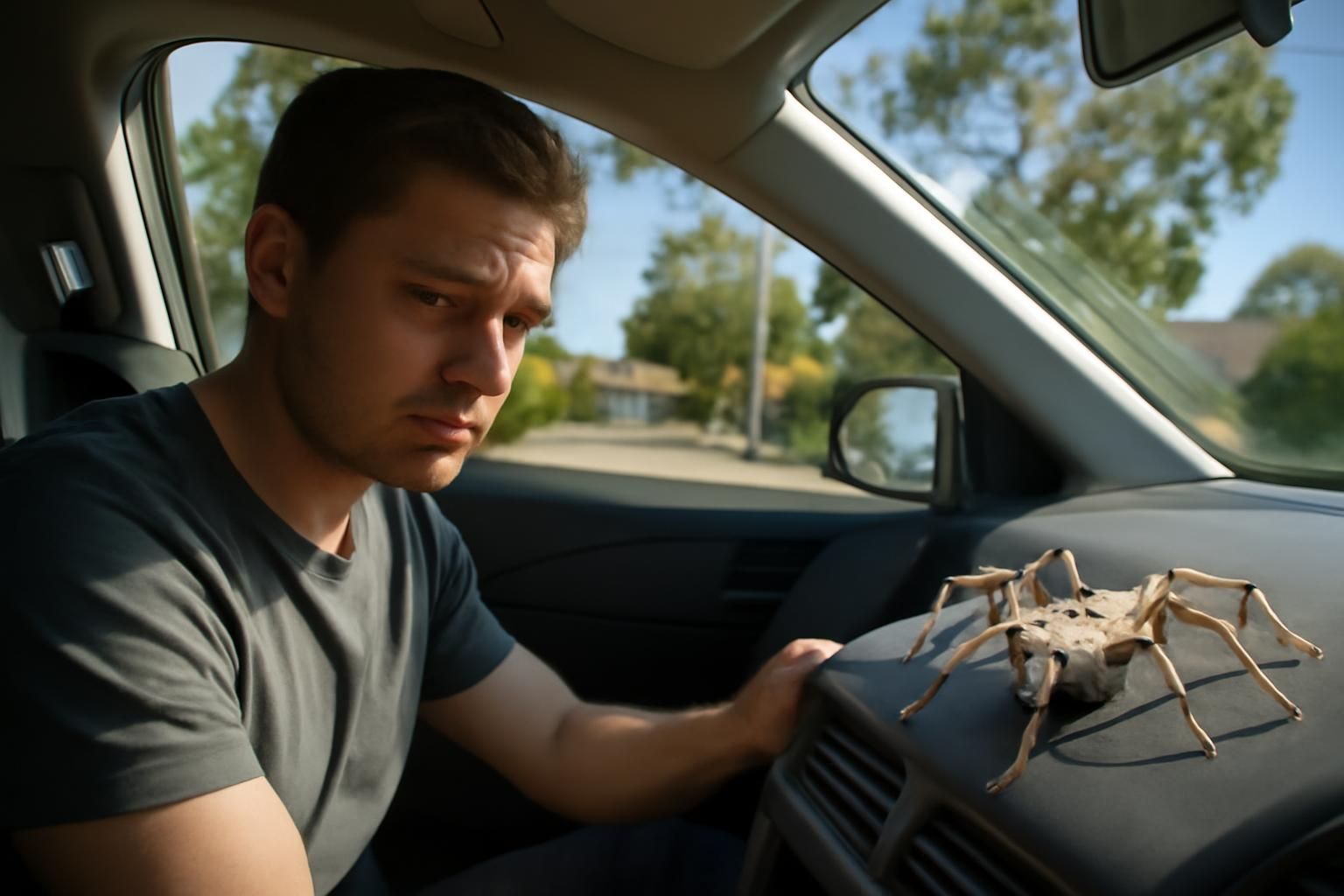
In June 2026, an incident on an Australian highway has sparked widespread discussion and fascination. An Australian driver named Sam Charles Uphill admitted guilt for reckless driving, attributing his near-catastrophic maneuver to a startling encounter with a huntsman spider inside his vehicle. This unusual claim brings to light the real dangers posed by unexpected distractions, particularly in a country known for its diverse and sometimes intimidating wildlife. The incident, captured by dashcam footage and reviewed by authorities, underscores the consequences when a momentary lapse in attention on the road transforms into potential tragedy. As natural habitats increasingly overlap with urban environments, such encounters between drivers and wildlife are becoming more frequent, raising questions about how best to maintain safety in unpredictable situations.
Key points to consider from this incident include:
- An Australian driver admitted guilt in a reckless driving incident caused by a fright from a huntsman spider.
- The dashcam footage played a pivotal role in identifying the nature of the reckless maneuver.
- Huntsman spiders, with leg spans nearly 6 inches, can cause significant distraction when inside a vehicle.
- The incident raises broader concerns about wildlife encounters amid increasing urban encroachment into natural habitats.
- Lawyers and judges stress that distractions—even caused by animals—do not excuse dangerous driving behaviors.
- Expert advice suggests drivers should remain calm and safely pull over if faced with insects or animals while driving.
Understanding the Australian Driver’s Reckless Driving Admission and Its Context
Sam Charles Uphill’s admission of guilt for reckless driving caught public attention not only because of the dangerous maneuver but also due to his unusual explanation involving a huntsman spider. According to official accounts, Uphill’s attempt to avoid the spider resulted in a near head-on collision. Video captured by another driver’s dashcam vividly depicted the chaotic moment when Uphill swerved into oncoming traffic, forcing another vehicle to veer off the road to prevent a crash. The footage was crucial for police investigations and Uphill’s subsequent arrest.
This incident exemplifies how a split-second event can escalate into a major traffic violation with potentially fatal consequences. Reckless driving refers to operating a vehicle with a blatant disregard for safety, typically involving unsafe lane changes, excessive speed, or failure to obey traffic laws. In this case, the driver’s conduct forced another driver into a dangerous position on the road—a clear breach of traffic safety norms.
While the huntsman spider claim might seem extraordinary, it touches on the broader issue of distractions caused by wildlife. Australia is known for its wide range of unique fauna, with huntsman spiders being one of the most recognized. These spiders are not venomous enough to cause major harm, but their size and sudden appearance can certainly provoke significant alarm. The Australian Museum describes huntsman spiders as having leg spans of nearly 6 inches, making them formidable when unexpectedly encountered in confined spaces like a car’s interior.
The Role of Dashcam Footage in Traffic Law Enforcement
The video evidence documented the incident with stark clarity, enabling law enforcement to piece together the sequence of events leading to the reckless driving charge. Dashcams have increasingly become valuable tools in traffic violation cases across Australia and worldwide. These devices offer unbiased, real-time accounts that help clarify fault, especially in complex scenarios involving multiple vehicles or unexpected interferences such as wildlife encounters.
Dashcams not only assist in investigations but encourage safer driving by reminding motorists their actions might be recorded. In Uphill’s case, the footage disproved any claims of innocence and lent credibility to specific details of his story, including the spider’s presence. However, despite the unusual circumstances, the law holds drivers accountable for maintaining control under all conditions, emphasizing that distractions must be managed without compromising safety.
The Northern Daily Leader and other outlets commented on Judge Mark Richardson’s stern reaction to the case, emphasizing that reckless driving is a serious offense and the consequences could lead to loss of the driver’s license. Uphill is set to return to court for sentencing, underscoring how courts consider both the explanation and the actual driving behavior in rendering judgments.
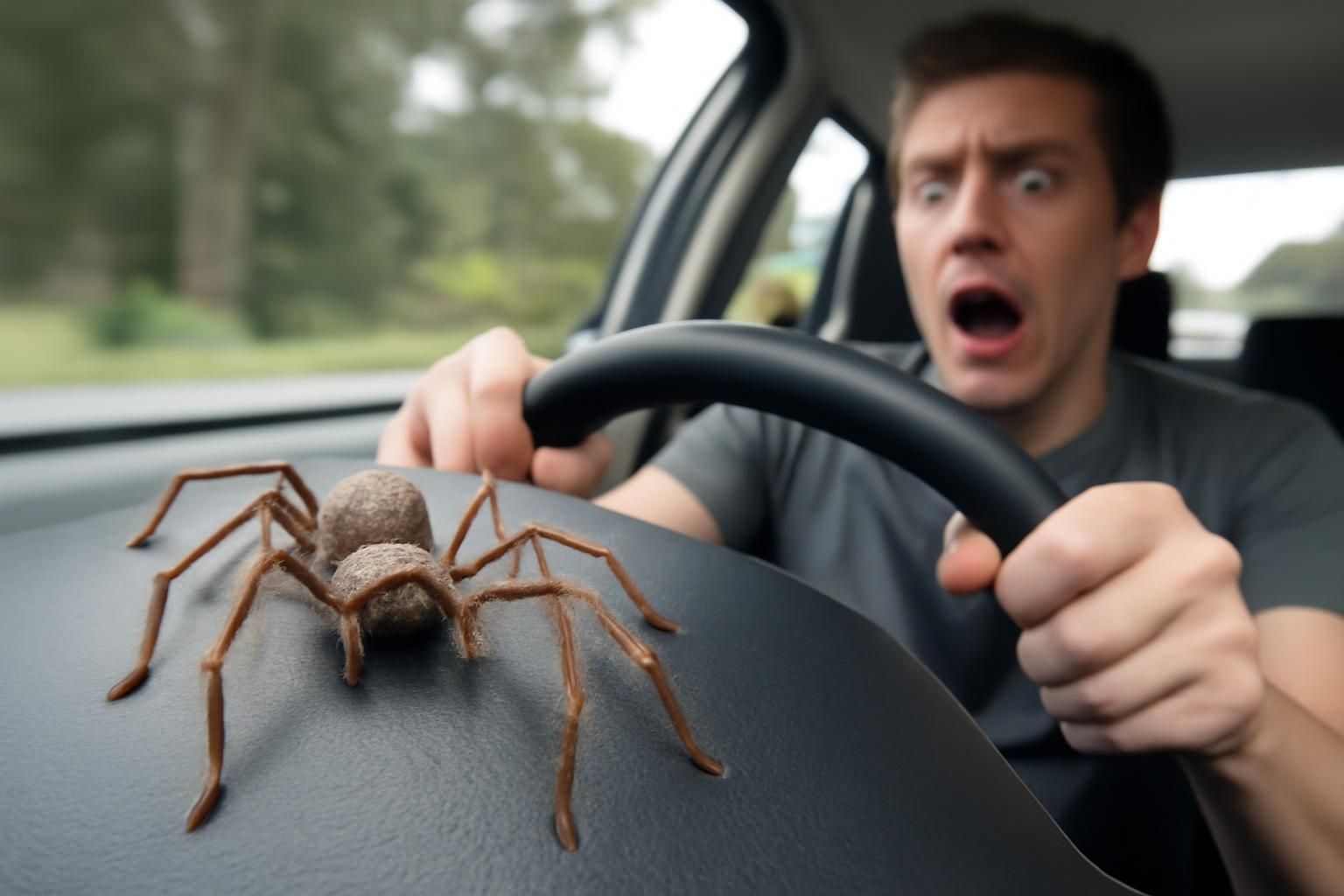
The Huntsman Spider: Nature’s Unexpected Challenge for Australian Drivers
Huntsman spiders are a common sight across many parts of Australia, often found hiding in homes, gardens, and vehicles. Their size and speed can trigger fright responses, which become critical when they unexpectedly invade a moving car. Understanding the biology and behavior of huntsman spiders can help explain why they might appear inside vehicles and how drivers should best respond.
These spiders belong to the family Sparassidae and thrive in warm climates. They are documented for their impressive leg spans, sometimes reaching nearly 15 centimeters. Despite their intimidating appearance, huntsman spiders are generally harmless to humans and rarely aggressive. They hunt by ambush or speed, feeding primarily on insects and occasionally small vertebrates. Their preference for sheltered, dark places means cars with open windows or those frequently parked outdoors can be attractive refuges.
Why Huntsman Spiders Enter Vehicles
There are several reasons huntsman spiders might enter cars. One major factor relates to urban expansion into natural territories, forcing wildlife to seek new shelters. Vehicles parked in spider-friendly environments, such as near shrubs or wooded areas, become convenient hideouts. Additionally, Australian roads often run adjacent to forests and bushlands, increasing the likelihood of insects and spiders venturing into passing cars through open windows or vents.
Drivers unwittingly invite these creatures inside when they travel with windows down or leave doors open during stops. Once inside, the confined space may cause the spider to behave unpredictably, potentially intimidating the occupant. Research highlighted by zoologists and wildlife experts suggests that such incidents are natural consequences of Australia’s rich biodiversity intersecting with human mobility.
Dealing with a Spider Encounter While Driving
Experts advise that drivers remain composed if they encounter spiders or other small animals inside their cars. Attempts to swat or jump away from the spider often induce loss of vehicle control. Instead, the recommended steps include:
- Keeping both hands firmly on the wheel.
- Reducing speed gradually and safely.
- Finding a safe spot to pull over off the road.
- Removing the spider after stopping, either personally (if safe) or by calling roadside assistance.
- Ensuring vehicle windows and doors are closed to prevent re-entry.
Following this guidance reduces the risk of accidents and helps protect both the driver and other road users. These principles align with general defensive driving protocols, highlighting how wildlife encounters form part of broader traffic safety considerations.
Reckless Driving and Its Consequences in Australia’s Traffic System
Reckless driving remains a significant concern for Australian traffic law enforcement. It contributes to a sizable proportion of road accidents, injuries, and fatalities annually. In 2026, road safety campaigns continue to stress vigilance and responsible behavior behind the wheel, especially as distractions multiply from technology, environmental factors, and unexpected hazards like spiders.
Legally, reckless driving includes a variety of behaviors such as:
- Unsafe lane changes or overtaking maneuvers.
- Excessive speeding beyond posted limits.
- Ignoring traffic signals or signs.
- Driving under impairment or distraction.
In Sam Uphill’s case, the act of swerving into oncoming traffic to avoid the spider constituted a grave breach of traffic laws. Such actions create high-risk scenarios that endanger other motorists. The justice system is firm in its approach, recognizing that while unexpected events can cause momentary panic, drivers must maintain control to prevent accidents.
Traffic Violations and Penalties: What Drivers Face
The typical penalties for reckless driving in Australia can include:
| Offense | Possible Penalty | License Impact |
|---|---|---|
| Reckless Driving | Fines up to several thousand dollars, imprisonment in severe cases | Suspension or cancellation of driver’s license |
| Dangerous Driving Causing Injury | Hefty fines, jail time | Mandatory license disqualification |
| Driving Offenses Involving Wildlife Encounter Distraction | Varies based on resultant damage or injury | Possible loss of license and increased insurance premiums |
These regulations reinforce that external factors such as animal distractions do not absolve drivers from responsibility. Authorities advocate for conservative, precautionary responses when wildlife appears unexpectedly inside the vehicle.
Wildlife and Urban Expansion: A Growing Challenge for Road Safety
As Australia’s population centers expand, human encroachment on natural habitats intensifies. This trend results in more frequent unexpected encounters between drivers and wildlife, including spiders, kangaroos, possums, and birds. The intersection of roads with ecosystems encourages these interactions, creating complex safety challenges.
Scientific reports emphasize that cars offer dark, protected environments attractive to critters seeking shelter. As a result, drivers can inadvertently share their vehicles with various creatures. This phenomenon is not unique to Australia but particularly notable due to the country’s diverse fauna.
Educational initiatives have emerged, focusing on the importance of driver awareness and preparedness to handle such situations calmly. The BBC and other international media have reported on how global urbanization increasingly influences wildlife behavior, leading to more adaptive and opportunistic animals entering human spaces.
One notable viral video demonstrates an Australian driver maintaining remarkable composure despite a large huntsman spider crawling inside the vehicle during a high-speed drive. Such examples show the ideal response to maintain safety and keep control.
Mitigating Risks: Safety Strategies for Drivers Facing Animal Distractions
Implementing practical safety strategies helps drivers navigate the unpredictable nature of wildlife intrusions without compromising road safety. These include pre-emptive measures such as:
- Keeping windows closed in areas with high wildlife presence.
- Conducting vehicle checks before driving, especially if parked outdoors.
- Installing insect screens or mesh for ventilation openings.
- Using distractions-free driving techniques, focusing continuously on the road.
When an animal or spider does appear, staying calm and pulling over safely remain paramount. Education about responding effectively reduces panic and reckless reactions, as evidenced by the case involving the Australian driver Uphill.
Case Studies of Animal-Related Driving Incidents
Alongside spider-related events, reports from Australian roads reveal numerous collisions caused by kangaroos darting across highways or startled birds striking windshield areas. Each instance demands a swift, measured response from drivers. Authorities advise that understanding animal behavior and the environment plays a key role in preventing accidents.
These broader encounters with native fauna reinforce the necessity for comprehensive road safety regulations adapted to Australia’s unique context. They also highlight how natural elements can influence human transport systems, demonstrating an ongoing need for pragmatic safety approaches.
Legal and Ethical Dimensions of Blaming Wildlife for Traffic Violations
The incident involving Sam Charles Uphill sparks important legal and ethical questions about accountability when non-human factors contribute to traffic violations. While his case illustrates how a huntsman spider startled him, the justice system maintains that drivers must anticipate distractions and respond responsibly.
Judges typically consider mitigating circumstances but rarely excuse reckless behavior based solely on wildlife interference. Uphill’s impending court sentencing reflects this balance, emphasizing personal responsibility alongside acknowledgment of unforeseen challenges.
Ethically, blaming a spider may invite skepticism but also draws attention to human-wildlife coexistence realities. Such incidents encourage broader dialogue about creating safer vehicular environments and promoting awareness of diverse distraction sources. Traffic laws must evolve to address these nuanced situations while enforcing clear standards of safe driving behavior.
Advice for Drivers and Policymakers
- Drivers should be educated on dealing with wildlife distractions calmly and safely.
- Policymakers could consider integrating wildlife awareness into traffic safety campaigns.
- Robust enforcement of reckless driving laws must continue to deter unsafe behavior regardless of external distractions.
- Future vehicle designs might incorporate features to minimize wildlife intrusion risks.
This holistic approach aims to enhance road safety without undermining the reality of living and driving within Australia’s diverse natural environment.
Resources and Further Reading on Australian Road Safety and Wildlife Encounters
For individuals interested in understanding more about the intersection of wildlife and driving safety, several resources offer valuable information:
- Detailed analysis of wildlife-related road safety in Australia
- Comprehensive guide to huntsman spiders by the Australian Museum
- Government road safety websites providing guidelines on handling distractions
- Published studies on the impact of urban expansion on wildlife encounters
Exploring these materials can empower drivers to make informed decisions and contribute to safer travel experiences across Australia’s unique landscapes.
What should I do if a spider suddenly appears inside my car while driving?
Stay calm, keep both hands on the wheel, slow down gradually, and safely pull over when possible to address the situation. Avoid swatting or making sudden movements while driving.
Are huntsman spiders dangerous to humans?
Huntsman spiders are generally not harmful to humans. They are non-aggressive and their venom is not considered medically significant, although they can cause discomfort with bites in rare cases.
Can a wildlife distraction excuse reckless driving under Australian law?
No, Australian traffic laws hold drivers responsible for maintaining control of their vehicle despite distractions, including encounters with wildlife. Reckless driving charges apply regardless of the source of distraction.
How can drivers minimize wildlife encounters in their vehicles?
Drivers can reduce risks by keeping windows closed in wildlife-prone areas, inspecting cars before driving if parked outdoors, and installing protective screens over ventilation openings.
What penalties can reckless drivers face in Australia?
Reckless driving can result in fines, license suspension, or even imprisonment depending on severity. Additional consequences include increased insurance premiums and mandatory safety courses.