
Glencore’s strategic move to secure a secondary listing on the Australian Securities Exchange (ASX) marks a pivotal moment in mining industry dynamics, particularly in the realm of copper production and mergers and acquisitions (M&A). Leveraging Australia’s mining hub status and its highly developed capital markets, Glencore is positioning itself to tap into one of the world’s largest pools of institutional investment. This move aims not only to elevate its copper production capabilities but also to accelerate its growth through targeted M&A ventures in the resource extraction sector. The Australian listing is a significant development that reflects broader shifts in commodity markets and investment flows, reshaping the global mining industry landscape.
In a world where the demand for copper is intensifying due to its central role in electrification, renewable energy technologies, and infrastructure, Glencore’s enhanced presence in Australia offers multiple strategic advantages. By aligning with one of the world’s leading mining hubs, Glencore is creating a seamless bridge between capital and resource extraction potential.
This article explores in-depth the several facets of Glencore’s secondary listing on the ASX, scrutinizing its implications for copper production, investment attraction, M&A activity, and the broader commodity markets. We will dive deep into how this maneuver positions Glencore to harness Australia’s mining-friendly capital environment to establish a robust market expansion strategy.
How Glencore’s Australia Listing Unlocks New Investment Opportunities in the Mining Industry
Glencore’s decision to pursue a secondary listing on the Australian Securities Exchange represents a calculated effort to broaden its capital base and facilitate access to Australia’s substantial pool of investment funds, including some of the world’s largest pension funds. Australia’s A$4.4 trillion superannuation system provides a unique opportunity for mining companies to secure stable, long-term financing, a crucial factor amid volatile commodity markets.
The Australian market’s mining-friendly regulatory framework and investor appetite for resource extraction companies create an enabling environment for Glencore. Australian investors have historically shown a strong preference for direct exposure to mining assets, particularly in copper, which is deemed essential for future economic and environmental transitions.
Glencore’s listing enhances transparency and local investor engagement. For institutional investors like AustralianSuper and private fund managers such as Tribeca, Glencore’s ASX presence offers a conveniently regulated avenue to diversify their portfolios while gaining exposure to one of the planet’s premier copper producers.
At a time when industry consolidation has reduced the number of available local mining investments, Glencore’s move fills a crucial gap. With tighter access to Australian investment capital, Glencore can more aggressively fund expansion projects and pursue M&A deals without relying solely on London or New York capital markets.
Moreover, the secondary listing simplifies compliance with local shareholder communication requirements and regulatory oversight, improving investor confidence and liquidity. It also gives Glencore greater flexibility in structuring deals with Australian-listed companies, potentially speeding up acquisition timelines and strategic partnerships.
In summary, this strategic listing represents an innovative mechanism to leverage Australia’s mining investment ecosystem, ultimately leading to enhanced funding opportunities and stronger investor relations that support Glencore’s long-term ambitions.
Impact of the Australian Mining Hub on Glencore’s Copper Production Expansion
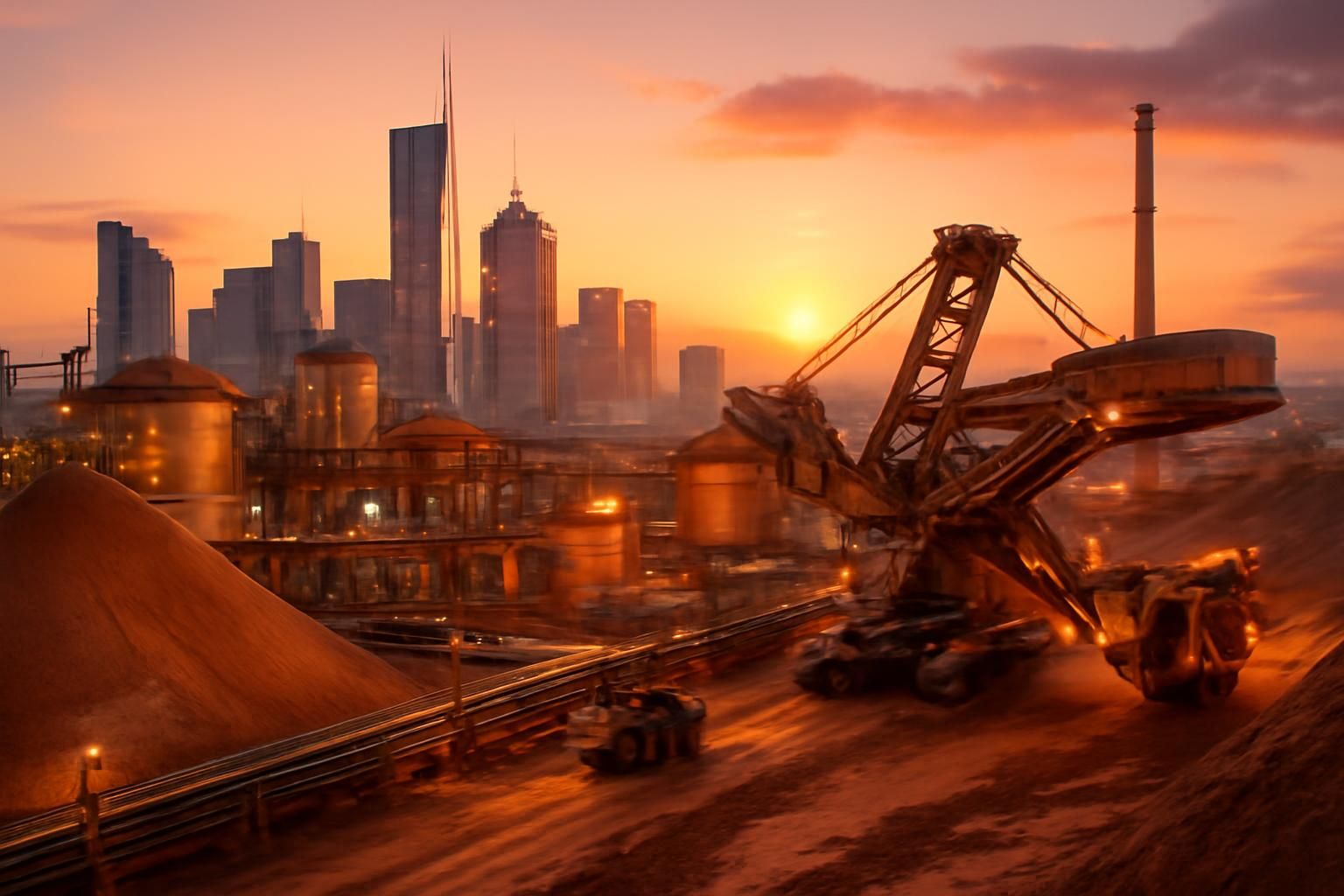
The Australian mining hub is renowned globally for its rich mineral deposits, sophisticated mining technologies, and well-established infrastructure. This advantageous ecosystem significantly benefits Glencore’s copper production ambitions, particularly at its CSA Mine in New South Wales, highlighted as one of the country’s highest-grade copper assets.
High-grade copper deposits like CSA generate superior economic returns by lowering unit production costs and maximizing ore-processing efficiency. These factors are critical when global copper demand is projected to surge in the coming years, driven by the accelerating rollout of electric vehicles, renewable energy grid components, and urban electrification projects.
Glencore’s Australian listing strengthens its ties to the local mining hub, enabling targeted capital injections to scale production volumes and adopt advanced extraction technologies. Integrating with Australia’s mining cluster promotes knowledge-sharing and innovation, further enhancing operational efficiency.
The proximity to specialized Australian mining service companies also helps reduce logistics costs and operational risks, ensuring more agile production ramp-ups. Australian regulatory frameworks, known for balancing environmental and social governance with practical mining incentives, amplify Glencore’s ability to sustainably increase output.
Importantly, Australia’s mining-friendly environment and government support for resource projects foster a conducive landscape for long-term copper supply growth, underpinning global commodity market stability. Glencore’s expanded copper operations within this ecosystem will likely set new benchmarks for productivity and resilience amid fluctuating market conditions.
How Glencore’s Australia Listing Catalyzes Strategic Mergers and Acquisitions
In the context of mining industry consolidation, mergers and acquisitions remain a crucial lever for growth and market positioning. Glencore’s secondary listing on the ASX creates a more seamless pathway to execute M&A transactions with Australian companies, underscoring its role as an active consolidator in the copper and broader resource sectors.
Access to Australia’s vast network of listed mining firms and emerging juniors positions Glencore favorably to identify and acquire stakes in promising projects and advance its copper production goals. This closer geographic and regulatory alignment accelerates due diligence and deal structuring processes, reducing transaction costs and timelines.
Additionally, the secondary listing serves to boost investor confidence in Glencore’s growth strategy, as shareholders in both the UK and Australia gain clearer visibility and voting rights for M&A initiatives. Jefferies analysts have noted that such a dual-listing structure enhances the company’s financial flexibility and attractiveness as a partner for joint ventures and acquisitions.
Glencore’s enhanced profile within the Australian market can also facilitate partnerships with institutional investors and government bodies that often play key roles in mining project approvals and financing. Collaborating with these stakeholders improves deal success probability and project execution timelines.
Overall, the Australian listing is a strategic tool that strengthens Glencore’s M&A capabilities and reinforces its market expansion roadmap in the copper sector, fostering a more competitive and integrated mining industry landscape.
The Role of Commodity Markets in Supporting Glencore’s Australia Listing Strategy
Commodity markets underpin the entire mining value chain by providing vital price signals, liquidity, and risk management tools. Glencore’s presence in Australia enhances its engagement with commodity exchanges and financial markets that are critical to its copper production and trading activities.
The ASX itself hosts active derivative markets and futures contracts related to base metals, including copper. By listing locally, Glencore can better hedge its production exposure and engage Australian investors more directly in commodity-linked instruments, aligning investment products with physical assets.
Broader commodity market trends also influence Glencore’s strategy. The sustained global emphasis on decarbonization raises copper demand forecasts, intensifying competition among producers to secure supply. The smaller pool of large copper assets worldwide makes expansions and acquisitions crucial, and commodity markets provide the necessary financial instruments to support these moves.
Glencore benefits from the transparency and liquidity of commodity markets in Australia and globally, enabling more accurate price discovery and efficient allocation of capital. These markets also offer avenues for risk mitigation against price volatility, a key factor for mining companies investing heavily in exploration and production.
In navigating these complex market conditions, Glencore’s Australian listing supports a diversified and resilient business model, enhancing its capacity to capitalize on commodity cycles and investor sentiment shifts.
Investment Trends and the Appeal of Glencore’s Australia Listing to Institutional Investors
Institutional investors in Australia represent one of the fastest-growing pools of capital globally, with assets under management reaching unprecedented levels. This trend fuels demand for diversified investments in high-quality resource extraction companies like Glencore, which offer direct exposure to copper, an essential commodity for future technological growth.
By securing a secondary listing on the ASX, Glencore taps directly into these burgeoning investment channels, offering pension funds, superannuation schemes, and asset managers convenient access to copper production assets within a familiar regulatory environment. This local access satisfies growing investor requests for transparency, ESG reporting, and corporate governance standards consistent with Australian rules.
Furthermore, Glencore’s Australian listing enables segmented investment products tailored to domestic markets, enhancing liquidity and tradability. This, in turn, attracts new investors and builds a more stable shareholder base compared to offshore listings.
The appeal extends to smaller retail investors encouraged by increased awareness and accessibility, which collectively bolster Glencore’s market capitalization and financial firepower to pursue its copper growth and M&A ambitions.
| Investor Type | Capital Pool Size (AUD Trillions) | Investment Focus | Relevance to Glencore |
|---|---|---|---|
| Superannuation Funds | 2.7 | Long-term, stable resource investments | Primary target for capital raising via ASX listing |
| Asset Managers | 1.1 | Diversified commodity and equities exposure | Key partners for strategic M&A funding |
| Retail Investors | 0.6 | Growing interest in direct mining stocks | Enhances liquidity and market breadth |
| Pension Funds | 0.85 | Stable, long-term asset allocation | Provides consistent investment support |
Australia as a Gateway for Glencore’s Market Expansion in the Asia-Pacific Region
Australia’s proximity to Asia-Pacific markets offers Glencore a strategic advantage for expanding its copper production and trade networks. The region represents the fastest-growing consumer market for copper, driven by industrialization, urbanization, and green infrastructure projects in countries like China, India, and Southeast Asia.
By establishing a strengthened presence in Australia through its ASX listing, Glencore can leverage regional trade agreements and logistics hubs to optimize export flows and reduce costs. Furthermore, Australia’s reputation for high-quality mined products aligns with growing demand for responsibly sourced commodities in Asia, supporting premium pricing and stronger trade relationships.
Efficient supply chain management enabled by Australian infrastructure hubs fosters faster responsiveness to Asia-Pacific demand surges, while collaboration with local partners generates knowledge exchange and innovation opportunities.
The Australian base also offers regulatory predictability and political stability, crucial given geopolitical uncertainties in other parts of the world, ensuring continuity of Glencore’s growth strategy and operational delivery in this crucial market expansion corridor.
Environmental and Social Governance (ESG) Implications of Glencore’s Australian Operations and Listing
As ESG considerations become integral to mining investment strategies, Glencore’s Australian listing and operational expansion come with amplified responsibilities and opportunities.
Australia’s stringent environmental laws and evolving social licenses to operate push Glencore to adopt best-in-class sustainable mining practices, from reducing carbon footprints to engaging with indigenous communities and ensuring workforce safety.
These commitments not only address investor concerns but also safeguard long-term operational viability. Transparency in ESG reporting, mandated by Australian standards, further strengthens Glencore’s reputation and investor relations, differentiating it positively in competitive commodity markets.
Moreover, Glencore’s adherence to ESG principles supports its access to green finance instruments and sustainability-linked loans, which are increasingly used to fund copper production projects aligned with net-zero targets and circular economy models.
The combined impact of these ESG initiatives enhances the credibility and resilience of Glencore’s Australian business, setting a benchmark for responsible resource extraction globally.
Technological Innovations Driving Efficiency in Glencore’s Copper Production Across Australia
Innovation is at the core of sustainable mining, and Glencore’s integration into Australia’s mining hub enables access to cutting-edge technologies aimed at improving copper production efficiency and reducing environmental impact.
Technologies such as automated drilling systems, real-time data analytics, and remote-operated machinery optimize ore extraction while minimizing waste and operational risks. These innovations reduce costs and increase safety and productivity—a critical advantage in a competitive commodity market.
Partnerships with Australian tech firms and mining research institutions foster an ecosystem of continuous improvement, accelerating adoption of renewable energy sources and water recycling technologies within Glencore’s Australian operations.
An example is the implementation of AI-powered predictive maintenance systems at the CSA Mine, which reduce downtime and equipment failures, directly translating into higher throughput and cost savings.
Such technological adoption exemplifies Glencore’s commitment to leveraging the Australian mining hub’s expertise to maintain its leadership in copper production and sustainability.
What advantages does Glencore gain from a secondary listing in Australia?
The secondary listing enhances access to Australia’s large pool of institutional investors, streamlines M&A operations with local firms, and improves market liquidity, supporting Glencore’s copper growth ambitions and strategic expansion.
How does Australia’s mining hub support Glencore’s copper production?
Australia’s mining hub offers high-grade copper deposits, advanced technology, and infrastructure that reduce production costs and boost efficiency, enabling Glencore to scale operations sustainably.
In what ways does Glencore’s listing influence mergers and acquisitions activity?
The listing facilitates quicker, cost-effective M&A deals with Australian companies, increases investor confidence, and allows collaboration with institutional and governmental stakeholders crucial for project approvals.
Why are commodity markets important for Glencore’s strategy?
Commodity markets provide price signals, liquidity, and risk management tools essential for optimizing copper production investments and trading strategies, especially in volatile environments.
How does Glencore address ESG factors through its Australian operations?
By adhering to Australia’s strict environmental and social governance standards, Glencore enhances sustainability, investor trust, and eligibility for green financing, supporting responsible resource extraction.