Meghan Markle, the Duchess of Sussex, continues to be at the center of intense public debate as a recent controversial comment reignited questions about her ability to fit into both the United Kingdom’s royal establishment and Hollywood’s elite circles. Since stepping back from her senior royal duties in 2020, Meghan has oscillated between public life and private ventures, facing mixed reactions from the media and fans worldwide. Her latest appearance as a guest judge on MasterChef Australia has generated headlines, spotlighting her struggle to balance her royal ties with her ambitions in entertainment. This ongoing controversy raises vital questions about public opinion and the media’s role in shaping her celebrity narrative and suitability in two vastly different worlds.
In brief:
- Meghan Markle’s recent remarks have intensified the debate on whether she can successfully navigate roles both as a former senior royal and a Hollywood celebrity.
- Her appearance on MasterChef Australia, where she challenged contestants to create a “dish fit for a Duchess,” sparked criticism for perceived entitlement.
- The media’s portrayal of Meghan continues to reflect polarized public opinion, highlighting the challenges she faces in reconciling her past royal role with current entertainment pursuits.
- Her fashion choices and public demeanor during international appearances play a significant role in the ongoing discourse surrounding her suitability for the UK and Hollywood.
- Experts and insiders weigh in on why Meghan remains such a polarizing figure, reflecting broader societal tensions about tradition, celebrity culture, and identity.
Analyzing Meghan Markle’s Controversial Comment and Its Impact on Public Perception
Meghan Markle’s recent comment during her guest appearance on MasterChef Australia struck a chord that rippled through public opinion and media narratives. When she challenged contestants to prepare a “dish fit for a Duchess,” the phrase, intended perhaps as a lighthearted integration of her royal past, has instead become emblematic of a deeper controversy surrounding her perceived entitlement and authenticity. This choice of words reopened wounds among those who question her sincerity and role within both the British monarchy and the entertainment industry.
The term “Duchess” carries significant weight, especially in British society. For many critics, Meghan’s insistence on retaining royal monikers post her formal detachment from royal duties in 2020 suggests an unwillingness to fully embrace her new public identity. Experts point out that such statements highlight a tension between her desire to maintain royal prestige and her pursuit of a renewed celebrity persona outside the monarchy. This dual existence has created a polarized public landscape.
Public reaction was swift, with social media users and commentators dissecting her comment as a symbol of what some perceive to be a lack of humility. Indeed, it sparked a fresh wave of debates on Meghan Markle’s suitability for roles traditionally governed by strict protocols and decorum. Detractors framed her remark as a tacit demand for special treatment, while supporters argued it was simply a playful nod to her background. This divergence in perspectives underscores the complex challenge Meghan faces in balancing her identity and public perception.
For example, during the MasterChef filming, reports emerged about disagreements behind the scenes concerning how staff should address her—whether or not to refer to her as “royalty” or “Duchess.” These reports further fuel the narrative of Meghan navigating conflicting expectations. Whether these accounts are fully accurate, they reflect the broader zeitgeist of a celebrity figure caught between two worlds, each with its own rules and expectations.
Overall, Meghan’s controversial comment acts as a lens to understand the ongoing friction in her public identity—a friction that directly influences her acceptance in the UK and Hollywood. The social and symbolic currency of her former royal status continues to complicate how the public and the media evaluate her authenticity and intentions.
The Intersection of Royal Tradition and Celebrity Culture in Meghan’s Public Life
Meghan Markle’s life represents a rare convergence of royal tradition and Hollywood celebrity culture, two realms that operate on fundamentally different principles and expectations. The debate over her suitability for either environment is fueled by these contrasting cultural codes, which clash in Meghan’s public persona. Understanding these distinct worlds helps clarify why her latest controversy has sparked such widespread discussion.
The British monarchy is an institution steeped in centuries of tradition, formal etiquette, and public scrutiny. Royals are expected to embody decorum, humility, and service, often setting aside personal ambition for collective duty. This carefully curated image is a protective mechanism for the institution’s longevity but can be restrictive for individual members seeking self-expression and autonomy. Meghan’s candid revelations about feeling “inauthentic” within royal life earlier highlight this tension explicitly.
On the other hand, Hollywood thrives on individuality, self-promotion, and reinvention. Celebrities often craft their brands by showcasing personal narratives, creativity, and sometimes controversial statements to sustain visibility and marketability. Meghan’s post-royal career, with new media projects, lifestyle brand launches like As Ever, and reality TV appearances, aligns with these industry norms. However, critics argue that her attempts to straddle both identities appear inconsistent, generating skepticism about her true intentions.
This clash explains why some observers perceive Meghan’s public demeanor as contradictory. For instance, her decision to forgo traditional royal attire and protocol during public appearances, coupled with her elaborate personal branding efforts, can be seen as incompatible with the reserved image expected of British royals. Additionally, her willingness to openly discuss private royal family matters through interviews and podcasts contrasts with royal culture’s preference for discretion.
Experts note that navigating between royal tradition and celebrity culture requires careful negotiation. Figures like Meghan who occupy these overlapping domains must constantly adjust their image to appeal to multiple audiences. Failure to harmonize these demands risks alienation from both spheres. Hence, Meghan’s suitability debate is, at its core, a question of identity management in the public eye.
Public and Media Reactions to Meghan’s Role as a Judge on MasterChef Australia
Meghan Markle’s participation as a guest judge on the highly rated MasterChef Australia brought renewed media attention, both positive and negative. This appearance was her first significant TV role since stepping back from official royal duties, marking a foray into reality television that many interpret as an attempt to rebuild her celebrity brand. Observers noted that the show’s producers prominently featured her presence, leveraging the intrigue surrounding her persona to boost ratings.
The luxury inherent in her challenge—to craft a meal “fit for a Duchess”—touched a nerve with royal supporters and critics alike. Some viewed it as an arrogant assertion of status, implying that her past royal title warranted special recognition even outside formal royal venues. Skeptics argued this reflects entitlement, a pattern they claim is consistent with her public behavior. Meanwhile, fans praised Meghan’s genuine enthusiasm for food and cultural appreciation of Australia, appreciating her effort to engage meaningfully with the show’s regional context.
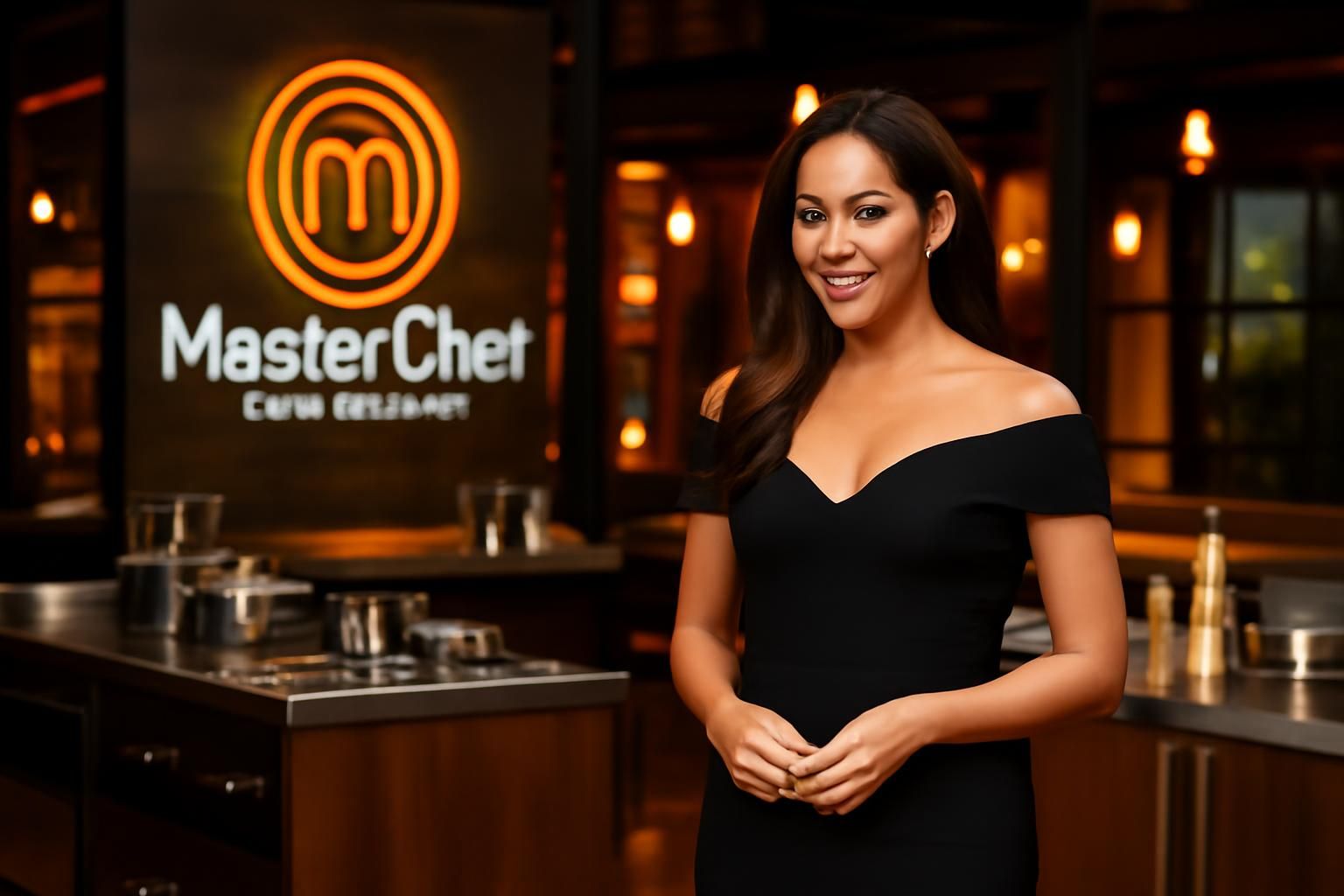
Her dress, a black gown with a slit and loose curls, sparked considerable fashion commentary. Compared to fellow judge Sofia Levin’s elegant floral white ensemble—seen as echoing Princess Catherine’s refined style—Meghan’s outfit was perceived as more relaxed and suggestive of her Hollywood identity rather than traditional royal propriety. This visual contrast magnified the underlying tension in the ongoing debate about where Meghan truly belongs.
Moreover, rumors surfaced that Meghan reportedly objected to being called “royalty” on set, with some reports suggesting she found the association both awkward and frustrating. This ambiguity around her acceptance of titles points to an ongoing struggle to reconcile her public persona with her past, fueling media speculation and contributing to the broader controversy. To many, this underscores a persistent question: does Meghan respect the limits of what her royal status should mean now that she lives primarily outside the UK?
The media’s coverage of this episode encapsulates broader themes—the difficulty of escaping established identities and the complex interplay between personal branding and public expectation. The widespread attention given to Meghan’s MasterChef role demonstrates how challenging it is for a figure emerging from royalty to redefine her narrative in entertainment. In essence, her suitability for Hollywood hinges not only on talent but also on audience perception shaped by her royal history.
Fashion and Public Image: What Meghan Markle’s Style Choices Reveal About Her Identity
Meghan Markle has always been a subject of scrutiny when it comes to fashion, with her choices often interpreted as symbolic statements about her identity and affiliations. Her wardrobe selections reflect much more than personal taste—they act as communicative tools within her fraught negotiation between royal expectations and Hollywood flair.
On MasterChef Australia, Meghan’s black dress with a thigh slit and open collar deviated from the conservative aesthetic typical of British royal engagements. This look aligns more closely with contemporary celebrity culture, which favors expressive, sometimes daring fashion statements. It contrasts sharply with the more traditional and muted garb of royals like Princess Catherine, who often opts for classic, understated ensembles.
Fashion analysts argue that Meghan’s choices symbolize her rejection of strict royal protocols and her assertion of independence as a media personality. Yet, this also intensifies the ongoing debate about her “suitability” for the UK, where many citizens still expect former royals to adhere to certain decorum, particularly in public appearances. Her departure from these norms leaves royalists feeling alienated while giving her more leeway in Hollywood.
Interestingly, these style choices also influence public opinion beyond the UK. In America and Australia, where celebrity culture is more tolerant of boundary-pushing attire, Meghan’s fashion receives less criticism and is often celebrated as empowering. This geographical disparity in reception highlights how her public image is constructed through a complex lens of cultural values.
Her appearance further reveals the psychological navigation of her dual identities—a woman who at once distances herself from and clings to aspects of royalty while simultaneously embracing her celebrity status. This duality is an essential element in understanding why discussions about her are so heated and polarized.
How Media Framing Shapes the Meghan Markle Controversy
The media plays a crucial role in shaping public narratives about Meghan Markle, continuously influencing perceptions tied to her suitability for both royal and Hollywood life. The coverage often oscillates between admiration and sharp criticism, showcasing the power of framing and agenda-setting in media discourse.
Stories highlighting Meghan’s “entitled remarks” or “controversial comments” tend to dominate headlines, reinforcing a certain image that may not fully encapsulate the nuance of her actions or intentions. By focusing on moments like the “dish fit for a Duchess” challenge, some outlets perpetuate a storyline of royal entitlement, potentially biasing public opinion against her.
Conversely, other media sources emphasize her charitable work, advocacy, and efforts towards normalizing mental health conversations, presenting a more positive portrait. This dichotomy reflects the broader cultural fault lines around race, gender, and class that Meghan represents. Notably, experts and insiders have remarked on how discussions about Meghan often go beyond her actions, delving into who she is as a symbol of larger societal issues.
Media framing also affects her career opportunities. While her royal association opens doors—such as her TV judging role—it also subjects her to intense scrutiny and higher expectations. Missteps or perceived contradictions are amplified, complicating her ability to craft a consistent public identity.
Understanding media framing around Meghan Markle thus provides essential insight into the dynamics of fame, power, and authenticity in the 21st century. It demonstrates how public figures navigating multiple spheres must manage not only their actions but also the stories told about them.
Challenges Meghan Faces in Reconciling Her UK Royal Past with Hollywood Ambitions
Meghan Markle’s journey from royal duchess to Hollywood figure is fraught with challenges that stem from the cultural and institutional disparities between these worlds. As she seeks to build a sustainable post-royal career, the tension between adhering to royal expectations and embracing entertainment industry norms comes to the forefront.
One significant challenge is managing public expectations. In the UK, royals are viewed as public servants first, bound by historical precedents. The expectation is for modesty, reserve, and loyalty to the institution. Meghan’s open discussions about her personal struggles and critiques of royal life disrupt this tradition, pivoting her image toward a more modern, individualistic figure that resonates with Hollywood but unsettles traditional royalists.
Conversely, Hollywood demands a degree of adaptability, authenticity, and sometimes controversy to maintain relevance. Meghan’s role on MasterChef Australia and the launch of her lifestyle brand As Ever illustrate efforts to carve out a distinct niche. However, critics argue she capitalizes on her royal connections too heavily, questioning the sincerity of her new ventures.
Another obstacle is media scrutiny from both sides. British tabloids often aggressively cover the royal family, scrutinizing Meghan’s every move with a magnifying glass tinted by royalist sentiment. Hollywood media can idolize or vilify celebrities, and Meghan’s hybrid status makes her uniquely vulnerable to both kinds of pressure. This leaves her navigating a public relations minefield, where any comment or action can provoke polarized reactions.
In summary, Meghan faces an uphill battle reconciling the rigid structures of British royalty with the fluid, high-profile demands of the entertainment industry. This challenge is further complicated by her desire to maintain a positive public image in multiple cultural contexts simultaneously.
The Role of Public Opinion and Celebrity Status in Meghan’s Ongoing Debate
Public opinion profoundly influences Meghan Markle’s capacity to define her public identity and determine her suitability for multiple arenas. As a once much-celebrated figure turned polarizing personality, Meghan lives in a world where celebrity and public approval are intimately tied to professional and personal viability.
The fluctuating public sentiment often mirrors larger societal debates over gender roles, race, and power dynamics. Meghan’s experiences as a biracial woman in the British royal family and the global entertainment industry intersect with numerous cultural narratives, contributing to the heightened scrutiny she faces.
Celebrity status amplifies these dynamics; the fascination with Meghan extends beyond her personal actions to the symbolism she embodies. Some see her as a progressive icon challenging archaic traditions, while others view her as opportunistic or unwilling to respect established norms. This polarization is reflected in social media reactions, mainstream media coverage, and expert commentary.
Interestingly, Meghan’s continued relevance suggests that public curiosity and media interest remain substantial, despite the controversy. This attention affords her both challenges and opportunities—she can leverage her celebrity for philanthropic and commercial ventures, but also risks backlash and fatigue among audiences.
In effect, the debate around Meghan Markle’s suitability is inseparable from her status as a public figure shaped by public opinion and celebrity culture.
Comparative Table: Meghan Markle’s Public Image in the UK vs. Hollywood
| Aspect | Public Image in the UK | Public Image in Hollywood and International Media |
|---|---|---|
| Perceived Authenticity | Often questioned for perceived entitlement and lack of traditional royal humility. | Mixed views; admired for candor and activism but scrutinized for leveraging royal status. |
| Fashion and Style | Criticized for deviation from royal decorum; viewed as too Hollywood. | Celebrated for modern, bold, and empowering fashion choices. |
| Media Coverage | Heavily critical tabloid focus, highlighting controversies and royal disputes. | Balanced to favorable in many outlets, emphasizing humanitarian efforts and media projects. |
| Career Opportunities | Limited due to negative public perception linked to royal controversy. | Growing opportunities in entertainment and branding sectors, aided by celebrity status. |
| Public Support | Divided; significant royalist opposition alongside a strong loyal fanbase. | Generally more supportive, especially in progressive circles and entertainment audiences. |
Understanding the Future Trajectory of Meghan Markle in Both Worlds
The question of whether Meghan Markle can successfully navigate her place in both UK society and Hollywood remains open. Her ability to reconcile her controversial comments, public image, and the expectations tied to her past and present roles will dictate her trajectory over the coming years.
Maintaining a balance between respecting royal traditions and embracing the freedoms of celebrity life is no small feat. Meghan’s efforts to solidify her brand through lifestyle ventures, media appearances, and selective public engagements highlight a strategic approach to shaping her identity. Nonetheless, the inevitable public and media scrutiny ensures that her every move will be evaluated through the lens of her complex dual identity.
Moreover, the ongoing debates and controversies surrounding her identity reveal broader societal challenges around race, gender, and power within the intersections of monarchy and celebrity culture. Meghan’s journey epitomizes a modern struggle to redefine public roles for women in positions of influence, surrounded by instantaneous global attention.
As Meghan maneuvers through these competing demands, her future in both Hollywood and the UK will likely depend on her ability to adapt, innovate, and engage authentically with her audiences. The upcoming years promise to be a critical period for the Duchess of Sussex as she continues to shape her unique path.
Why did Meghan Markle’s comment on MasterChef Australia spark controversy?
Her comment asking contestants to ‘create a dish fit for a Duchess’ was seen by some as entitled and a sign she struggles to let go of her royal status, sparking debate about her authenticity.
How do Meghan’s fashion choices reflect her identity struggles?
Her fashion often symbolizes the tension between royal tradition and Hollywood glamour, as seen in her relaxed MasterChef attire contrasting with traditional royal decorum.
What role does media framing play in public opinion about Meghan?
Media coverage greatly influences perceptions, often emphasizing her controversies or achievements to shape a polarized public view impacting her suitability for different roles.
Can Meghan successfully reconcile her royal past with a Hollywood career?
This remains challenging as she must balance the expectations of royal humility with the demands of entertainment celebrity culture, facing scrutiny from both spheres.
Why is Meghan Markle a polarizing figure in public discourse?
Her identity at the intersection of race, gender, and power, combined with contrasting cultural expectations of royalty and celebrity, fuels ongoing polarized debates.