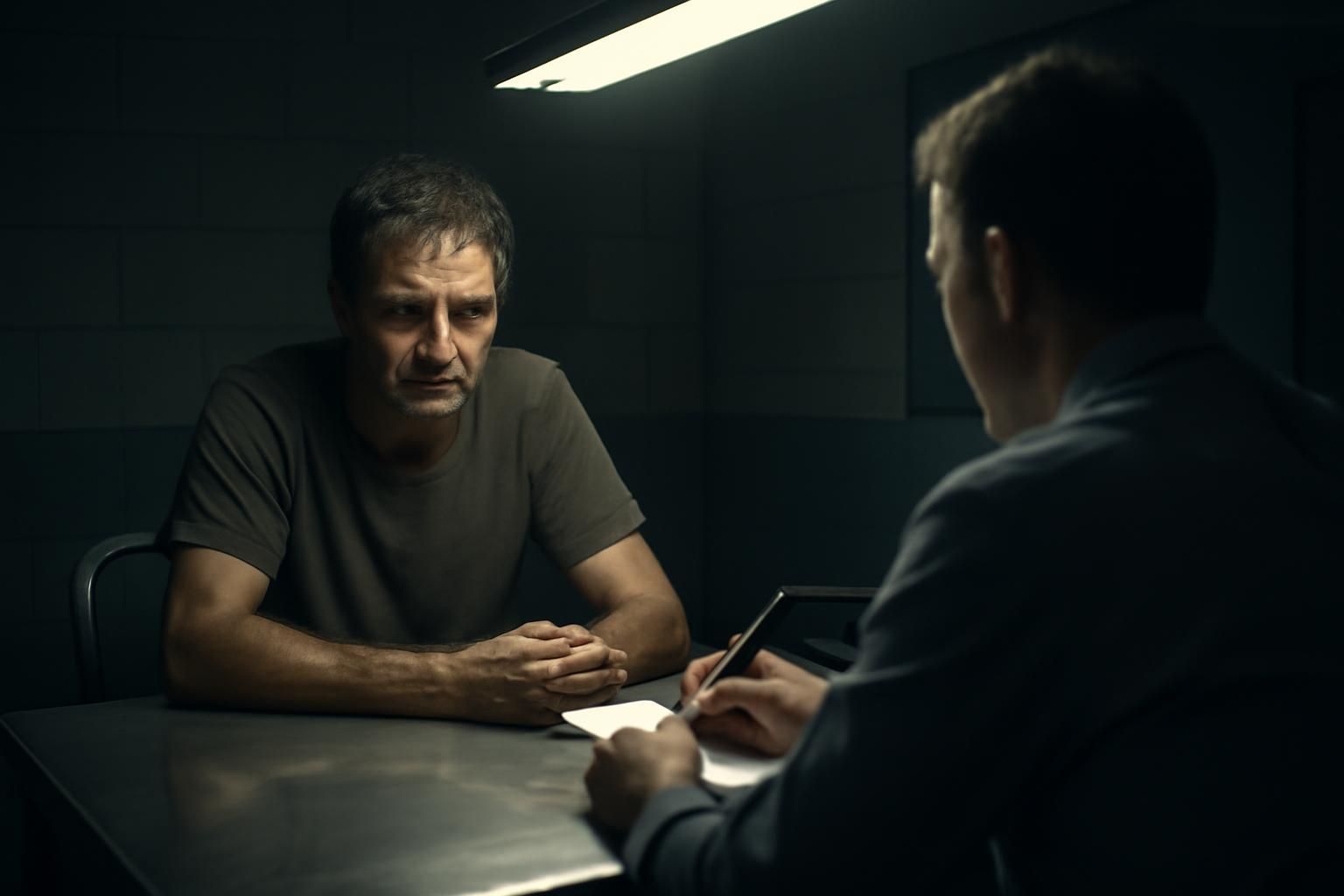
In a rare and exclusive development in the world of true crime, law enforcement authorities in Australia have unveiled the final police interview with convicted murderer Bradley Murdoch. The chilling footage captures moments from Murdoch’s last interactions with police before his death, where investigators desperately sought clues to the whereabouts of his victim’s remains. This release, timed ahead of the 25th anniversary of the disappearance of British backpacker Peter Falconio, sheds new light on a decades-old investigation that has continued to haunt the public and law enforcement alike. Murdoch’s steadfast refusal to disclose critical information amidst mounting evidential pressure reveals the complex psychological dynamics at play in interactions between killers and the police during final confessions or denials.
As true crime enthusiasts and professionals revisit this haunting episode, the released footage serves as a powerful reminder of the difficulties in wrapping up unsolved elements of criminal cases, even when the perpetrator is incarcerated and terminally ill. More than 20 years after Falconio’s murder on a remote highway near Barrow Creek, the quest for answers remains active and poignant. The following deep dive explores various dimensions of this exclusive police interview release, offering insights into the interrogation techniques, forensic challenges, legal battles, and the continuing emotional impact on the victim’s family and the broader public.
Unveiling the Last Police Interview: Insights into Murdoch’s Final Statements
The exclusive release of Bradley Murdoch’s last police interview grants a unique window into one of Australia’s most infamous crime investigations. Recorded shortly before Murdoch died of throat cancer, the interview exposes the killer’s consistent denial of involvement and his chilling indifference towards locating Peter Falconio’s remains.
During the footage, an officer appeals to Murdoch’s empathy, urging him to consider the pain a parent would endure if their son’s body remained hidden. Despite this, Murdoch dismisses the appeal, responding bluntly, “I don’t know anything about it,” and warns officers not to “beat around the bush,” affirming he would cut them short if the same line of questioning continued. His tone and body language communicate a hardened and unyielding attitude that underlines the difficulty of extracting information from convicted killers during last interviews.
This moment also reflects on the often emotional and psychological strategies detectives employ in attempting to draw out confessions or new leads. The interview reveals a tactical push-pull dynamic: police oscillate between direct confrontations and appeals to the suspect’s conscience.
The persistence of Murdoch, even as he faced death, testifies to the complexities involved in investigating such gruesome crimes and indicates a possible psychological barrier he maintained to avoid responsibility or cooperation. As the official investigation continues, police stress their commitment to uncovering the truth, promising that no lead or piece of information, however seemingly insignificant, will be ignored as they persist in solving the case in 2026.
The Context and Background: The Murder of Peter Falconio
Peter Falconio, a British backpacker hailing from Huddersfield, disappeared in July 2001 while traveling through Australia with his girlfriend, Joanne Lees. Their journey, intended to be a typical adventurous route across the Northern Territory, took a tragic turn near Barrow Creek, a remote town approximately 300 kilometers north of Alice Springs. Falconio’s disappearance sparked an extensive manhunt, police investigations, and worldwide media attention due to the mysterious circumstances and the fearsome implications of the crime.
The sequence of events at the crime scene unfolds with chilling clarity: Murdoch approached Falconio’s vehicle, allegedly noting sparks emanating from the camper van. Upon inspection, he shot Falconio in the head. His subsequent kidnapping and assault attempt on Joanne Lees ended when she managed a daring escape after hours hiding in the wilderness. This account was a cornerstone of the prosecution’s case, augmented by forensic DNA evidence linking Murdoch to the attack, and led to his conviction in 2005.
This backdrop frames the police interview, emphasizing the profound stakes involved. Despite the conviction, the precise location of Falconio’s remains has remained unknown, which intensifies the anguish borne by his family and widens the scope of the investigation even decades later. The murder has not only remained a dark chapter in Australia’s crime history but also serves as a case study in persistence and hope within law enforcement’s search for closure.
Analyzing the Crime Scene and Investigation Complexities
The remote and rugged environment of the Northern Territory posed significant challenges during the initial and ongoing investigation. The harsh terrain limited search operations, while the passage of time further degraded potential evidence. This scenario is illustrative of the difficulties faced in many cold cases where victims vanish in isolated locations.
Key challenges in the investigation include:
- Geographical isolation hampering extensive search and rescue operations.
- Limited eyewitness accounts, as the area is sparsely populated.
- Forensic evidence degradation over time.
- The perpetrator’s refusal to disclose the body’s location complicating definitive closure.
These factors illustrate why despite a conviction, parts of the case remain unresolved, underscoring the enduring mystery surrounding Falconio’s remains.
Interrogation Techniques in High-Stakes True Crime Investigations
Interrogating a suspect like Bradley Murdoch demands a blend of psychological insight, patience, and strategic questioning. The released interview footage provides a practical example of how police balance tact and pressure during interviews, especially when the suspect shows resistance or deception.
Detectives often strive to create a rapport or invoke empathy, as seen when officers asked Murdoch to think of Falconio as their son to pierce the emotional armor Murdoch displayed. This approach aims to break down defenses by personalizing the plea for cooperation. Conversely, some techniques involve more direct confrontation, aiming to catch suspects off-guard or prompt contradictory statements that can lead to admission.
However, in 2026, law enforcement recognizes that each interrogation must be tailored meticulously. Individuals with a history of calculated criminal behavior present a formidable challenge. Murdoch’s terse responses and threats to “cut the questioning short” typify the stonewalling behaviors officers regularly encounter.
Modern interrogation protocols increasingly integrate psychological profiling and data analytics to predict suspect behavior patterns, enhancing the probability of eliciting vital information. Nonetheless, the balance between ethical treatment and investigative efficacy remains a constant concern, as harsh methods risk undermining the integrity of confessions or legal proceedings.
The Role of DNA Evidence and Forensic Science in Securing Convictions
Bradley Murdoch’s conviction was notably supported by DNA evidence linking him to the crime scene, a critical factor that helped overcome Murdoch’s persistent claims of innocence. As forensic science evolves, its pivotal role in criminal investigations becomes ever more apparent.
The advancements from early 2000s to 2026 have transformed the capacity to analyze genetic material, recover evidence from challenging environments, and reconstruct facts more accurately. This progress includes:
- Improved DNA profiling sensitivity to detect minute biological traces.
- Enhanced forensic databasing systems allowing efficient cross-matching across cases and jurisdictions.
- Better scene reconstruction technologies with 3D mapping and digital modeling.
- Integration of genetic genealogy techniques for identifying unknown suspects or victims.
Murdoch’s case exemplifies the importance of forensic evidence in not just convicting, but in deterring recantations, setting a precedent for future investigations. In fact, police continue to explore forensic leads hoping to fill gaps left by Murdoch’s silence on Falconio’s remains.
Legal Struggles and Appeals: Maintaining Justice in True Crime Cases
Despite DNA evidence and witnesses, Murdoch appealed his conviction twice, emboldening the public and legal observers to watch the case closely. These appeals underscore how complex and prolonged legal battles can become in high-profile true crime cases.
Repeated appeals often hinge on procedural arguments, re-examination of forensic evidence, or allegations of unfair trial conduct. These motions serve as safeguards ensuring justice but also generate frustration among victims’ families awaiting closure.
Noteworthy is how these processes impact law enforcement’s role: agencies must balance the demands of reopening evidence and defending convictions against the backdrop of advancing forensic methods and evolving legal standards.
| Aspect | Appeal Focus | Outcome |
|---|---|---|
| Procedural Fairness | Challenged jury instructions and trial conduct | Appeal denied; conviction upheld |
| Forensic Evidence Reevaluation | Questioned DNA evidence validity | Reviewed; DNA evidence confirmed reliable |
| New Witness Testimony | Attempted introduction of additional accounts | Rejected due to lack of substantiation |
The persistence of appeals highlights the judicial system’s function to continually scrutinize convictions, maintaining a fragile balance between finality and fairness in the administration of justice.
Last Words and Deathbed Silence: Murdoch’s Legacy in True Crime
Murdoch’s recent death in custody from throat cancer closed the final chapter of his life, but left unresolved questions about Falconio’s remains. Notably, Murdoch refused to watch a video appeal from Falconio’s parents seeking information, reinforcing his refusal to engage with the case’s human impact.
This silence, even in the face of death, poses difficult questions about the motivations and psychology of killers. What drives some to disclose information, while others like Murdoch cling to silence? True crime experts often note the complex interplay of guilt, control, defiance, and the desire for continued power over victims and law enforcement narratives.
From a criminological perspective, Murdoch’s behavior exemplifies a broader phenomenon where killers maintain control post-conviction by withholding specifics, potentially inflaming the trauma of victims’ families and complicating investigative closure. This case remains one of many that challenge investigators and families to cope with incomplete justice and unanswered questions.
Impact of the Released Interview on Ongoing Crime Investigation in 2026
The unveiling of Murdoch’s last interview in 2026 has reinvigorated public interest and official investigative efforts to crack unresolved elements of Falconio’s case. Law enforcement agencies emphasize that no piece of information is too small—every detail could be a breakthrough in locating the missing remains.
In response to the release, police have called on the public to come forward with any new information or recollections from the past. This approach has been effective in other major cold cases, where community engagement has led to re-opening previously closed lines of inquiry.
Authorities acknowledge that digital technology and social media use in 2026 facilitate widespread information sharing, increasing the likelihood of new leads surfacing. Emphasizing transparency and cooperative public-police relations, the forces hope this fresh momentum will bring resolution to Falconio’s family after a quarter-century of uncertainty.
The Psychological Dynamics Behind Killer Interviews: Understanding Murdoch’s Responses
Studying Murdoch’s responses during his last police conversation reveals intricate psychological mechanisms at play when killers confront law enforcement for the final time. His use of repetition—”I know nothing”—and confrontational remarks illustrate defensive tactics aimed at asserting control and minimizing vulnerability. This performative denial may serve several functions:
- Avoidance of guilt acknowledgment to protect self-image.
- Maintaining dominance over interrogators by dictating the pace and tone.
- Preservation of secrets as a final act of defiance or control.
Psychologists argue that such interviews offer important insights into the mindset of perpetrators at the end of their lives, shedding light on complex emotions including regret, anger, and apathy. Murdoch’s explicit refusal to engage with victims’ families or police appeals indicates a hardened psyche largely unreceptive to remorse.
For law enforcement, understanding these psychological patterns aids in designing more effective interrogation strategies and supports victims’ families in managing expectations concerning offender cooperation.
Continuing the Search: How the Case Evolves with New Leads and Public Involvement
Although Bradley Murdoch’s death symbolically closes the suspect’s direct involvement, the case’s unresolved elements persist as active priorities. The released interview has catalyzed renewed investigative strategies leveraging community tips, forensic advances, and digital information-sharing platforms. For example, data mining social media posts, re-examining archival material, and deploying modern geospatial analysis aim to identify previously overlooked locations for searches.
In 2026, police agencies recognize the value of ongoing public engagement campaigns. Sharing updates and appeals for information through forums, blogs, and dedicated websites helps sustain attention and builds collective memory around cold cases. Notably, platforms such as this true crime resource blog provide detailed archival material and facilitate information exchange that is invaluable to investigators.
This model of proactive investigation, enhanced by technology and community involvement, represents a significant evolution from methods used at the time of Falconio’s disappearance. The hope persists that combined efforts will ultimately solve the mystery of Falconio’s fate and bring closure to those affected.
Why was Bradley Murdoch’s last interview so significant?
The interview provided rare insight into the killer’s mindset and revealed his firm refusal to disclose the location of Peter Falconio’s remains, directly impacting ongoing investigations.
What challenges do investigators face in locating Peter Falconio’s remains?
The remote crime scene location, time elapsed since the crime, and Murdoch’s continued silence present significant obstacles in recovering the remains.
How have forensic advancements impacted the Falconio case?
Advancements in DNA profiling, forensic databasing, and scene reconstruction have reinforced Murdoch’s conviction and support renewed investigative approaches to unresolved elements of the case.
What psychological strategies do police use during killer interviews?
Investigators often balance empathetic appeals with confrontational tactics to prompt cooperation, tailoring approaches to suspect behavior and emotional response.
How can the public contribute to solving cold cases like Falconio’s?
Community tips and shared information via digital platforms can uncover new leads or overlooked evidence, demonstrating the importance of public engagement in cold case investigations.