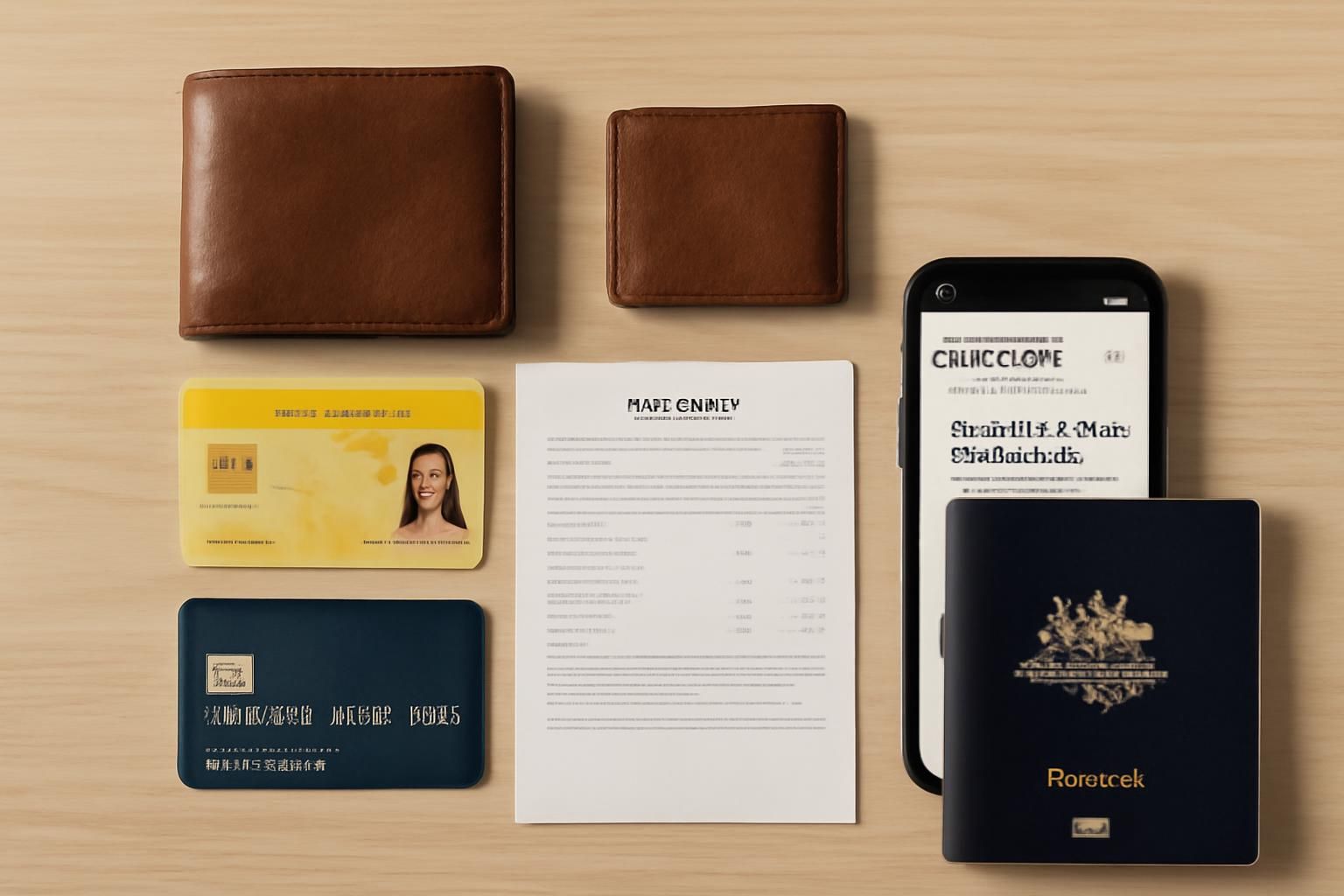
Losing your wallet in Australia can be a disorienting and stressful ordeal. Beyond the immediate inconvenience of missing cash and cards, the risk of identity theft and unauthorized transactions escalates rapidly. In a country with a strong emphasis on personal security and digital banking, understanding the correct protocol for canceling cards and replacing identification is essential. The initial hours after losing your wallet are critical to minimizing financial damage and regaining control over your personal information.
From the moment you realize your wallet is missing, knowing which steps to prioritize will protect your bank accounts, prevent fraudulent claims against your credit, and help you replace your essential documents swiftly. Australian institutions provide various helpful resources and streamlined processes to assist in these emergencies. Navigating this can be overwhelming, but a structured approach ensures no element—be it your driver license, passport, or credit cards—is overlooked.
Immediate Actions to Take After Realizing Your Wallet Is Lost in Australia
The very first step when you notice your wallet is missing is to remain calm and carefully retrace your movements. Many Australians recover forgotten wallets simply by recalling where they last used them—whether at a café, a public transport station, or a friend’s house. Checking your surroundings thoroughly is key before moving on to more urgent interventions.
Once you confirm your wallet is not just misplaced, canceling your credit and debit cards becomes the highest priority. This step prevents unauthorized spending, which can quickly snowball if not addressed. Australian banks such as Commonwealth Bank and Westpac offer instant support for lost or stolen cards through their official apps or hotlines. For instance, using the CommBank app, Australians can navigate to the Cards section, select the affected card, and report it as lost or stolen within minutes. Banks then typically lock the cards and issue replacements swiftly.
Simultaneously, notify your financial institution and request suspension or cancellation of any direct debits linked to the lost cards. Staying communicative with banks helps in flagging suspicious activities early. Listing your emergency contacts is invaluable too—they can assist you in managing finances or replacing identification if you are unable to act promptly yourself.
Filing a police report should follow quickly after canceling cards. In Australia, reporting to the police is not only critical for possible recovery but also serves as formal documentation in case of fraudulent claims. Some states, like New South Wales, offer online reporting options on portals such as Service NSW, simplifying this process greatly.
In summary, the immediate priorities include:
- Retracing your steps to locate the wallet.
- Contacting banks and canceling lost credit/debit cards.
- Notifying your emergency contacts.
- Filing a police report online or in person.
- Monitoring your accounts for suspicious activity.
Acting quickly in this order helps mitigate risks and speeds up the recovery of lost funds and identity security.

Prioritizing Identification Replacement: Driver License, Passport, and Other Crucial IDs
After securing your financial accounts, focus shifts towards replacing essential identification documents—critical for identification purposes and legal compliance within Australia. The driver license, often stored in wallets, must be replaced promptly as it’s a primary photo ID used in countless daily transactions and activities.
Replacing your driver license can be done at the local Department of Motor Vehicles or its state equivalents, with options increasingly available online. This process typically requires proof of identity, and having a police report can facilitate quicker issuance. For example, the NSW Roads and Maritime Services guide offers a clear process to apply for a replacement license, emphasizing the importance of doing so without delay.
Next, attention must be turned to replacing your passport if it was lost in the wallet. Given travel plans can be severely disrupted by a missing passport, Australians should visit the Australian Passport Office promptly. The process requires filling out applications for lost or stolen passports and sometimes attending an interview to verify identity. The timelines may vary, so ordering your replacement as soon as possible is essential.
Beyond these, other IDs such as Medicare cards, concession cards, and proof of age documents must also be considered. The replacement procedures for these vary by issuing agency but often involve submitting official forms and identity proofs, sometimes requiring the police report as supporting evidence.
To summarize, here is a checklist for replacing identification:
| Type of ID | Typical Replacement Body | Notes |
|---|---|---|
| Driver License | State’s Motor Vehicle Authority (e.g., NSW RMS) | Online renewal available; police report recommended. |
| Passport | Australian Passport Office | Requires lost passport report; possibly urgent processing. |
| Medicare Card | Department of Human Services | Replacement online/in person; essential for healthcare access. |
| Other Photo IDs (e.g., proof of age) | Issuing Authority varies | Depends on type; may require application and ID proof. |
Replacing these IDs swiftly helps restore your legal identification and access to various services, reducing the disruption caused by losing your wallet.
Protecting Yourself from Identity Theft After Losing Your Wallet in Australia
Losing a wallet exposes you to a heightened risk of identity theft, especially when personal documents fall into the wrong hands. Criminals can misuse your sensitive data to open fraudulent accounts, incur debts in your name, or commit other offenses. Protecting yourself involves proactive vigilance and immediate protective measures.
One of the most effective protective steps is to place a fraud alert on your credit file with Australian credit bureaus such as Experian, Equifax, or Illion. A fraud alert warns lenders and service providers that your identity may have been compromised, prompting extra verification before any new credit is approved. You can also choose to freeze your credit, making it impossible for anyone to open new accounts using your identity without your explicit approval.
Regularly monitoring your bank and credit accounts online for suspicious or unauthorized transactions is vital. Many Australian banks offer proactive fraud detection services and real-time alerts that notify you immediately of attempted transactions. Changing passwords on all your related online accounts is essential to prevent hacking, particularly if your wallet contained login or access information.
Another modern safeguard is investing in an RFID-protected wallet. Many Australian consumers now opt for wallets embedded with RFID-blocking technology, which protects your cards from silent scanning and electronic theft. This technology blocks wireless signals that thieves might use to steal data from contactless cards.
Lastly, keeping informed about common identity theft scams and staying in touch with your financial institutions’ updates helps maintain awareness. Many banks provide guidance and support through dedicated lost wallet and identity theft pages like Commonwealth Bank’s support resources.
List of Key Identity Theft Protection Measures
- Place a fraud alert on your credit file immediately.
- Freeze your credit reporting if you suspect high risk.
- Monitor financial accounts daily for irregular activity.
- Change passwords for all online banking and related services.
- Use an RFID-blocking wallet to prevent electronic data theft.
- Stay updated with trusted bank and government alerts about scams.
Practical Tips to Prevent Losing Your Wallet and Stay Prepared in Australia
Preventing wallet loss is always better than managing its consequences. Australians can adopt several practical habits and products that reduce the chances of misplacing wallets or aggravating the fallout of such loss.
One innovative solution gaining popularity is the use of smart wallets with tracking capabilities. For instance, the Ekster Wallet for AirTag integrates Apple AirTag technology, allowing you to quickly locate your wallet through the Find My app on your iPhone. Customers praise its sleek design, rapid access to cards, and anti-skimming features. This can save valuable time and stress in finding the misplaced wallet.
Simple behavioral changes also make a difference. Always store your wallet in a consistent, secure place—whether it’s a zipped pocket, a specific bag section, or a designated home spot—to minimize accidental loss. Reducing what you carry helps too; carrying fewer cards and cash reduces the impact if loss occurs.
Setting periodic reminders on your phone can help maintain awareness, especially during busy errands or travel days. Additionally, keeping copies (physical or digital) of important documents elsewhere ensures you have backups in emergencies.
Here is a practical list summarizing effective wallet loss prevention strategies:
- Use a trackable wallet like Ekster’s Wallet for AirTag.
- Designate a safe spot at home and on the go to keep your wallet.
- Carry only necessary cards and cash daily.
- Utilize phone alarms to remind you to check for your wallet periodically.
- Keep backup copies of essential IDs and documents safely separate.
By combining technology with mindful habits, Australians can significantly reduce both the likelihood of losing their wallet and the severity of its consequences.
What should I do if I lost my wallet in Australia?
If you’ve lost your wallet, start by retracing your steps and checking all possible locations. If it remains lost, immediately cancel your credit and debit cards, report lost identification to authorities, and monitor your accounts for suspicious activity.
How do I report a stolen wallet in Australia?
Report the theft to your bank to cancel cards, file a police report—many are available online via state services—and place fraud alerts with credit bureaus to prevent identity theft.
Can I replace my driver license and passport online in Australia?
Many states offer online replacement options for driver licenses, while passports generally require in-person verification. Check specific agency websites for up-to-date procedures.
What are essential identity theft protection steps after losing a wallet?
Place fraud alerts or freeze your credit, monitor bank activity, change all relevant account passwords, and consider RFID protection when upgrading your wallet to deter electronic theft.
Are there wallets with tracking features to prevent loss?
Yes, products like the Ekster Wallet for AirTag combine stylish design with tech integrations, enabling wallet tracking through smartphone apps which help quickly locate misplaced wallets.