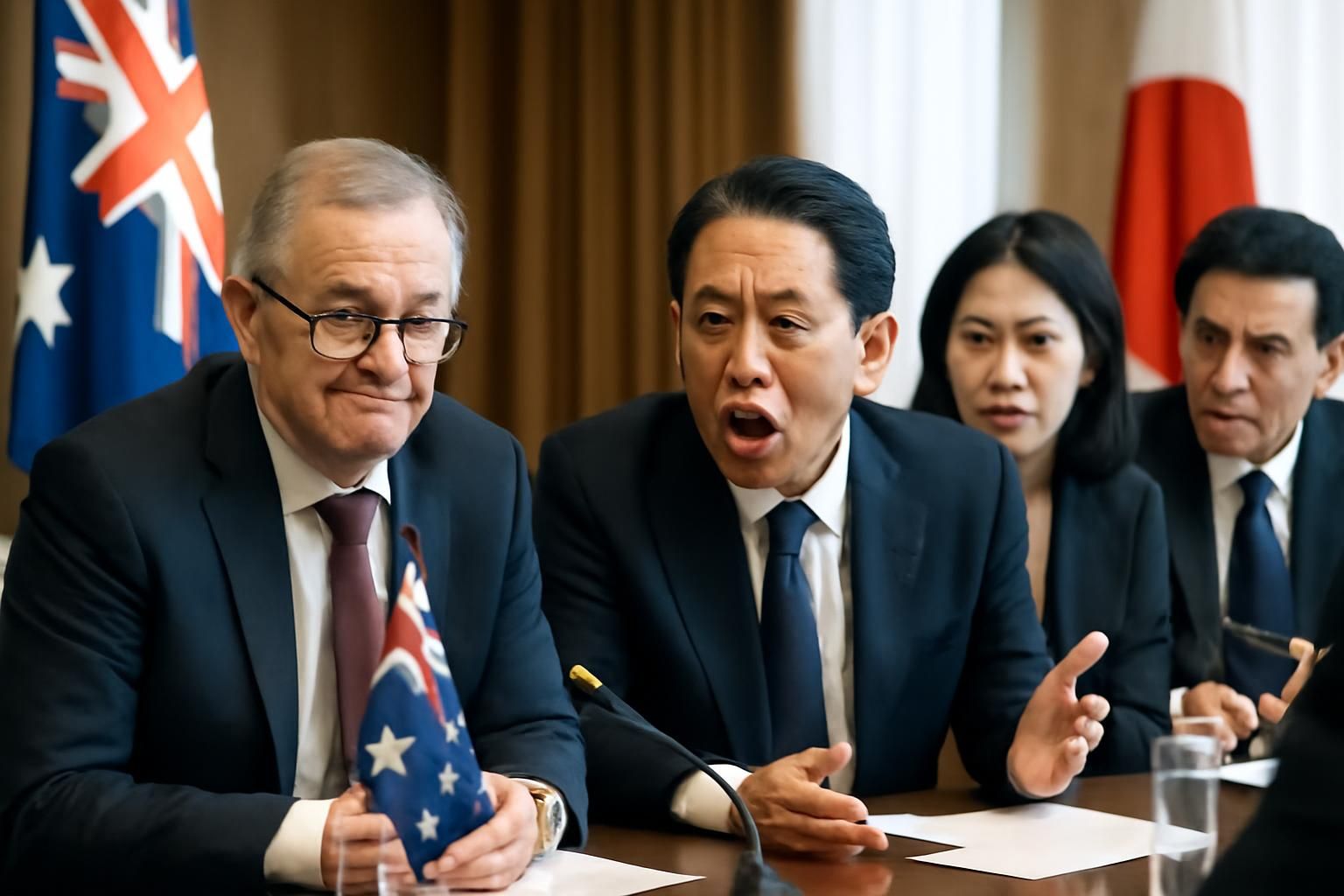
Australia’s Prime Minister, Anthony Albanese, ignited a significant diplomatic controversy following a lighthearted yet ill-timed joke about melons gifted by Japan’s leader, Sanae Takaichi. During a satirical podcast episode, Albanese’s remark about receiving “a couple of melons” from the Japanese prime minister was perceived by many as culturally insensitive and disrespectful. This incident has brought to light the delicate nature of diplomatic etiquette between nations and the repercussions that humor can have in international relations.
The exchange took place on the “Bush Deep” podcast hosted by comedian Nikki Osborne. Albanese’s casual recounting of the gift, accompanied by gestural mimicry linked to the joke, triggered criticism not only within Australia but profoundly in Japan. Tokyo’s former ambassador to Australia, Shingo Yamagami, sharply condemned the joke as a breach of respect between the two countries, emphasizing the cultural significance of the prized Japanese crown melons. The political scandal escalated into a broader dialogue on leadership criticism and the responsibilities of a head of government to maintain cultural sensitivity in public communications.
- Australian PM Anthony Albanese made an inappropriate “melon joke” about Japan’s leader during a podcast.
- The humor sparked diplomatic tension, leading to public outrage in Japan and criticism from political leaders.
- The joke centered around a gift of crown melons, a symbol of cultural pride in Japan.
- The incident highlighted issues of cultural sensitivity, political scandal management, and international relations challenges.
- Calls for apology were met with hesitation, intensifying leadership criticism and scrutiny of the Prime Minister.
Political Scandal Arising from the Australian PM’s Inappropriate Melon Joke
The political fallout from Australian Prime Minister Anthony Albanese’s crude melon joke became an immediate focus of both domestic and international media. During an informal podcast conversation, Albanese recounted receiving two prized Japanese crown melons from Japan’s Prime Minister Sanae Takaichi during her official visit in May. What began as a light-hearted anecdote — featuring Albanese mimicking a particular hand gesture while referencing “a couple of melons… as you do” — was quickly interpreted as disrespectful to both the Japanese leader and the culturally significant gift.
This episode not only tarnished the reputation of the Australian PM but also risked jeopardizing diplomatic ties between Australia and Japan, two nations regarded as close regional allies. Crown melons, known for their rarity and expensive cultivation process, represent a gesture of respect and friendship in Japanese culture. The fact that these fruits fetched over 30,000 yen (£140) each underscores their importance.
Political opponents in Australia seized on the incident to critique Albanese’s judgment and decorum. The leader of the opposition, Angus Taylor, publicly declared the comments “beneath the office of the prime minister,” demanding a formal apology. This demand fueled further debate about the responsibility leaders hold in international diplomacy and public discourse.
The scandal also shone a spotlight on the broader context of political communication in 2026, where casual or insensitive remarks in public or semi-public settings can rapidly escalate into major controversies. This dynamic is especially pronounced in an era where podcasts and digital media have become platforms for political figures to connect directly with the public, sometimes with unintended consequences.
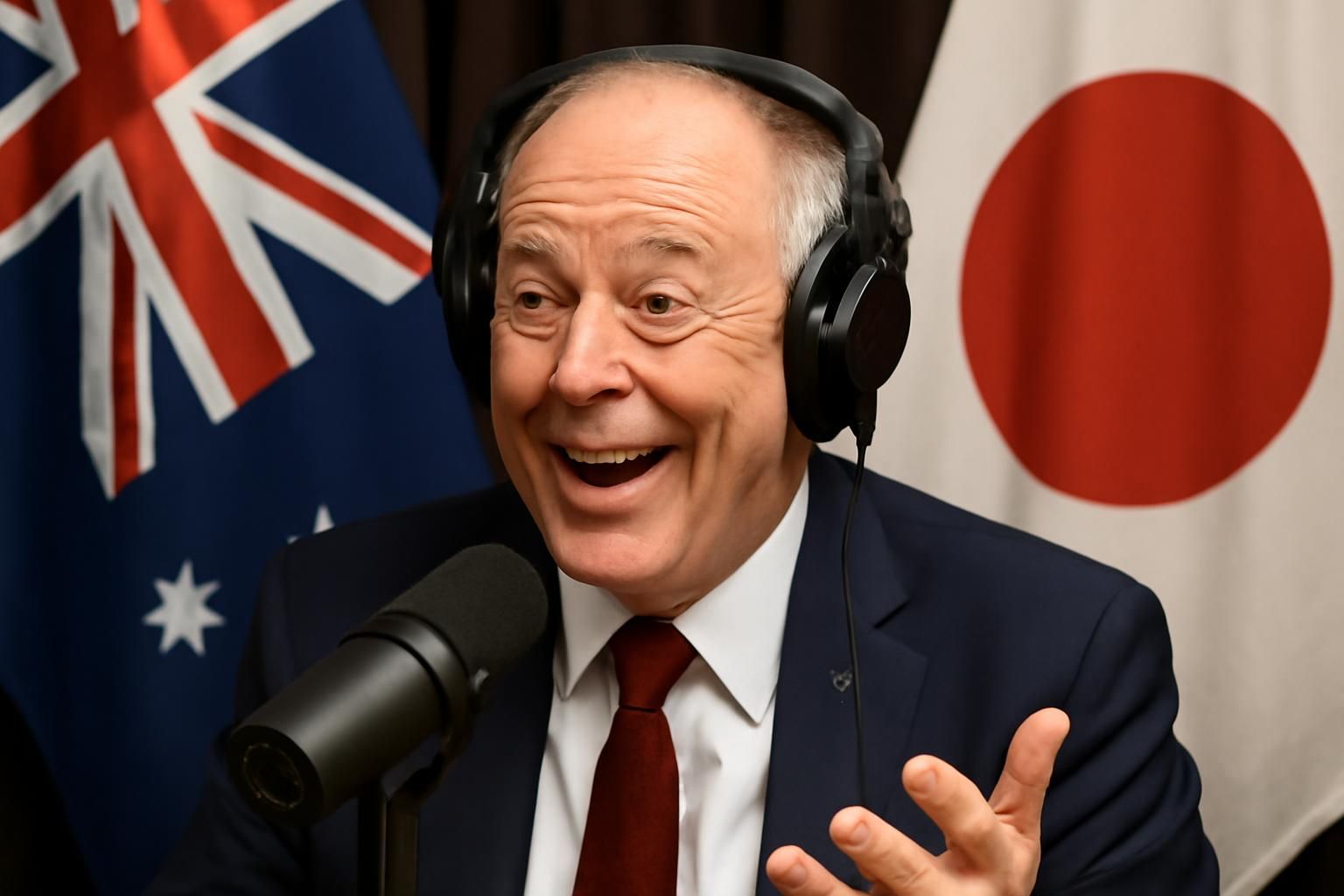
Diplomatic Tension Between Australia and Japan Sparked by Cultural Misstep
Australia’s Prime Minister’s joke resulted in palpable diplomatic tension as Tokyo expressed profound dissatisfaction with the public remarks. Japan’s former ambassador to Australia, Shingo Yamagami, a respected diplomat familiar with both countries, issued a scathing indictment of Albanese’s choice of humor. In his critique, Yamagami asserted the joke was “not only ungracious” but also “betrayed the close bond of our two nations.”
The crown melon is highly regarded in Japan. These fruits come from specialized greenhouses and represent a prized gift — often exchanged during official visits to symbolize goodwill. By jesting about this significant gift in a way that appeared casual and frivolous, Albanese inadvertently undermined a respected cultural tradition.
Japan’s reaction was intensified by the perception that the Australian PM dismissed the seriousness of the gift and the respect it was intended to convey. This incident has been dissected in diplomatic circles as a clear example of how cultural insensitivity can lead to diplomatic friction, even between allied countries. The event urges a renewed focus on cultural intelligence and respect as pillars in international relations, especially in the Asia-Pacific region.
This dynamic is especially crucial in 2026, as geopolitical shifts heighten the importance of maintaining alliances. Australia and Japan’s relationship extends beyond politics to economic cooperation and regional security. Ensuring that such bonds are safeguarded against misunderstandings or offenses remains a key focus for policymakers and diplomats alike.
Cultural Sensitivity’s Role in Maintaining Strong International Relations
At the heart of the controversy lies a fundamental issue: the role of cultural sensitivity in diplomatic relations. Diplomatic exchanges often involve symbolic gestures, with gifts holding significant meaning in many cultures. The Japanese crown melon is emblematic of polite formality and respect. Therefore, public figures must treat such symbols with caution and understanding.
The ‘melon joke’ exemplifies how humor, especially when crossing cultural lines, can lead to unintended offense. What might be perceived as lighthearted in one country may be deemed rude or degrading in another. This situation serves as a cautionary tale for leaders worldwide about the importance of cultural competence.
Beyond the political sphere, cultural sensitivity influences bilateral trade, cooperation in scientific research, and cultural exchanges. Australia has a history of promoting multiculturalism domestically, yet incidents like this illuminate the challenges when domestic communication styles clash with foreign cultural expectations.
To foster trust and mutual respect, education on cultural norms and rigorous media training for officials should be prioritized. For instance, countries like Japan have long traditions of gift-giving etiquette that leaders and diplomats must comprehend. Australia can benefit from reinforcing its diplomatic corps and government leaders’ cultural awareness to prevent future incidents of this nature.
Leadership Criticism Amidst the Podcast and Political Backlash
Anthony Albanese’s appearance on the “Bush Deep” podcast, hosted by comedian Nikki Osborne, has come under significant scrutiny beyond the melon joke. The podcast platform, known for its informal and satirical tone, led to additional uncomfortable moments, including Albanese’s responses to personal questions about celebrity preferences that drew further criticism for their perceived inappropriateness.
Leadership criticism intensified as political opponents and media commentators questioned Albanese’s suitability as a head of government, particularly in an era when a leader’s public image directly influences international perceptions and national unity. The blend of casual media appearances and official diplomatic responsibilities can create complex challenges for leaders who must maintain decorum.
Despite public calls for an apology regarding the melon joke, the Prime Minister publicly denied any sexual insinuation or intent to offend. This stance has polarized public opinion, with some defending his right to humor and others demanding a greater degree of respect and formality from national leadership.
Examples of similar incidents worldwide highlight how leaders can suffer or recover depending on their management of controversies. Albanese’s handling of this situation will likely be studied for lessons on crisis communication, leadership accountability, and maintaining international goodwill amidst personal misjudgments.
Examples of International Relations Strained by Diplomatic Missteps
This incident between Australia and Japan joins a long list of diplomatic tensions sparked by cultural or communicative missteps in international relations. In 2024, for instance, a misinterpreted gesture between the leaders of Germany and the United States caused months of awkward diplomacy. Another famous case involved a controversial joke made by a European leader that strained relations with African nations due to its racial connotations.
These examples reveal how sensitive international diplomacy is to cultural nuance and verbal diplomacy. They also highlight the importance of comprehensive media training for political figures operating on the global stage. Such training can prevent misunderstandings and avoid unnecessary diplomatic escalation.
The lesson is clear: while democracy encourages open and relaxed communication, the global political arena demands higher standards of professionalism and cultural understanding. The ability of leaders to navigate these complexities directly impacts their countries’ standing and relationships worldwide.
In the Australian case, Albanese’s joke is a reminder that personal camaraderie — even in informal settings — does not excuse a disregard for cultural respect and diplomatic decorum.
Strategies to Manage and Avoid Political Scandals from Public Statements
Political scandals arising from inappropriate remarks can have lasting effects on a leader’s career and a nation’s international reputation. Governments and political figures have developed strategies to mitigate and manage such crises, including rapid responses, public apologies, and cultural diplomacy efforts.
In the aftermath of the melon joke fallout, some recommend the Australian government adopt a more proactive stance in damage control. Quick, sincere apologies aimed directly at the offended party often help soothe tensions. For example, issuing statements reaffirming respect for cultural symbols and reinforcing bilateral commitments can restore trust.
Educational workshops on cultural sensitivity and improved media training for officials are preventive measures that reduce future risks. Creating advisory groups with cultural experts during diplomatic exchanges can also help anticipate potential issues.
Another strategy involves controlling the narrative by engaging the public transparently while demonstrating awareness of the incident’s impact. Leaders can use official visits, joint statements with foreign counterparts, or participation in cultural exchange programs to reaffirm positive ties.
Below is a table summarizing key management strategies for political scandals linked to public statements:
| Strategy | Description | Example Application |
|---|---|---|
| Rapid Response | Immediate acknowledgment and addressing of the incident | Official apology or clarification issued within 24 hours |
| Public Apology | Sincere remorse expressed to offended parties and public | Press conference or social media statement |
| Cultural Diplomacy | Engagement in activities that reinforce mutual respect | Joint cultural events or diplomatic visits |
| Preventive Training | Educational programs for officials about cultural sensitivity | Mandatory cultural competence workshops |
| Narrative Control | Proactive public relations to manage the story positively | Media campaigns and interviews emphasizing respect |
Public Perception of Leadership and Its Effects on International Image
Leadership behavior in public forums greatly shapes the domestic and global image of a country. Albania’s melon joke controversy illustrates how a single comment can ripple through public opinion, impacting not only internal politics but a nation’s standing globally.
Leaders are increasingly walking a fine line between approachability and maintaining the gravitas expected of their office. A joke that might cultivate perceived relatability or humor could also backfire, decreasing respect on the international stage. This balance is challenging to achieve yet integral to a stable diplomatic presence.
Australia’s image as a reliable and respectful partner in Asia-Pacific relations relies in part on the comportment of its leaders. As diplomatic tensions arise from seemingly minor incidents, the importance of maintaining a dignified public persona becomes central. This incident may influence how Australians and foreigners view their leadership, potentially affecting foreign investment, tourism, and collaborative political initiatives.
In this environment, political figures must be continuously aware of the weight of their words, especially in cross-cultural contexts. The intersection of media scrutiny, public relations, and global diplomacy demands sophisticated communication skills.
Lessons Learned and Future Directions in Managing Cultural Sensitivity
The Australian PM’s controversial joke on the “Bush Deep” podcast serves as a prominent example of lessons that can be gleaned about cultural sensitivity and leadership in international affairs. The incident highlights the need for a clear framework and guidelines regarding appropriate public discourse for politicians when referencing foreign cultures and leaders.
Governments globally may take this event as an instructive case to revisit how leaders are prepared for engagements in digital and informal media settings. Adapting diplomatic language to new media formats while preserving respect and professionalism is critical in 2026’s interconnected world.
Additional investments in cultural education within political institutions will be crucial. Embracing diversity and understanding the symbolic weight of cultural artifacts can prevent conflicts and foster lasting partnerships. These efforts should also extend to media hosts and platforms that engage with political figures, ensuring a mutually respectful environment.
Ultimately, the episode underlines an opportunity for nations like Australia to lead in cultivating diplomatic culture that respects both tradition and the evolving media landscape, balancing humor with honor.
What exactly did the Australian PM say about the Japanese leader’s melons?
During a podcast, Prime Minister Anthony Albanese joked about receiving ‘a couple of melons’ from Japan’s Prime Minister Sanae Takaichi, mimicking a hand gesture that was considered inappropriate and culturally insensitive.
Why did Japan react strongly to the melon joke?
Japan values the cultural significance of the crown melon, which is a prized and costly gift symbolizing respect. The joke was seen as disrespectful to the Japanese leader and the cultural traditions involved, sparking outrage.
Has the Australian PM apologized for the melon joke?
As of now, Prime Minister Albanese has denied any sexual or inappropriate intent behind the joke and has not issued a formal apology regarding this particular remark.
How can political leaders avoid scandals from inappropriate jokes?
Leaders can engage in cultural sensitivity training, adopt careful communication strategies, issue timely apologies if needed, and seek advice from diplomatic and cultural experts before making potentially sensitive remarks.
What impact can such diplomatic incidents have on international relations?
Such incidents can strain bilateral relations, damage trust between nations, complicate diplomatic cooperation, and harm the global image of the leaders and countries involved if not managed properly.