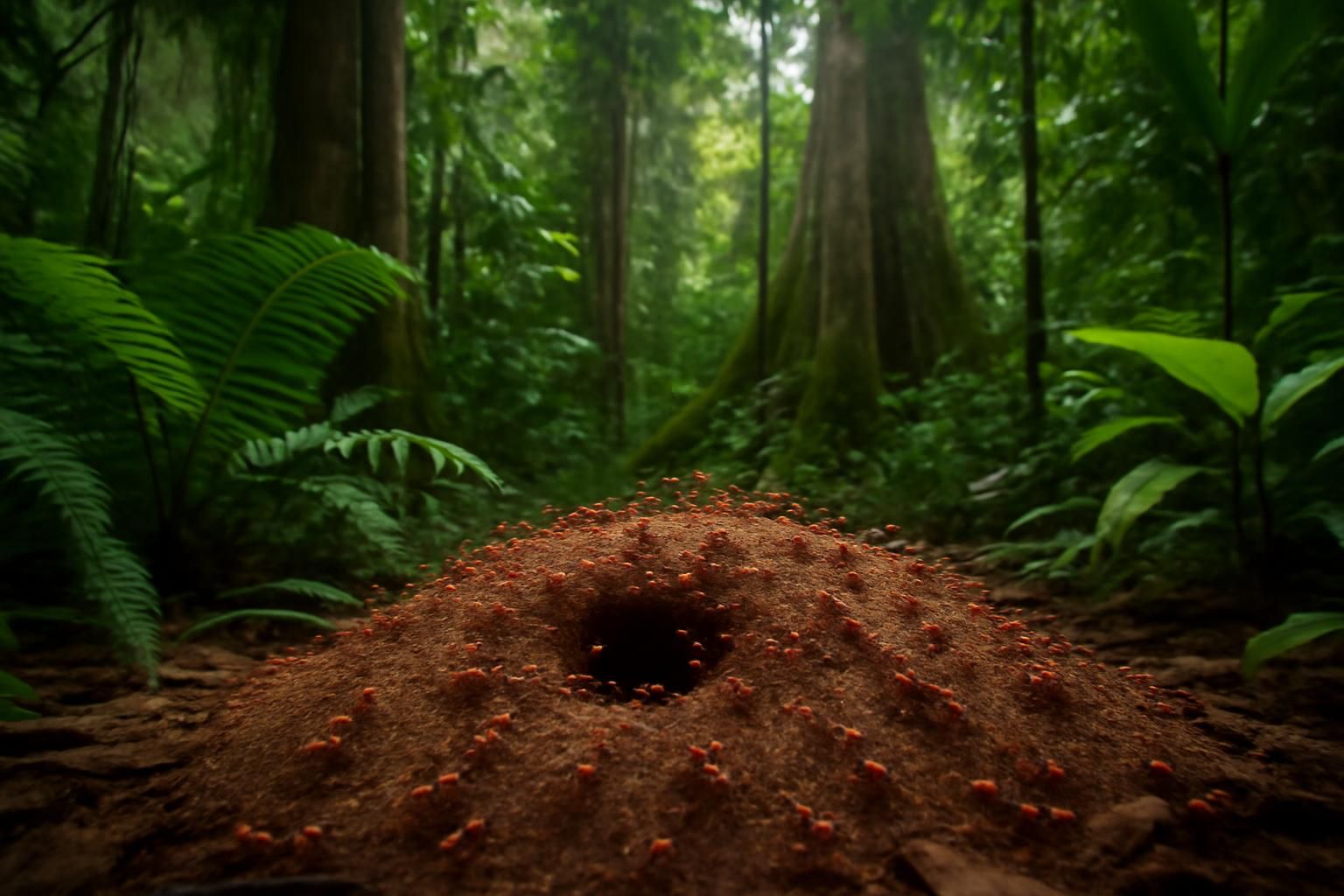
The discovery of a fire ant nest within the ancient and revered Gondwana Rainforests on Australia’s Gold Coast, specifically inside Lamington National Park, has sent ripples of concern through conservationists, ecologists, and public health officials. This World Heritage-listed rainforest, known for its extraordinary biodiversity and ecological history stretching back to the supercontinent Gondwana, faces a new and pressing threat from one of the world’s most aggressive invasive species. With their ability to spread rapidly and withstand diverse environments, fire ants present not only an environmental challenge but pose significant risks to agriculture, native wildlife, and human health across Australia.
- Fire ant nest detected in one of Australia’s most sensitive World Heritage rainforests.
- Invasive species threaten biodiversity and disrupt ecological balance.
- Potential economic impact could exceed $2 billion annually.
- Rapid eradication efforts successfully destroyed the nest before it spread.
- Calls for sustained funding to prevent future invasions are intensifying.
- The discovery highlights expanding reach of invasive fire ants in ecosystems once thought resistant.
Ecological Significance of the Fire Ant Discovery in Australia’s World Heritage Rainforest
The detection of a fire ant nest in Lamington National Park exemplifies a profound environmental challenge for the conservation of Australia’s precious ecosystems. This area represents one of the last vestiges of Gondwana, the ancient supercontinent, and is internationally recognized for its remarkable biodiversity. The presence of an invasive species such as the fire ant within this delicate habitat raises concerns about long-term ecological stability.
Fire ants, native to South America, first arrived in Australia in 2001 and have since become infamous for their rapid colonization abilities. Their incursion into this rainforest is particularly alarming because the habitat was not previously considered susceptible to such invasions. The discovery underscores a shift in the species’ reach and adaptability, posing potential threats to native flora and fauna.
The local ecosystem is exceedingly sensitive to change. Fire ants aggressively compete with native ants and other invertebrates for resources, which can unravel complex food webs. Many of the region’s endemic species rely on specific ant populations for seed dispersal, soil aeration, or as part of their prey base. The introduction of fire ants threatens to disrupt these vital ecological functions, with cascading effects on plant regeneration patterns and predator-prey dynamics.
Moreover, fire ants can negatively impact vertebrate wildlife by preying on ground-nesting birds, reptiles, and amphibians. The ants’ venomous sting also poses direct risks to wildlife survival. This new threat could undermine decades of conservation initiatives aimed at preserving the rainforest’s biodiversity.
In light of these environmental risks, the discovery serves as a stark reminder of the need for comprehensive monitoring and stringent biosecurity measures to protect World Heritage sites. Maintaining ecological integrity in such globally significant forests requires vigilance against invasive species that can alter ecosystem functioning irreversibly.

Biology and Behavior of Fire Ants Contributing to Their Invasive Success
Understanding why fire ants succeed as a formidable invasive species is crucial in addressing their threat to Australian environments. The species’ biological resilience, reproductive strategies, and dispersal mechanisms make containment and eradication complex challenges.
Fire ants survive under a wide range of environmental conditions, from dry urban areas to moist forest ecosystems, enabling them to invade diverse habitats. One factor contributing to their adaptability is their ability to build nests in various substrates, including soil, decomposed wood, and leaf litter, common throughout rainforests such as those in Lamington National Park.
The reproductive biology of fire ants promotes rapid population expansion. Queens can fly distances of up to 30 kilometers under favorable conditions, allowing the species to disperse into new territories efficiently. Colonies can quickly grow to house thousands of workers, facilitating dominance over native ant species. Furthermore, fire ants exhibit flotation abilities enabling them to survive flooding events by forming rafts and relocating colonies, which is critical in wet, flood-prone rainforest environments.
This combination of dispersal, resilience, and aggressive foraging allows fire ants to outcompete native ants. Their aggressive stings not only protect them from predators but also reduce predation pressure on their colonies, contributing to their invasive success.
Their transport via human activities complicates containment measures. Fire ants often spread through freight, soil, and plant materials, emphasizing the importance of strict biosecurity protocols in Australia’s ports and agricultural sectors.
Key biological traits making fire ants successful invaders:
- High reproductive rates with winged queens capable of long-distance flights.
- Ability to form resilient, buoyant rafts during flood events.
- Generalist nesting habits suitable for varied environments.
- Aggressive behavior and potent venom aiding in competitive dominance.
- Human-assisted dispersal through trade and transport networks.
These biological characteristics not only explain the challenges faced in eradication efforts but also highlight the necessity for comprehensive and adaptive management strategies tailored to the ants’ unique behavior.
Economic and Public Health Impacts Linked to Fire Ant Spread in Australia
The arrival and proliferation of fire ants in Australia come at a significant economic and health cost. Research estimates that widespread fire ant infestation could result in annual expenses exceeding $2 billion due to damage in multiple sectors including agriculture, healthcare, and infrastructure.
Agricultural losses could prove substantial, with some estimates suggesting crop outputs could fall by as much as 40%. Fire ants prey on seedlings and young crops, damage irrigation systems, and their nesting activities disturb soil structure vital for farming. These impacts jeopardize food production and the livelihoods of many rural Australians.
Public health concerns center on fire ants’ painful stings, which provoke allergic reactions in sensitive individuals, sometimes leading to anaphylactic shock that requires urgent medical care. The increased frequency of stings could generate over 100,000 additional medical consultations annually, straining healthcare resources. This surge would result in both direct costs and indirect economic impacts such as lost productivity and increased healthcare expenditure.
Besides stings, fire ants damage infrastructure through tunnel-building activities that erode soil and compromise foundations, machinery, and electrical equipment. Such damages add repair and maintenance costs, contributing further to the economic burden.
These interconnected consequences reinforce the importance of early detection and eradication to prevent fire ants from becoming entrenched across the continent. Without intervention, the combination of environmental degradation, health risks, and economic loss could pose long-term challenges for Australia’s well-being.
Strategies and Challenges in Fire Ant Detection and Eradication in Rainforest Environments
The recent detection of a fire ant nest in the Lamington National Park clearing was met with swift eradication to prevent further spread. This showcases the efficacy of rapid-response programs when adequately funded and managed but also reveals the challenges of protecting complex rainforest ecosystems.
Detecting fire ants in dense rainforest canopies and thick underbrush is inherently difficult. Their nests are often concealed, and their colonies can remain undetected for long periods, enabling spread before intervention. This necessitates comprehensive monitoring protocols combining ground surveys with advanced technologies such as drone surveillance and environmental DNA sampling.
Eradication efforts typically involve targeted pesticide treatments combined with physical removal of nests. However, the rainforest environment limits pesticide application to protect non-target species and fragile habitats, complicating control methods.
Maintaining sustained funding is critical. Studies suggest that effective containment programs require investments of up to $300 million per year in Australia to halt fire ant establishment. Delays or shortfalls in funding risk eroding the gains of early detection, allowing colonies to expand unnoticed.
Community engagement is another vital component. Raising awareness among local residents and visitors to World Heritage sites helps in early reporting and support for eradication measures.
The Lamington National Park success story exemplifies what rapid detection and response can achieve, but it also serves as a cautionary example emphasizing the need for ongoing vigilance and resources in remote and ecologically sensitive areas.
Broader Environmental Impact of Invasive Fire Ants on Australia’s Biodiversity
Australia’s native biodiversity is uniquely vulnerable to invasive species like fire ants because of evolutionary isolation. The introduction of an aggressive predator such as the fire ant disrupts established ecological networks, threatening plant and animal species that have no adapted defense strategies.
Fire ants compete with native ants, which perform critical roles in seed dispersal and soil nutrient cycling. Their aggressive colonies displace these native ants, leading to declines in biodiversity. Many small vertebrates, including endangered species, face heightened predation and competition pressure, risking population declines or local extinctions.
In World Heritage rainforests, where biodiversity values are globally significant, the stakes are even higher. The rainforest acts as a reservoir for rare species and unique genetic materials that have evolved over millions of years. Disruption by fire ants could trigger irreversible losses, undermining conservation efforts and ecological resilience in the face of climate change.
Efforts to maintain biodiversity must integrate invasive species management as a core priority. Protecting these ancient habitats requires coordinated action among governmental agencies, conservation groups, Indigenous communities, and scientists to mitigate the environmental impact effectively.
Community and Indigenous Perspectives on Managing Invasive Fire Ants
Local communities, including Indigenous groups, hold profound cultural and ecological ties to the Gondwana Rainforests and surrounding areas. Their perspectives are invaluable in shaping management strategies for invasive species like fire ants.
Incorporating Indigenous knowledge systems can enhance understanding of ecological indicators and landscape changes caused by invasive ants. This integrated approach aids in early detection and adaptive management, promoting culturally appropriate conservation practices.
Community involvement also fosters stewardship and compliance with biosecurity measures designed to limit fire ant spread. Public education campaigns aim to inform residents and tourists about recognizing fire ant activity and steps to take upon discovery.
Collaborative governance involving Indigenous custodians, environmental agencies, and the public strengthens the social fabric necessary to address invasive species threats. Respecting and valuing traditional ecological knowledge alongside scientific insights leads to more holistic and effective conservation outcomes.
Economic Cost-Benefit Analysis of Fire Ant Eradication in Australia’s World Heritage Regions
The financial rationale for investing in fire ant eradication is compelling when considering the long-term savings from avoided environmental degradation and public health expenses. A government report projected that continuous annual investments of around $300 million are necessary for effective control programs. Without such commitment, annual detrimental impacts could reach at least $2 billion.
| Category | Estimated Annual Cost (AUD) | Impact Description |
|---|---|---|
| Agricultural Losses | 800 million | Reduced crop yields by up to 40%, damage to farming infrastructure |
| Healthcare Costs | 400 million | Increased medical consultations from fire ant stings and allergic reactions |
| Environmental Rehabilitation | 300 million | Restoration of degraded habitats and biodiversity conservation |
| Infrastructure Maintenance | 200 million | Damage repair to electrical systems, structures affected by nest tunnels |
This comparison underscores that investing in prevention and early action is financially prudent, reducing the overall burden on Australia’s economy and public systems. The data strongly supports calls for increased budget allocations to invasive species programs, particularly in sensitive World Heritage-listed rainforests like Lamington National Park.
Technological Innovations and Research in Fire Ant Management and Conservation
Advancements in technology have begun to transform invasive species management, offering hope for more effective fire ant control within fragile ecosystems. Innovative tools include remote sensing, environmental DNA (eDNA) detection methods, and targeted biological controls.
Remote sensing technologies employ drones equipped with multispectral cameras to detect changes in vegetation health or subtle disturbances indicative of fire ant nesting sites. Coupled with machine learning algorithms, these systems can analyze large areas quickly and accurately, even within dense rainforest canopies.
Environmental DNA sampling detects traces of fire ant genetic material in soil or water samples, allowing early identification of invasion before visible signs appear. This technique enhances surveillance efforts by complementing traditional field surveys.
Research into natural biological controls focuses on pathogens, parasitic phorid flies, and entomopathogenic fungi that specifically target fire ants without harming native species. Although promising, these approaches require extensive testing to ensure ecological safety in World Heritage rainforests.
Sustained collaboration between scientists, conservation organizations, and government agencies is essential to develop and deploy these technologies effectively. Emphasizing innovation will improve eradication success rates while minimizing environmental disruption, a vital balance for preserving biodiversity.
Policies and Global Collaboration to Counter Invasive Fire Ant Threats in Australia
Fire ants represent a global invasive species problem that extends beyond Australia’s borders. International cooperation plays a crucial role in preventing further introduction and mitigating spread via trade and travel pathways.
Australia implements strict biosecurity laws, including inspection of imported goods, quarantine measures, and public awareness campaigns, to limit fire ant introductions. Increased funding for research and eradication programs reflects a commitment to protecting World Heritage rainforests and broader ecosystems.
At the regional level, cooperation with neighboring countries promotes shared strategies and data exchange on early detection and rapid response. Coordination among Pacific and Southeast Asian nations is vital due to shared maritime trade routes that pose risks of fire ant dispersal.
Multilateral organizations also support policy development and funding initiatives to enhance invasive species management globally. Australia’s role as a leader in environmental conservation strengthens these international networks and elevates awareness about the significant environmental impact invasive fire ants cause.
Ongoing commitment to policy reinforcement, research funding, and international partnerships will determine Australia’s success in safeguarding its invaluable World Heritage-listed rainforests from invasive threats in the years to come.
For more details about invasive species management strategies in Australia, visit integrated conservation programs and biosecurity policy frameworks.
What makes fire ants such a dangerous invasive species?
Fire ants possess aggressive behavior, high reproductive rates, and adaptability to diverse environments, enabling them to outcompete native species and disrupt ecosystems.
How was the fire ant nest in Lamington National Park discovered and dealt with?
The nest was detected through targeted surveys and promptly destroyed via rapid-response eradication programs before it could spread.
What are the main economic impacts of fire ants in Australia?
Fire ants threaten agriculture by damaging crops and infrastructure, increase healthcare costs due to stings, and cause environmental degradation requiring costly restoration.
What technological tools are being used to manage fire ants?
Remote sensing, environmental DNA detection, and biological control agents like pathogens and parasitic flies are key innovations enhancing fire ant management.
How can communities contribute to preventing fire ant spread?
Communities can participate by reporting sightings, following biosecurity guidelines, and supporting conservation efforts to reduce invasive species impact.