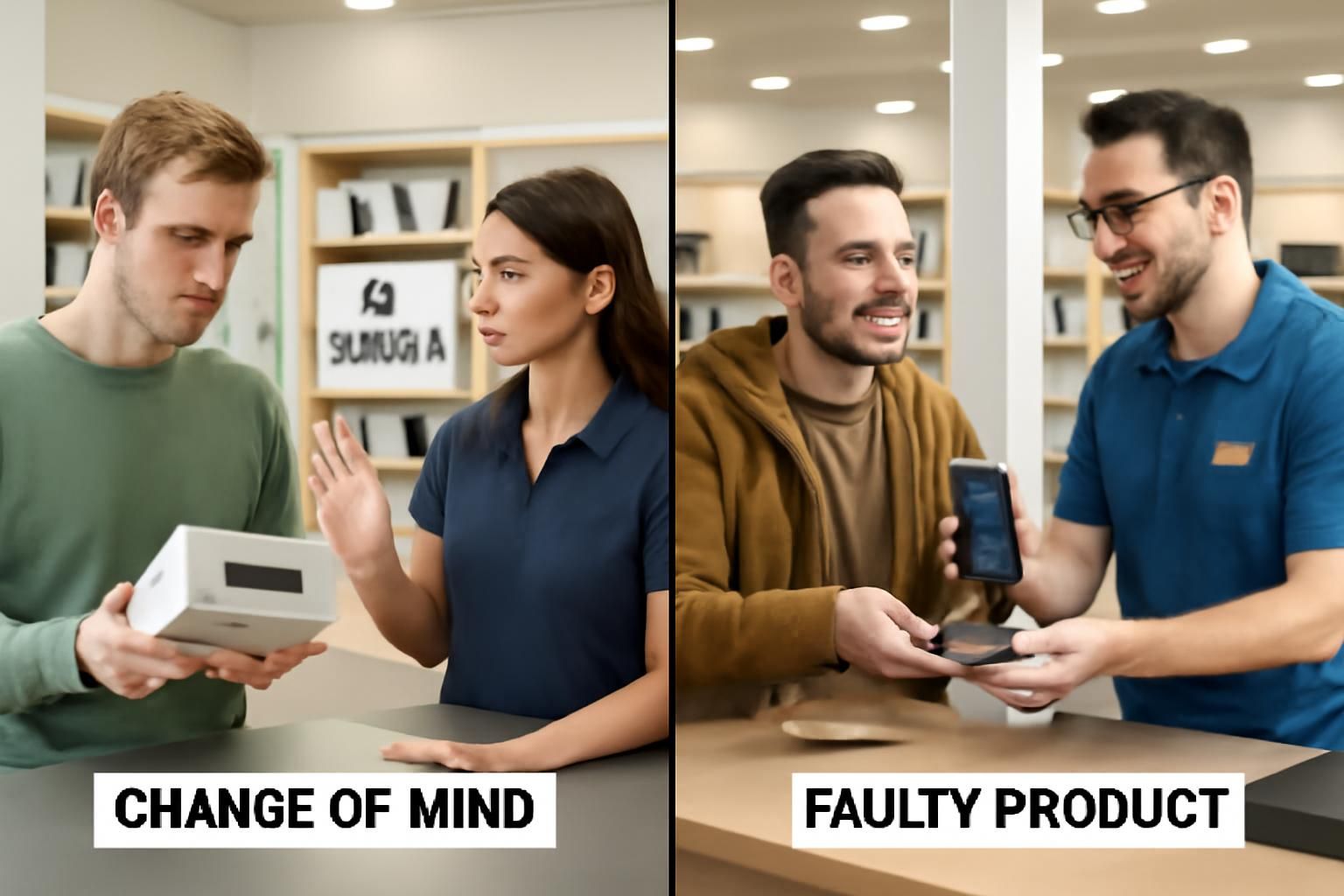
Understanding your refund rights in Australia is crucial for anyone making a purchase, whether online or in-store. By 2026, consumer protection laws have continued to emphasize clear distinctions between refunds due to a change of mind and those resulting from faulty goods. Australian Consumer Law (ACL) provides a robust framework ensuring customers receive fair treatment, especially when products fail to meet guaranteed standards. However, the right to a refund is not always straightforward and depends heavily on the nature of the problem with the product or service. While stores may offer voluntary return policies for change of mind scenarios, these do not override statutory rights related to defective products. Navigating through these differing entitlements requires a solid understanding of the obligations of businesses and rights of consumers under Australian law.
In brief, here are the key points about refund rights in Australia:
- Faulty goods entitle consumers to a repair, replacement, or refund under the ACL.
- Change of mind generally does not lead to an automatic refund unless the store has a specific return policy allowing it.
- Consumer protection laws prioritize remedies for goods with major problems over voluntary store policies.
- Warranties do not replace ACL rights but can offer additional coverage.
- Return policies for change-of-mind must be clearly displayed and cannot limit statutory consumer rights.
Australian Consumer Law: Understanding Refund Rights for Faulty Goods
Under the Australian Consumer Law (ACL), consumers have the right to a remedy when goods are faulty, unsafe, or fail to do what they are supposed to do. This legal protection ensures that if a product you bought does not meet certain standards, you can request a repair, replacement, or refund — and you get to choose the remedy if the problem is major.
What qualifies as a ‘major problem’? It includes situations where a product:
- Is unsafe or poses a danger to the user.
- Differs significantly from any description, sample, or demonstration model.
- Has a fault that cannot be fixed within a reasonable time.
- Does not do what the consumer asked for or is unfit for the purpose made known to the seller.
For example, if you purchased a smartphone and after a few weeks the device fails to charge or repeatedly crashes, this would be considered a major problem. The retailer must then offer a repair, replacement, or full refund. In contrast, minor issues can be repaired, but the consumer cannot usually opt for a refund.
These protections apply regardless of any warranty the manufacturer or retailer provides. The warranty acts as an additional benefit but does not reduce your statutory refund rights.
Learn more about your refund rights for faulty goods and the distinctions made by consumer law in Australia.
Change of Mind: When Do Refund Rights Apply?
Unlike faulty goods, refund rights due to change of mind situations are far less guaranteed under Australian law. Generally, stores are not obligated to provide refunds or exchanges if a customer simply changes their mind about a purchase. This means if you decide you no longer want the product but it is in perfect condition, you cannot legally demand a refund unless the store’s return policy explicitly offers this.
Many retailers do voluntarily provide change-of-mind returns or exchanges to maintain customer satisfaction, but these policies vary significantly across businesses. Common limitations include:
- No change-of-mind refunds on sale or clearance items.
- Refunds or exchanges only allowed within a set timeframe, for example, within seven days of purchase.
- Products must be returned in original condition, unopened or undamaged packaging.
Retailers must clearly communicate these policies at the point of sale or on their websites to ensure consumers understand their rights before purchasing. It’s important to distinguish these voluntary policies from your ACL entitlements related to faulty products, as stores cannot limit your rights through “no refund” signage or in-store policies when it comes to defective goods.
Avoid confusion by understanding change of mind returns thoroughly as defined by consumer protection guidelines in Australia.
How to Determine if Your Goods Are Faulty or If You’re Just Changing Your Mind
One of the most common points of confusion in refund rights arises when consumers aren’t sure if their product is defective or if they simply wish to return it due to a change of mind. Here are factors that you should consider when assessing your situation:
1. Product Performance and Quality Standards
The ACL sets standards requiring the goods to be safe, durable, free from defects, and performing as expected. If your product does not meet these criteria, it’s considered faulty. For instance, a refrigerator that stops working within six months would generally qualify for a remedy under consumer law, unless damage was caused by consumer misuse.
2. Misleading Descriptions or Samples
If a product doesn’t match its description or fails to match a sample or demonstration seen before purchase, this is deemed a fault. An example is purchasing a set of curtains online described as “navy blue” but receiving pastel blue instead. Such discrepancies empower consumers to seek a refund or replacement.
3. Fit for Purpose
Goods need to be suitable for any purpose the consumer specified at the time of buying. If a product fails to satisfy this purpose, it may be faulty. For example, if you requested a heavy-duty tool for construction, but the tool breaks during normal use, the business must take action.
4. Time Since Purchase
The length of time since you bought the goods is relevant. While there is no explicit statutory timeframe under ACL, a reasonable consumer would expect the product to last for a certain duration. A TV that stops working after several months may qualify for a refund, but a small scratch noticed years later may not.
Understanding these criteria helps separate genuine product defects from cases where the customer’s preference or regret leads to their desire to return the purchase.
Business Obligations and Consumer Remedies Under Australian Return Policies
Businesses in Australia have legal obligations under the ACL to comply with consumer guarantees. They are required to:
- Offer a repair, replacement or refund for goods with major problems.
- Provide repair services for goods with minor issues.
- Not mislead consumers by displaying “no refunds” signs when goods are faulty.
Many businesses also have their own return policies that extend consumer protections voluntarily, especially for change-of-mind returns. However, these policies must be transparent, clearly communicated, and cannot infringe upon the statutory rights under the ACL.
To assist retailers and consumers alike, here is a comparison table outlining key scenarios and outcomes in line with Australian consumer protection laws:
| Scenario | Consumer Right | Business Obligation |
|---|---|---|
| Goods are faulty or don’t match description | Choose repair, replacement, or refund if major | Provide remedy at no cost; reimburse if manufacturer’s fault |
| Change of mind return | No automatic right unless store policy offers refund | Clearly display return policy; honor voluntary returns |
| Minor problem with goods | Right to repair within reasonable time | Fix or replace product promptly |
| Services not provided with due care or skill | Right to redo service, refund, or compensation | Rectify problem or provide refund |
For further professional insights on consumer rights and business obligations regarding returns, refunds, and exchanges in Australia, refer to expert articles like those from Sprintlaw’s guide on returns and refunds.
Warranties, Repair, Replacement, and Your Purchase Rights in Australia
Consumers often misunderstand the role of warranties, confusing them with the legal rights provided by the ACL. Warranties, whether voluntary, manufacturer, or extended, supplement statutory rights but do not replace them.
What warranties offer:
- Additional assurance on product quality or performance for a stated period.
- Possibility of repair, replacement, or refund on terms exceeding ACL standards.
What warranties do not offer: They cannot override or reduce your consumer guarantees. Even if a warranty expires, you may still have rights under the ACL if the product was inherently faulty at the time of purchase.
In 2026, it remains critical for consumers to check both the warranty details and the underlying consumer protection laws when making a claim. This dual approach ensures you exercise your full purchase rights efficiently.
If you suspect your product is not meeting the standards covered by your warranty or the ACL, use resources like the ACCC’s repair, replace, refund problem solver to understand how best to proceed.
Mastering these concepts helps consumers confidently assert their rights and seek the appropriate remedy without unnecessary delays or disputes.
Can I get a refund if I just change my mind?
Generally, no. Australian Consumer Law does not require businesses to provide refunds for change of mind. However, if the store has a return policy allowing it, you may be eligible.
What qualifies as a major problem with a product?
A major problem is when the product is unsafe, significantly different from what was described, or cannot be repaired within a reasonable time.
Does a warranty affect my refund rights under ACL?
No, warranties provide additional benefits but do not replace your consumer rights under the ACL. You can claim under either or both.
What should I do if a business refuses to acknowledge my refund rights?
Try to speak to a manager or submit a written complaint. If unresolved, report the issue to your local consumer protection agency or the ACCC.
Are there time limits for returning faulty goods?
There is no fixed statutory time limit, but goods should last a reasonable period. This varies depending on the product type and price.