Purchasing a used car through a private sale in Victoria can be both a cost-effective and rewarding experience, but it demands heightened diligence compared to dealership transactions. Navigating the complexities of car transfer, vehicle registration status, and PPSR checks requires more than just a handshake and cash exchange. Buyers must arm themselves with knowledge to detect hidden finance, confirm true ownership, and avoid vehicles with compromised histories. This detailed guide breaks down the essential steps private buyers need to confidently handle the entire process in 2026, illuminating potential pitfalls and providing practical tools to ensure a smooth ownership transfer.
Used car enthusiasts and first-time private buyers alike will find actionable insights here—from verifying seller credentials to deciphering comprehensive vehicle history reports. The emphasis on conducting a thorough rego check and an in-depth PPSR check underlines how these investigations serve as pillars against scams and financial liabilities. Whether it’s deciphering registration nuances, understanding motor vehicle duty calculations, or ensuring an accurate Certificate of Roadworthiness is in place, every facet is critical for a successful, trouble-free transaction.
For anyone venturing into the realm of private vehicle sales, this car buying guide will serve as both a roadmap and a shield—highlighting the legal frameworks, practical checks, and negotiation wisdom needed to transform a potentially overwhelming purchase into a seamless achievement.
Key points for private buyers:
- Always conduct a PPSR check before any commitment to uncover finance, theft, or write-off status.
- Verify current and valid vehicle registration (rego) to prevent buying a suspended or defective vehicle.
- Confirm seller identity and ownership documentation to avoid fraud and legal complications.
- Obtain a current Certificate of Roadworthiness to ensure the vehicle meets safety standards.
- Understand transfer fees and motor vehicle duty calculated from market value for correct payment to VicRoads.
Understanding the Vital Role of PPSR and Rego Checks in a Private Sale
One of the foundational steps in buying a used car privately is conducting a thorough Personal Property Security Register (PPSR) check. This national database provides crucial details, safeguarding buyers from inadvertently purchasing vehicles with hidden finance secured against them. Without this check, a buyer risks assuming ownership of a car still legally encumbered by loans, which could lead to repossession or unexpected debt.
The PPSR check in Victoria reveals multiple important vehicle attributes, including whether there is money owing, if the vehicle has been written off in any state, and whether it has a stolen status. These insights come from a comprehensive national report that covers registrations across all Australian states and territories, offering a panoramic vehicle history rather than a narrow local snapshot.
Beyond financial concerns, a PPSR check confirms the vehicle’s official identification matches the registration plate and Vehicle Identification Number (VIN). This alignment is critical; discrepancies often signal stolen or cloned vehicles. For private buyers, this means that a PPSR report is a non-negotiable part of the due diligence process, helping to avoid costly and stressful future disputes.
Complementing the PPSR check is the vital verification of the vehicle’s current registration status—a “rego check”—which assures the buyer that the vehicle’s registration is active and free from suspensions or cancellations. Vehicles with suspended registration often stem from unresolved defect notices issued by VicRoads due to vehicle safety concerns, such as brake faults or emissions failures. A suspended rego means the vehicle cannot legally be driven, and if purchased unknowingly, it brings immediate logistical and financial headaches to the new owner.
The buyer can conveniently verify this status through online portals or vehicle history report tools aligned with VicRoads data. Engaging in these checks early avoids unpleasant surprises and helps in planning any necessary repairs or legal processes before finalizing ownership transfer.
Understanding and combining PPSR and rego checks empower the buyer with a strong shield against fraudulent sales and saves significant sums usually spent on hidden debts or unexpected regulatory breaches.
Step-by-Step Guide to Verifying Seller Identity and Vehicle Authenticity for Secure Car Transfer
Before diving into the paperwork, private buyers must first confirm the legitimacy of the seller and the authenticity of the vehicle to avoid scams. This step is often overlooked but essential given the increasing sophistication of fraudulent vehicle sales. The process begins with reviewing critical seller-provided documents, such as the certificate of registration and a valid Victorian driver licence.
Ensure the seller’s name on these documents matches each other and the registration papers to guarantee they are the legitimate registered operator. This simple yet effective verification prevents issues arising from purchasing stolen vehicles or illegally transferred ownerships. If the seller cannot provide a Victorian driver’s licence, they should be willing and able to prove identity through VicRoads validation at a Customer Service Centre.
Next, verify the vehicle’s unique identifiers—the VIN on the chassis, compliance plate, and windscreen—alongside the registration plate. These identifiers must concur precisely with the details on the car history report and registration documents. Any mismatch should be treated with extreme caution and could indicate tampering or stolen goods.
Private sales sometimes involve vehicles with personalised number plates. Here, it is crucial to note that ownership rights for custom plates transfer only upon completion of the registration transfer with VicRoads. Buyers should confirm this transfer process’s timeline and conditions, as failure to finalize the transfer can result in legal inconveniences or financial liabilities.
Finally, practicality counts: inspect whether the number plates themselves physically correspond to records or if they have been reported stolen or missing. Stolen plates are frequently used in crimes, and becoming the registered owner of a car with such plates may implicate the buyer in legal troubles.
Engrossing yourself in these verification steps significantly mitigates risk and forms the backbone of a secure and legitimate private vehicle transfer.
Understanding the Financial Aspects: Market Value, Motor Vehicle Duty, and Registration Transfer Fees
Once identity and authenticity are established, the next focus area for private buyers involves financial obligations linked to ownership transfer, including transfer fees and motor vehicle duty payable to VicRoads. Unlike dealership purchases where these costs may be rolled in automatically, private buyers must handle them explicitly to avoid penalties.
The transfer fee remains a fixed amount, currently around $39.10, but the motor vehicle duty calculation is more nuanced. It depends on the vehicle’s dutiable value, which corresponds to market value—factors such as the car’s make, model, year of manufacture, and mileage influence this valuation. The comprehensive car history report offers a market value section, providing buyers with an approximate appraisal based on recent sales of similar vehicles. This empowers buyers to anticipate duty charges and prevent under-declaration, which can attract penalties.
Avoiding inaccurate valuation is particularly important because if VicRoads later finds that the declared value is lower than actual market value, the buyer is liable for additional duty payments and fines. Therefore, relying on objectively sourced vehicle market appraisals enhances compliance and negotiation positions with sellers.
Alongside costs, the buyer should also prepare to manage the practical aspects of the ownership transfer. The application for transfer of registration with VicRoads requires accurate completion of vehicle details, including rego number, expiry date, VIN, and seller information. Delays or errors in this process can incur fines or legal exposure if the vehicle is involved in an incident before the new registration takes effect.
Understanding these financial and procedural layers is fundamental to completing a transparent and legally sound private vehicle purchase.
Comparison of Ownership Transfer Financial Obligations in Victoria
| Fee Type | Purpose | Typical Cost | Basis for Calculation |
|---|---|---|---|
| Transfer Fee | Administrative handling of registration change | $39.10 fixed | Flat fee |
| Motor Vehicle Duty | State tax on vehicle ownership transfer | Varies, approx. 4.2% of market value | Based on market value of the vehicle |
| Certificate of Roadworthiness Fee | Certification of vehicle safety prior to registration | Varies by tester | Cost of roadworthy inspection |
This table outlines an overview of expenses to anticipate during ownership transfer. Being prepared for these costs helps private buyers budget realistically.
Essential Vehicle Condition Verification: Certificate of Roadworthiness and Inspection Tips
Buying a used car privately means the onus is entirely on the buyer to confirm the vehicle’s safety, which begins with securing a Certificate of Roadworthiness (RWC). The RWC provides assurance that the car has passed all necessary mechanical inspections ensuring it meets Victorian road safety standards. This certificate, valid for 30 days from issuance, is a mandatory prerequisite to transfer the vehicle’s registration.
A genuine and current RWC should include the tester’s licence number, serial number, and the date of issue. Buyers should verify these details and confirm the certificate is original, as fraudulent or outdated RWCs can lead to legal complications and unsafe vehicle purchase.
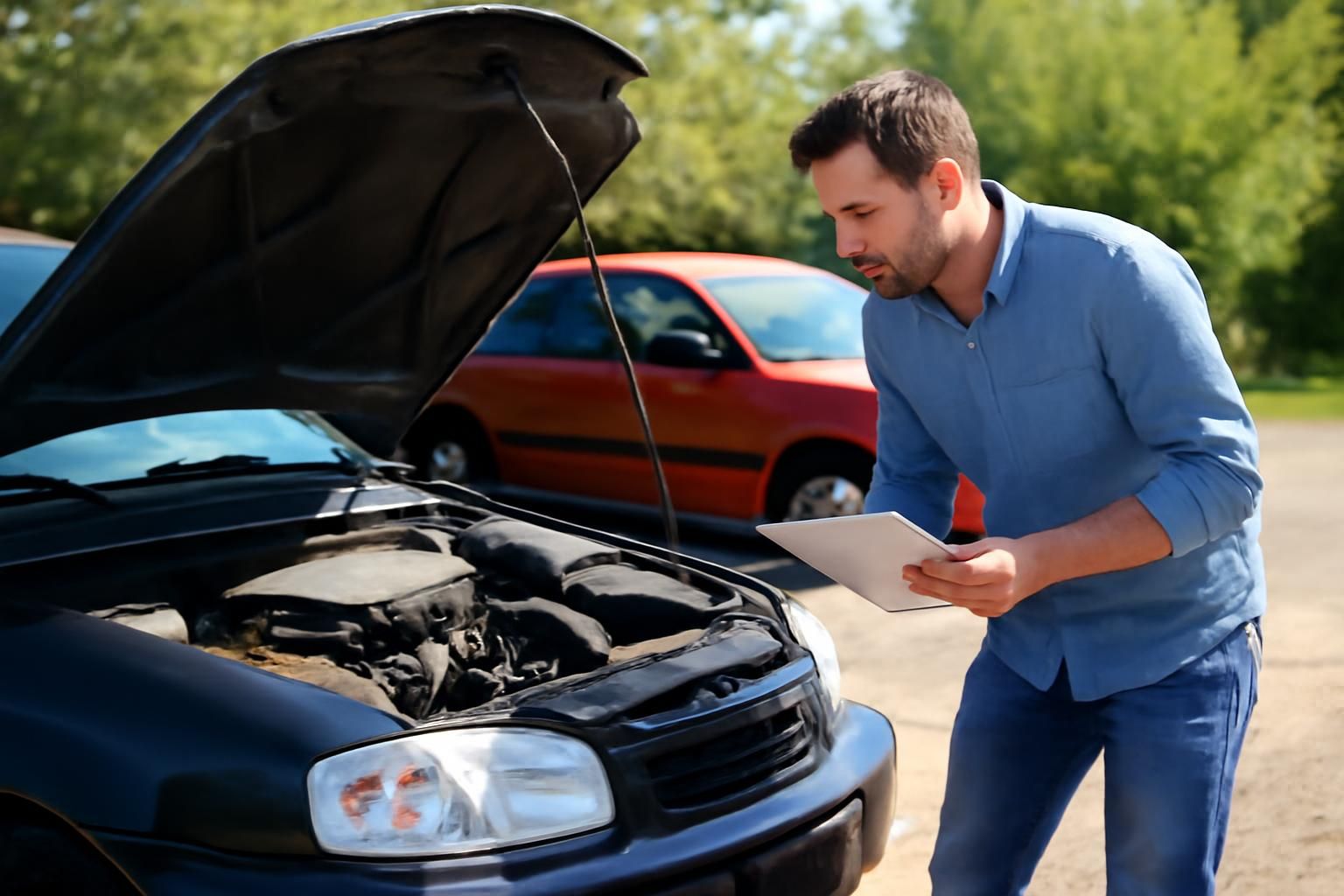
Aside from the documentation, buyers should conduct a thorough pre-purchase vehicle inspection preferably during daylight hours to spot problems easily. Areas requiring particular attention include:
- The consistency of VIN markings across multiple points on the vehicle
- Signs of body repairs indicating prior accidents or damage
- Engine bay condition for leaks or hidden repairs
- Operational status of crucial electronics and safety systems
- Test driving over varied road conditions to confirm drivability
This hands-on inspection habit significantly reduces the chance of unwelcome surprises after purchase. To assist buyers, referencing a used car paperwork checklist can ensure no critical step or document is overlooked during this phase.
Checklist for Private Sale Vehicle Condition Verification
- Check valid Certificate of Roadworthiness (RWC)
- Verify matching VINs on chassis, windscreen, and compliance plate
- Inspect for signs of recent bodywork or repainting
- Review service history and odometer consistency
- Test drive, focusing on brakes, steering, and engine performance
Safe Transaction Practices and Avoiding Private Sale Scams
Committing to the purchase and successfully transferring ownership culminates this step-by-step process, but private buyers must also safeguard the payment and handover phase. Financial fraud, fake seller identities, and odometer rollback remain prominent risks in 2026, necessitating cautious engagement.
The safest payment methods include PayID, bank transfers, or banking app payments—always accompanied by a written receipt documenting both parties’ full legal names and transaction details. Cash payments or deposits without receipts are strongly discouraged, as they offer little protection if disputes arise later.
Meeting sellers in safe, public locations rather than private homes, and ensuring the vehicle is roadworthy and registered properly before finalizing payment, adds layers of security. Additionally, transferring the registration promptly through VicRoads ensures that the buyer is officially liable for the vehicle, reducing risks from traffic fines or legal infractions incurred post-sale.
Finally, awareness of common red flags—such as sellers unwilling to provide a VIN, refusal to permit test drives, or prices substantially below market value—helps buyers steer clear of scams. For comprehensive advice tailored to Australian private purchasers, visiting resources like AUCN’s car buying guide can provide invaluable insights into safe buying strategies tailored for 2026’s market dynamics.
What is a PPSR check, and why is it essential when buying a used car privately?
A PPSR check reveals if the vehicle has any outstanding finance, has been written off, or reported stolen, providing a national overview. This protects buyers from purchasing a vehicle with hidden debts or problematic histories.
How can I confirm that the seller truly owns the car?
Request the certificate of registration and verify the seller’s Victorian driver licence matches the name on the registration. This ensures the seller is the legitimate registered operator.
What must I check on the Certificate of Roadworthiness?
Verify the RWC is current (issued within 30 days), original, and includes the tester’s licence number and serial number, assuring the vehicle meets safety standards before transfer.
What are the safest ways to complete payment for a private car sale?
Use traceable methods like PayID or bank transfers with a written receipt documenting the transaction. Avoid cash payments and deposits without receipts for your legal safety.
How soon do I need to complete the vehicle ownership transfer after purchase?
You should submit the transfer of registration application to VicRoads as soon as possible, typically within 14 days, to avoid fines or liabilities related to the vehicle.