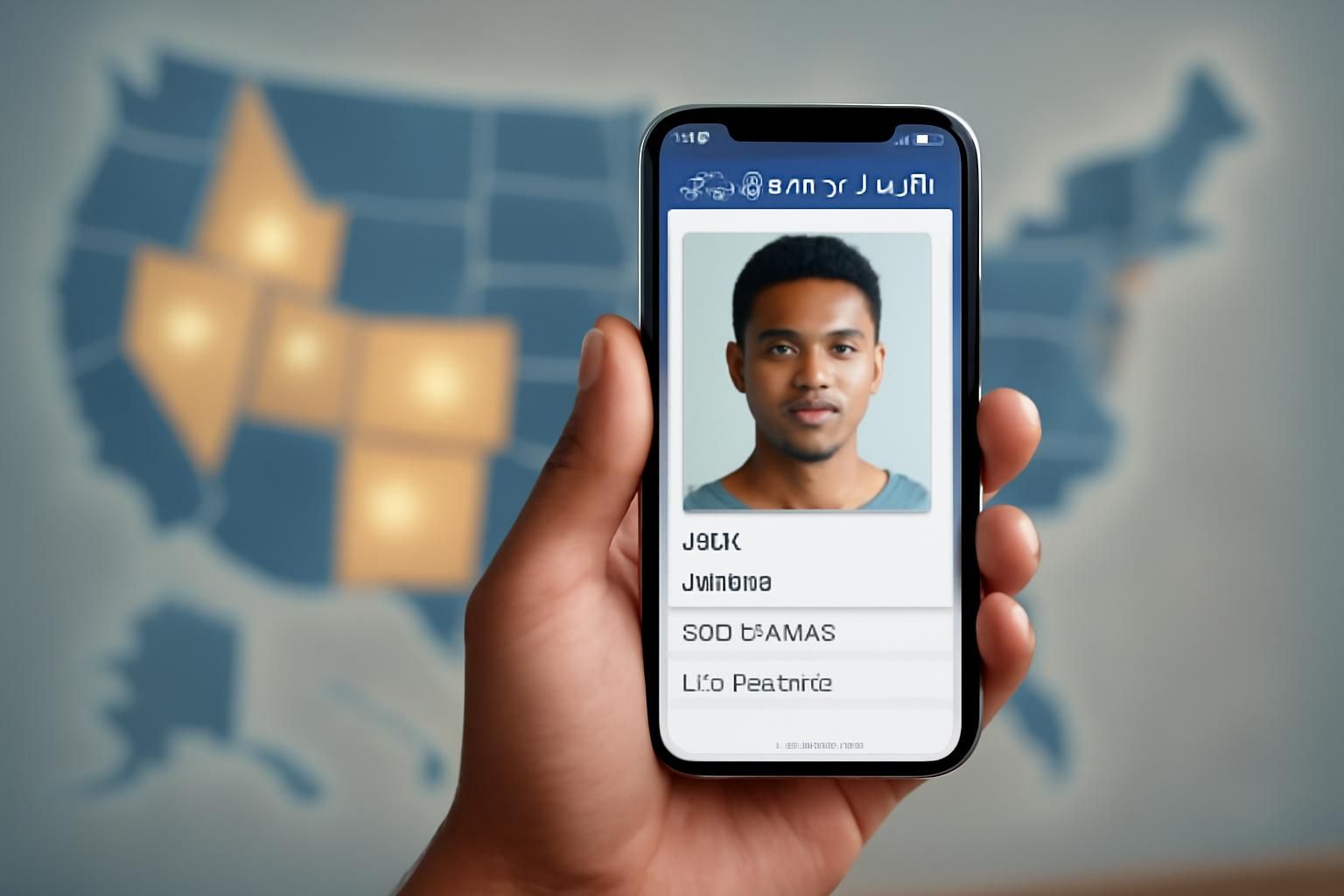
Digital driver licenses are rapidly transforming how Americans prove their identity, with an increasing number of states embracing this technology. These electronic credentials stored directly on smartphones offer the convenience of easy access, enhanced security features, and streamlined verification processes. As of 2026, more than 20 states, plus Puerto Rico, have adopted some form of digital identification, including digital driver licences (often called mobile driver licenses or mDLs). The proliferation of these credentials is not only reshaping everyday life but also redefining travel, commerce, and governmental services.
While the concept of carrying a physical ID card remains familiar, the digital driver’s license revolution exemplifies the shift toward digital-first solutions across the nation. Airports at participating U.S. Transportation Security Administration (TSA) checkpoints now accept these mobile credentials, allowing millions of Americans to fly without pulling out a physical license. However, adoption varies by state, and acceptance outside official checkpoints—such as businesses verifying age or rentals—is still developing. Understanding which states have authorized digital driver licences, the platforms they support, and where these IDs are accepted is crucial for residents and travelers alike.
Key Takeaways on Digital Driver Licences
- Over 20 U.S. states plus Puerto Rico currently issue digital driver licences or digital IDs usable on smartphones.
- The TSA accepts digital IDs from approximately a dozen to 14 states for airport security screening.
- Major platforms supporting these digital IDs include Apple Wallet, Google Wallet, and Samsung Wallet.
- Digital driver licences include privacy-enhanced features, allowing selective data sharing without disclosing all personal details.
- Interstate digital licence use is expanding, though physical IDs remain legally required in some contexts.
States with Active Digital Driver Licences and the Scope of Adoption
Several states have emerged as leaders in the digital ID movement by implementing full-fledged digital driver licence programs. Notably, Arkansas and Colorado have spearheaded efforts, offering residents access to electronic driver licences through either state-specific apps or major digital wallets. Other states such as Louisiana, Maryland, and Utah have also joined the initiative, gradually bringing their residents into the mDL ecosystem.
The growth is fueled by state Departments of Motor Vehicles (DMVs), which are actively creating or upgrading digital platforms to ensure secure issuance of these credentials. For example, Utah’s rolled out a widely available digital driver licence accessible via a dedicated driver licence app, offering enhanced user control over personal data and the ability to present ID remotely via contactless technology. Maryland’s implementation further provides users with flexible digital ID options integrated with smartphones.
The increased adoption is linked to the adoption of REAL ID-compliant digital licenses, meaning these digital credentials are recognized for federal identification purposes such as air travel or entering federal buildings. This compliance ensures digital licenses conform to the same stringent security standards as traditional physical IDs.
Despite the expanding availability, each state’s digitization timeline varies due to legislative, technical, and security readiness. For instance, several states have pilot programs or limited rollout phases awaiting broader public access, while others continue legislative work to formalize digital licence laws facilitating wider acceptance. With evolving technology, states are working collaboratively to develop standards enabling interoperability. This cooperative spirit fosters interstate digital licence use, a crucial element for residents who travel frequently.
According to recent data from where mobile driver’s licenses are gaining traction, states with accelerated adoption report high user engagement, rural access expansion, and positive privacy feedback. This trend reflects a national momentum toward digital driver licences that are both practical and privacy respectful.
Digital ID Acceptance: Airports, Businesses, and Beyond
The Transportation Security Administration (TSA) plays a pivotal role in validating digital driver’s licenses. Since early 2025, the TSA has approved digital IDs offered by approximately 14 states for use at select airport checkpoints, allowing eligible travelers to use their smartphones instead of traditional physical IDs at security. States that currently have their digital licenses accepted by the TSA include Colorado, Arizona, and Maryland, among others. This marks a substantial shift in how traveler identity verification is conducted, speeding up screening and reducing physical document handling in response to evolving security needs.
Airport acceptance is not the only significant milestone. Many private-sector partners—especially those involved in age verification (such as bars and liquor stores), rental agencies, or event venues—are beginning pilot programs to accept digital IDs. The credentials leverage advanced encryption, allowing users to selectively share data fields, such as proof of age without exposing home addresses or other sensitive details, enhancing user privacy.
Despite these advances, not all states support TSA acceptance yet, and digital ID holders are advised to carry their physical driver licence as a backup. The continued expansion of mobile driver licence acceptance is expected, with many states and businesses awaiting finalized regulatory frameworks, tech infrastructure upgrades, and public awareness campaigns.
To stay informed about participation, travelers can consult the official TSA resource listing participating states in the digital ID program. This resource provides current details on states with TSA-approved digital identification solutions for air travel.
Technical Platforms and Security Aspects of Mobile Driver Licences
Digital driver licences have been designed not only with convenience but also with stringent security at their core. Most state digital IDs can be added to popular smartphone wallet platforms such as Apple Wallet, Google Wallet, and Samsung Wallet, ensuring compatibility across major mobile devices. In addition, some states provide dedicated apps that integrate with their DMV systems to facilitate issuance, management, and revocation of digital licences.
These platforms employ multiple layers of security: biometric authentication, encrypted data exchanges, and real-time verification with state databases. This multi-tiered approach combats fraud and identity theft, a consideration that state DMVs and federal agencies prioritize. For example, to authenticate a digital driver’s license, the user often must unlock the phone via fingerprints or face recognition, minimizing unauthorized use if the device is lost or stolen.
Digital licence data structures leverage selective disclosure technology, which allows users to present only the required data for a transaction instead of revealing complete personal information. This capability marks a significant privacy enhancement compared to physical licences. For instance, a bar checking customers’ age can verify age eligibility without obtaining full address details, reducing unnecessary personal data exposure.
User experience remains a priority; many states continuously update driver licence apps to improve ease of use and reliability. Technologies supporting offline verification, QR code scanning, and contactless NFC transactions are increasingly common, underpinning digital ID credibility in real-world usage scenarios.
For an interactive overview of which states offer digital driver licences alongside wallet compatibility, the Mobile Driver’s License Issuing-State Tracker provides a frequently updated, user-friendly resource.
The Legal Framework and Interstate Digital Licence Use Challenges
The rise of digital driver licences requires well-defined legislative frameworks to ensure nationwide usability while preserving consumer protections. Governments must reconcile traditional ID laws with the realities of digital transactions. State legislatures have enacted or proposed various laws addressing aspects such as the creation, recognition, and use of digital IDs, often called digital licence laws.
Despite significant progress, nationwide acceptance hinges on standardized interoperability protocols that allow digital IDs issued in one state to be trusted in another. Interstate digital licence use is an ongoing issue; although digital IDs facilitate easier identity verification, law enforcement, federal agencies, and private businesses frequently encounter systems still primarily designed for physical cards. Efforts coordinated by organizations like the National Highway Safety Administration (NHSA) help bridge these gaps by pushing for compatible digital ID standards.
In many cases, while digital licences are legally valid, individuals must carry a physical driving licence when crossing state lines or handling certain transactions. This limitation is due to incomplete federal acceptance policies and varied implementation timelines across states. However, the trend indicates that a robust interstate framework is emerging, with pilot programs testing multi-jurisdictional digital ID use and real-time verification mechanisms becoming more standardized.
Residents are encouraged to stay informed about their state’s digital ID regulations, as well as how other states’ programs integrate with theirs. For a comprehensive overview on state-specific digital ID status and legal considerations, the NHSA’s resource on states using digital driver’s licenses offers a detailed guide.
The evolving legal landscape emphasizes the importance of balancing convenience, privacy, and security as digital driver licences become a fundamental component of identity verification nationwide.
Everyday Benefits and Future Outlook of Digital Driver Licences
The introduction of digital driver licences contributes significantly to modernizing identity verification beyond government-issued IDs. For everyday users, digital IDs mean fewer physical items to carry, instant access to credentials on their phones, and simplified interactions where ID is required. For example, purchasing age-restricted products, renting vehicles, or entering secured buildings can now be expedited via efficient digital verification.
Businesses benefit from reduced fraud risks due to enhanced cryptographic protections, and government agencies experience streamlined DMV operations that reduce administrative burdens. Additionally, in emergency situations, digital verification can be lifesaving by providing quick access to verified identity data, vital for first responders or healthcare professionals.
Looking ahead, the expansion of mobile driver licence technology appears poised to accelerate as infrastructure and regulatory acceptance grow. Key priorities include increasing the number of states with digital licences, expanding TSA airport acceptance, developing unified interstate verification systems, and promoting user-friendly applications.
Integrating digital driver licences with broader digital identity ecosystems—including federal IDs, social security systems, and international travel documentation—could further transform how identity is managed.
Individuals and organizations interested in tracking momentum can explore updates found in industry blogs such as resources on states issuing digital IDs, which highlight the latest advances in digital ID rollout and adoption trends.
The future of digital identification is undeniably intertwined with electronic driver licences, marking a significant evolution in the intersection of technology, law, and daily life.
Which states currently issue digital driver licences?
As of 2026, over 20 states including Arkansas, Colorado, Maryland, Utah, and others offer digital driver licences that residents can add to smartphone wallets or state DMV apps.
Can digital driver licences be used for air travel?
Yes, the TSA accepts digital driver licences from approximately 14 states for streamlined airport security screening, although travelers should carry a physical ID as backup.
Are digital IDs secure and private?
Digital IDs use encryption and selective disclosure technology, allowing users to share only necessary information while protecting sensitive data, enhancing privacy compared to physical IDs.
Do digital driver licences work across state lines?
Interstate use of digital driver licences is expanding, but regulations and technical standards are still evolving, so physical IDs might be required for some cross-state activities.
Which platforms support mobile driver licences?
Popular mobile wallets such as Apple Wallet, Google Wallet, and Samsung Wallet support many state-issued digital driver licences, often supplemented by dedicated state DMV apps.