
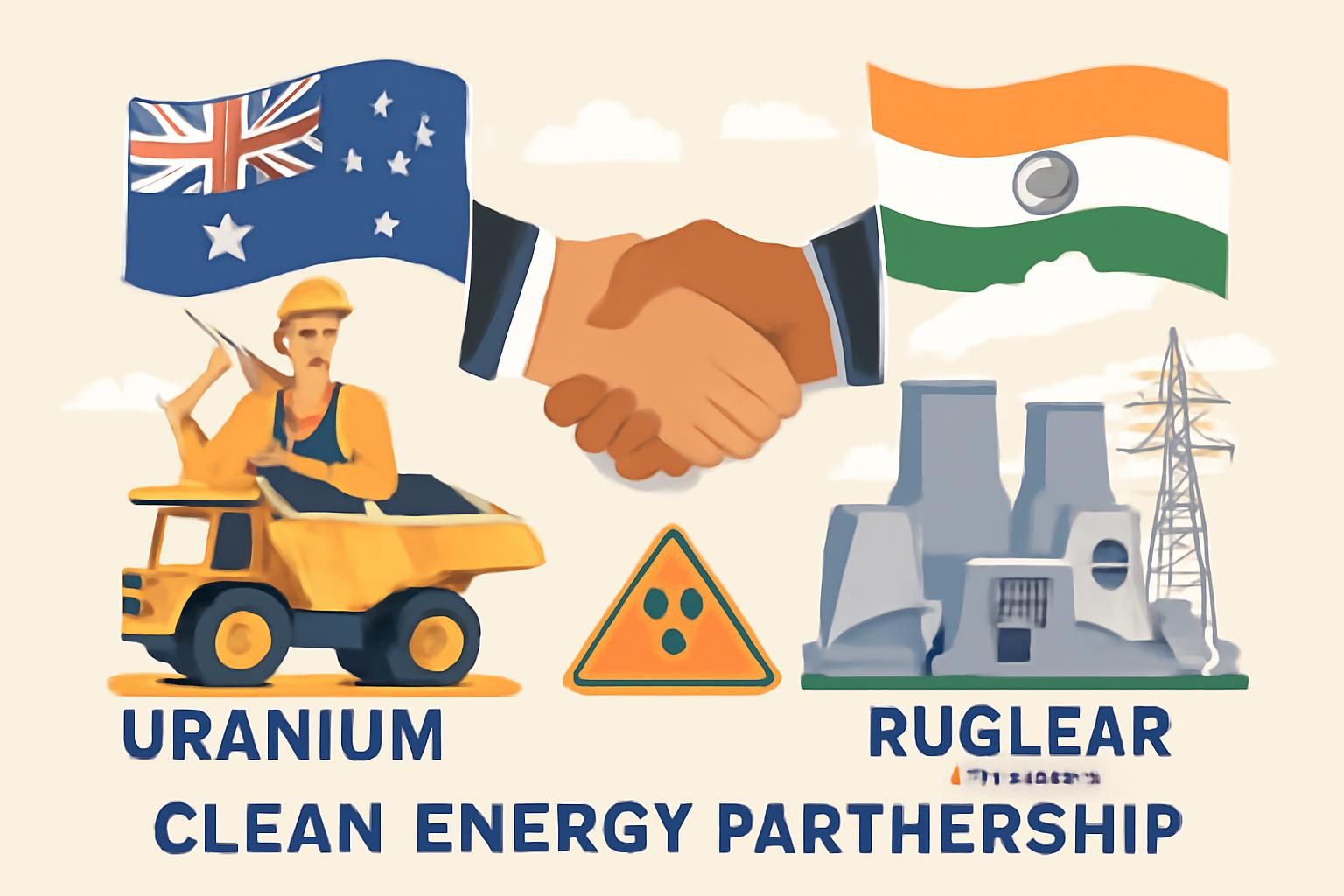
The recent landmark agreement between Australia and India to export Australian uranium for peaceful nuclear energy purposes marks a pivotal shift in bilateral relations and strategic cooperation between two influential Indo-Pacific partners. With India’s ambitious goal to reach 100 gigawatts of nuclear energy capacity by 2047, this deal not only enhances India’s clean energy aspirations but also opens new avenues for Australia’s resources sector, traditionally reliant on China. Australian Prime Minister Anthony Albanese and Indian Prime Minister Narendra Modi celebrated this agreement during Modi’s visit to Melbourne, underscoring the broad scope of cooperation spanning from clean energy to critical minerals and green hydrogen.
In brief:
- Australia and India have formalized a long-awaited uranium export agreement exclusively for peaceful nuclear energy use.
- The deal supports India’s target of 100 gigawatts nuclear capacity by 2047, significantly expanding its clean energy foundation.
- This marks a strategic diversification of Australia’s trade partnerships beyond its traditional reliance on China.
- Modi’s visit deepened bilateral cooperation across critical sectors including renewables, critical minerals, and green hydrogen.
- Australia’s largest pension fund committed a substantial investment into India’s infrastructure, signaling robust economic engagement.
- This agreement finalizes pending administrative obstacles since the 2014 nuclear cooperation pact between the two countries.
- Both nations demonstrate strengthened geopolitical ties through resource and technology collaboration in a volatile Indo-Pacific environment.
- The agreement promises long-term benefits across economic, environmental, and strategic dimensions, highlighting historic opportunities amid an evolving global energy transition.
Significance of the Australia-India Uranium Export Agreement for Nuclear Energy Expansion
The signing of this uranium export agreement signifies more than just commercial exchange; it represents a strategic leap in enabling India’s nuclear energy ambitions. India currently operates around 7.7 gigawatts of nuclear energy capacity, yet its goal to achieve 100 gigawatts by 2047 requires securing reliable, long-term uranium supplies. Australia, possessing the world’s largest known uranium reserves but not utilizing nuclear power domestically, stands as a crucial partner in this energy transformation.
Historical hurdles had stalled uranium exports due to concerns about potential diversion to nuclear weapons programs. This new pact explicitly restricts uranium use to peaceful purposes, such as power generation, providing transparency and trust. Not only does this reassure Australia’s nuclear non-proliferation commitments, but it also enables India to significantly elevate its non-fossil fuel energy share.
By aligning their goals this way, both countries underline their commitment to combating climate change through decarbonized energy systems. Nuclear energy, characterized by low greenhouse gas emissions once operational, complements renewables by supplying stable baseload power. India’s extensive grid demands such stability to ensure continuous supply, especially given its rapid industrial and urban growth.
The agreement’s impact will resonate broadly – enhancing India’s energy security, fostering sustainable development, and escalating Australia’s profile as a responsible uranium supplier on the global stage. It exemplifies how resource-rich nations can support emerging economies without compromising international non-proliferation norms.
Deepening Strategic Cooperation Beyond Uranium: Renewable Energy and Critical Minerals
While uranium export forms the centerpiece, the bilateral engagement extends significantly into renewable energy and critical mineral sectors. With both Australia and India committed to expanding clean energy, collaboration on green hydrogen projects, solar, wind, and low-carbon aluminium represents vast new frontiers. These sectors are vital for achieving net-zero targets and reducing fossil fuel dependencies globally.
Australia has abundant critical minerals like lithium, cobalt, and nickel essential for batteries and electric vehicles, alongside its uranium resources. India, on the other hand, is aggressively scaling its renewable energy capacity and electric mobility initiatives, requiring these minerals in large quantities. Joint efforts in supply chain optimization, technology sharing, and sustainable mining practices symbolize a comprehensive energy transition partnership.
Prime Minister Modi emphasized the historic opportunities for cooperation in low-carbon aluminium production, an energy-intensive sector where cleaner processes could curb carbon emissions substantially. Likewise, Australian technology and capital investment could accelerate India’s infrastructure development for renewables integration, such as smart grids and hydrogen pipelines.
Such broad-based cooperation not only diversifies India’s energy basket but also promotes industrial innovation, local job creation, and resilience across supply chains vulnerable to geopolitical tensions. This multi-dimensional strategic cooperation sets the foundation for a durable energy partnership within the shifting dynamics of Indo-Pacific geopolitics.
Trade Partnership Evolution: From Historical Ties to 2026 Economic Engagement
Australia and India’s trade relationship has strengthened considerably over the years, with India now Australia’s fifth-largest trading partner. This uranium export deal fits into a broader narrative of economic integration accelerated by earlier agreements like the Economic Cooperation and Trade Agreement (ECTA), which boosted bilateral trade to over $54 billion.
The uranium agreement reflects Australia’s strategic diversification drive to reduce reliance on Chinese trade links. For India, this partnership unlocks expanded access to high-quality resources essential for its industrial ambitions. The growing Indian diaspora in Australia—approximately one million strong—also plays a pivotal role in bolstering cultural and economic connections by fostering business relations and knowledge exchanges.
Notably, Australia’s largest pension fund, AustralianSuper, pledged an additional A$500 million into India’s National Investment and Infrastructure Fund, demonstrating confidence in India’s sustained economic growth and infrastructure modernization plans. Investment inflows from Australia are projected to support critical infrastructure projects in roads, ports, railways, and urban environments, essential for India’s long-term development trajectory.
Ultimately, this expanding trade partnership epitomizes a shift toward mutually beneficial, long-term collaboration across industries, technology transfer, and human capital development, leveraging geographic proximity and shared democratic values to build resilient economic corridors.
The Role of Political Leadership and Diplomacy in Securing the Uranium Export Deal
Political vision and diplomatic engagement have been decisive in concluding this landmark agreement. Prime Minister Narendra Modi’s visit to Melbourne acted as a catalyst, culminating years of negotiations plagued by administrative and non-proliferation concerns. Modi’s portrayal as a “living bridge” between Australia and India highlights the personal diplomacy underpinning the renewed partnership.
Australia’s Prime Minister Anthony Albanese reiterated the friendly and close nature of this partnership, emphasizing shared strategic interests. The deal finalizes key commitments laid out in the 2014 bilateral nuclear cooperation pact, overcoming earlier hesitations. It illustrates how strong political will aligns with international norms to reconcile security concerns with economic and environmental imperatives.
Moreover, both leaders discussed wider themes such as cybersecurity, critical minerals development, and sustainable urban infrastructure, weaving an integrated strategic framework. This expanded agenda reflects the complexity of 21st-century diplomacy, where resource security, climate change, and technological innovation intersect broadly with geopolitics.
The handling of the uranium export agreement demonstrates a model for leveraging diplomacy in fostering stable, transparent, and progressive relations, essential to underpinning future collaborations in the Indo-Pacific region and beyond.
Implications of the Uranium Export Deal on Regional Geopolitics and Global Energy Markets
The Australia-India uranium export agreement sends ripples through regional geopolitics, signifying shifts in alignment within the Indo-Pacific. With Australia seeking to diversify trade away from China and India solidifying ties with a resource-rich neighbor, the deal underlines the nuanced balance of power and economic influence in the region.
Energy security remains a core concern for many Indo-Pacific nations, and India’s expanding nuclear program is a strategic hedge against fossil fuel uncertainties. The collaboration presents a model for responsible uranium supply chains adhering strictly to non-proliferation and civilian energy use. This climate of trust counters historical apprehensions seen in India’s nuclear partnerships.
The agreement also impacts global energy markets by reinforcing nuclear power’s role in diversified energy portfolios amid rising concerns over climate change and energy volatility following global supply disruptions. Australia’s position as a leading uranium exporter gains prominence, especially as other suppliers grapple with political and environmental constraints.
Furthermore, this partnership may inspire other countries to pursue similar frameworks balancing peaceful nuclear collaboration with non-proliferation safeguards. It exemplifies how resource diplomacy intersects with global energy transitions, regional security architectures, and sustainable development ambitions.
Challenges and Considerations in Implementing the Uranium Export Framework
While the deal opens promising opportunities, practical challenges remain in operationalizing uranium exports under stringent oversight. Both Australia and India must maintain transparent procedures ensuring uranium’s exclusive use for energy generation, demanding robust tracking, legal frameworks, and inspection regimes.
Moreover, logistical complexities in transporting uranium safely across vast distances require coordination among technical, regulatory, and security agencies. Given uranium’s sensitive nature, policies on storage, transport, and usage compliance must continuously adapt to evolving international standards.
India’s nuclear infrastructure needs ongoing modernization to efficiently integrate increased uranium supply into reactors. This requires investments in reactor technology, workforce training, and maintenance systems to meet expanded nuclear capacity targets.
From Australia’s perspective, balancing domestic political viewpoints that lack endorsement of nuclear energy with commercial ambitions necessitates careful management. Public communication about non-proliferation assurances and environmental safeguards remains essential to bolster community support.
Ultimately, the success of this landmark deal hinges on sustained governmental cooperation, technological innovation, and mutual trust to navigate the complexities of nuclear energy commerce responsibly and securely.
Prospects for Long-Term Bilateral Relations and Regional Collaboration
The uranium export deal serves as a cornerstone for deepening Australia-India relations beyond transactional exchanges toward strategic partnership. Both countries envision expanded collaboration in emerging sectors such as clean energy technology, digital infrastructure, and infrastructure development, fostering interconnected growth pathways.
India’s evolving energy strategy, propelled by its climate commitments and industrialization needs, finds an ideal complement in Australia’s resources and technology capabilities. This synergy opens pathways for joint ventures in hydrogen economy projects, battery manufacturing, and sustainable mining innovations, spurring innovation ecosystems across continents.
Regional collaborations involving Southeast Asian and Pacific nations may also benefit as Australia and India enhance their connectivity and policy coordination. Their joined efforts can advance Indo-Pacific stability, economic prosperity, and environmental sustainability, offering alternatives to existing geopolitical tensions.
In essence, the uranium export agreement stands not only as a symbol of present achievement but as a foundation for a resilient, multifaceted partnership poised to shape the region’s energy and economic landscape for decades.
Economic and Environmental Impact of Scaling Nuclear Energy Through New Uranium Supply Chains
The introduction of expanded and diversified uranium supplies from Australia is likely to have far-reaching economic and environmental consequences, particularly within India’s rapidly developing context. By securing dependable access to uranium, India can reduce reliance on coal and other fossil fuels, cutting carbon emissions significantly.
This transition aligns with India’s nationally determined contributions under international climate accords, promising cleaner air quality, energy affordability, and sustainable industrial growth. Nuclear power’s high capacity factors help stabilize grids and mitigate intermittency issues often associated with solar and wind power.
Economically, increased uranium exports stimulate job creation and technological advancement in Australia’s mining sector while unlocking investment opportunities in India’s nuclear energy construction and maintenance sectors. Additionally, investors such as AustralianSuper illustrate the growing financial confidence underpinning green infrastructure and energy projects between the two countries.
The co-benefits of this partnership underscore the potential of bilateral trade agreements in fostering environmental stewardship alongside economic development, serving as a replicable model for other resource and emerging economies globally.
| Aspect | Australia’s Role | India’s Role |
|---|---|---|
| Uranium Supply | Largest uranium reserves, stringent non-proliferation policies | Expanding nuclear reactor infrastructure, energy transition goals |
| Renewable Minerals | Major supplier of lithium, cobalt, nickel | Growing demand for EV batteries and renewables integration |
| Investment | Capital and technological capability, pension fund investments | Infrastructure expansion, institutional support for energy projects |
Key Factors Driving the Australia-India Uranium Export Agreement Success
- Political Commitment: Sustained leadership support enabled finalization and trust-building.
- Strategic Alignment: Complementary national energy and security priorities foster mutual benefits.
- Regulatory Frameworks: Clear non-proliferation clauses guarantee peaceful uranium usage.
- Economic Incentives: Investments and trade diversification align with broader growth goals.
- Technological Cooperation: Shared innovation accelerates clean energy deployment.
- Diplomatic Engagement: High-level visits and continuous dialogue cement partnerships.
Frequently Asked Questions about Australia-India Uranium Export Partnership
What are the main purposes of the uranium exported from Australia to India?
The uranium exported under this agreement is explicitly for peaceful uses, primarily nuclear energy generation to increase India’s non-fossil fuel power capacity.
How does this deal benefit Australia economically?
Australia benefits economically by diversifying its trade partnerships beyond China and expanding its uranium mining sector, creating jobs and attracting investment.
What safeguards ensure uranium is not used for military purposes?
The agreement includes strict non-proliferation conditions that ensure uranium is exclusively used for civilian nuclear reactors, with transparent oversight and verification mechanisms.
How will this agreement impact India’s clean energy goals?
By securing a reliable uranium supply, India can expand its nuclear power capacity dramatically, helping achieve the target of 100 gigawatts by 2047 and reducing carbon emissions.
What broader sectors besides uranium trade are being enhanced between Australia and India?
Cooperation extends into renewables, critical minerals such as lithium and cobalt, green hydrogen, infrastructure investment, cybersecurity, and technology sharing.